
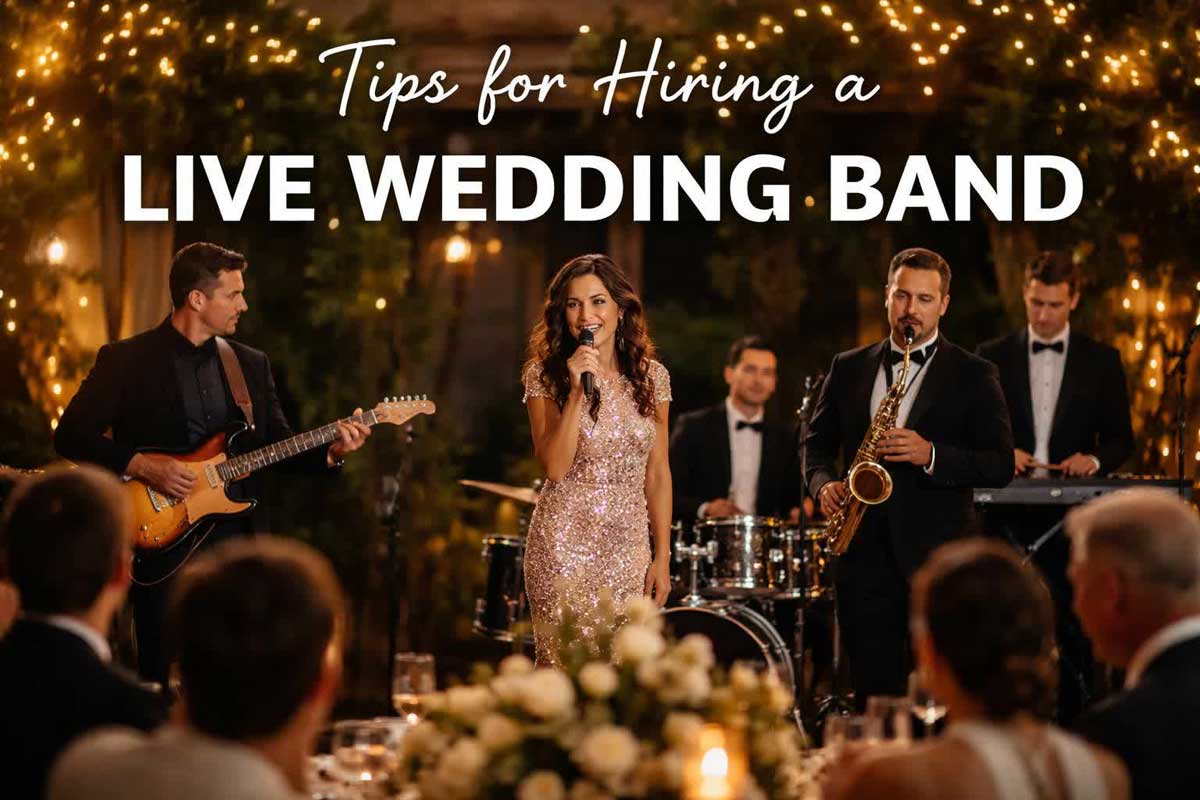
Tips for Hiring a Live Wedding Band: A Complete Guide
Tips for hiring a live wedding band, from budgeting and contracts to rider requirements. Make your reception unforgettable and book a live wedding band from Green Light Bands, a premier booking agency.
Hiring live musicians for your wedding is one of the most consequential entertainment decisions you will make, and most couples underestimate how much preparation it requires. The tips for hiring a live wedding band in this guide come from Green Light Bands, a provider with a diverse roster spanning Top 40, classic rock, jazz, and country acts built specifically for high-energy wedding receptions. Get this decision right, and your dance floor stays packed all night. Get it wrong, and no amount of beautiful flowers or catering fixes the atmosphere.
Tips for Hiring a Live Wedding Band That Fits Your Vision
Here is what most guides get wrong: they treat band hiring as a simple checklist. Book early, check reviews, done. The reality is that live wedding entertainment involves technical riders, contract clauses, insurance requirements, and timeline logistics that can derail even the most organized couple. Below, we cover every layer of the process, from matching musical style to your theme all the way through contract red flags that signal an unprofessional act.
Match the Band’s Musical Style to Your Wedding Theme
The band’s musical style is not just background noise. It shapes the entire emotional arc of your reception, from the cocktail hour through the last dance.
A jazz band creates an intimate, sophisticated atmosphere perfect for smaller venues and black-tie affairs. A Top 40 or pop band drives high-energy crowd engagement and works across most age groups. Classic rock acts suit outdoor festivals and barn weddings with a more relaxed dress code. A country band like Wildwood pairs naturally with rustic or Southern-themed receptions.

The mistake couples make is booking a band they personally love without thinking about their guest list. A couple in their thirties may adore indie folk, but if half the guests are over sixty and the other half are under ten, a versatile setlist built around recognizable hits will keep more people on the dance floor. Ask any band you are considering how they read a crowd and adjust their repertoire mid-reception. That adaptability is worth more than any fixed setlist.
Live Band vs. DJ: Which Is Right for Your Reception?
A live band delivers an energy and atmosphere that no DJ can replicate. This is especially true for the roster of bands from Green Light Bands. You won’t find more incredible wedding bands than these:
Liquid Blue: Internationally acclaimed, electrifying, colorful, high-energy live entertainment for luxury weddings.

Red Hot Revolution: Explosive, powerhouse party band with thrilling vocals and nonstop energy.

Metro Music Club: Stylish, sophisticated, incredibly polished dance band with irresistible musical versatility.

Paul Cave & The Platinums: Smooth, classy, captivating crooner entertainment with timeless musical elegance.

The visual spectacle of live musicians, the spontaneous crowd engagement, and the physical presence of performers on stage create a fundamentally different experience than recorded music played through speakers.
That said, a live band is not automatically the right choice for every wedding. Here is an honest comparison:
| Factor | Live Band | DJ |
|---|---|---|
| Atmosphere | High-energy, visual, unique | Consistent, flexible |
| Song variety | Limited to repertoire | Virtually unlimited |
| Sound consistency | Variable by performance | Highly consistent |
| Cost | Generally higher | Generally lower |
| Space required | Larger stage footprint | Minimal setup |
| Band breaks | Required (15-20 min) | None |
If your venue has limited space, a tight budget, or you need a very specific song played exactly as recorded, a DJ may serve you better. If you want performance energy, a packed dance floor, and an unforgettable visual centerpiece, a live band wins.
Budgeting When Hiring a Live Wedding Band: What to Expect
Budgeting for live wedding entertainment requires planning beyond the base quote. The quoted rate from most bands covers their performance time, but several additional cost layers appear between the initial conversation and the final invoice. Couples who fail to account for these extras often face sticker shock close to the wedding date, and by then, renegotiating is nearly impossible.
Understanding what actually drives a band’s price is the first step to building a realistic budget.
What Drives the Base Fee When Hiring a Live Wedding Band
A band’s base performance fee is shaped by four primary variables:
- Number of musicians. A three-piece acoustic trio prices very differently from a 10-piece band with a horn section. Each additional musician adds to the fee, and also to travel costs, catering riders (many contracts require a vendor meal per musician), and stage footprint requirements.
- Experience and demand. Bands with a long track record of high-profile weddings, strong video portfolios, and planner referral networks command premium rates. This premium is usually justified, experienced acts handle unexpected situations (a late caterer, a sound system glitch, a drunk guest grabbing the mic) without derailing the reception.
- Geographic market. Live entertainment pricing varies significantly by region. A four-piece band in a major metropolitan market will typically price higher than a comparable act in a smaller city, reflecting both local cost of living and competitive demand.
- Day of week and season. Saturday evenings in peak wedding season (broadly May through October in most of the US) carry the highest rates. Friday evenings, Sundays, and off-season dates often come with more negotiating room. New Years Eve jobs can be twice as expensive as a regular Saturday gig.
The easiest way to make sure there are no hidden fees is to request an all-inclusive price. However, even with an all inclusive price there may be some extras that may not be covered, such as overtime fees, a stage rental, or lighting. The all-inclusive price will typically cover the band fee, production costs, setup, sound check, travel expenses, hotel costs, ground transportation, and per diem.
Warning
Never agree to a verbal price. If a band quotes you a number over the phone, request a formal proposal before proceeding. Verbal quotes sometimes omit travel fees, equipment costs, and overtime rates, and there is no paper trail to hold anyone accountable.
Hidden Costs: Travel Fees, Sound System, and Overtime
These three cost categories are where budgets most commonly go wrong.
Travel fees are the most frequently overlooked item. Bands based more than a certain distance from your venue typically charge in one of three ways: a per-mile rate beyond a defined radius, a flat travel fee, or a requirement for hotel accommodations if the venue is too far to drive back the same night. Always ask for the band’s home base and calculate the actual distance to your venue before comparing quotes from different acts. A band that appears cheaper on paper may become more expensive once travel is factored in.
Sound system costs depend entirely on what the band includes in their setup. Some bands travel with a full professional sound rig, mixing board, front-of-house speakers, monitor wedges, microphones, and cabling, and this is reflected in their fee. Others perform with minimal equipment and expect the venue to provide a house sound system, or expect you to rent one separately. A third-party audio rental for a reception-sized room can add a meaningful cost to your budget. Before comparing quotes, ask every band explicitly: What audio equipment do you bring, and what do you require the venue or client to provide?
Overtime rates apply when your reception runs longer than the contracted performance window. Most contracts specify a defined end time, and every additional hour beyond that triggers an overtime charge, often at a rate higher than the pro-rated hourly equivalent of the base fee, because the band is now working outside their planned schedule. The practical fix is simple: build buffer time into your contract from the start. If you think you might want dancing until midnight, contract until midnight, not 11 PM.
Catering riders are a cost many couples never anticipate. Many professional band contracts include a clause requiring the client to provide a hot vendor meal for each musician during the reception. For a seven-piece band, that is seven additional plates. Confirm with your caterer whether vendor meals are included in your per-head count or billed separately. Top bands also bring a dedicated sound engineer, which would mean another vendor meal.
How to Compare Quotes Accurately
The only way to compare band quotes fairly is to normalize them against the same set of variables. When you receive a quote, build a simple comparison that adds:
- Base performance fee
- Travel fee (calculated for your specific venue)
- Sound system rental (if not included)
- Estimated overtime (one hour buffer is a reasonable assumption)
- Catering rider cost (vendor meals, if applicable)
This total cost of engagement is what you are actually comparing, not the headline number. A band quoting a lower base fee but requiring a separate sound system rental and charging a high travel rate may cost more in total than a band with a higher base fee that includes everything.
According to The Knot’s annual wedding industry research, live entertainment is consistently one of the top wedding budget line items for couples who prioritize guest experience. Treating it as a single line item rather than a multi-variable cost is the most common budgeting mistake couples make.
Questions to Ask a Wedding Band Before You Book
The questions you ask a wedding band before signing a contract are only useful if you know what a good answer looks like versus a red flag. Most guides give you a list. This section gives you the list, the mechanism behind each question, and how to interpret what you hear, so you can make an actual hiring decision, not just collect information.
“How many events do you perform each weekend?”
Bands that double-book on the same day, performing a ceremony in the afternoon and a reception in the evening, for example, risk arriving fatigued, rushed through sound check, or late due to an overrun at the earlier event. A professional act will be transparent about their scheduling. If a band is evasive about this, treat it as a warning sign.
“Can we see a live performance or attend a showcase before booking?”
Video demos are curated to show the best possible performance under ideal conditions. A live showcase, even a short one, reveals how the band handles a real room, how they engage the crowd, how they transition between songs, and how they respond when energy dips. A few professional bands host periodic showcases for prospective clients. If a band has no live showcase option and only offers polished video content, ask for unedited footage from a recent wedding. Generally, world-class bands don’t do showcases because they’re already getting all the jobs they want. It’s usually the newly-formed or inexperienced bands that put on showcases in an attempt to increase their bookings.
“How do you read a crowd and adjust your setlist mid-reception?”
This question separates experienced wedding bands from acts that simply perform their set regardless of audience response. A strong answer describes a specific process: watching the dance floor, reading body language, shifting tempo or genre when energy drops, taking requests within reason. Crowd adaptability is one of the most valuable skills a wedding band can have. The top bands from Green Light Bands have many years of experience of reading the room and adjusting their setlist on the fly to keep the dance floor packed.
“What is your setlist, and how much can we customize it?”
Understand the actual mechanics of customization. Most bands have a core repertoire of songs they perform reliably, and the best bands today have arranged most of their songs into medleys. They may play just a minute or minute-and-a-half of a song and then transition into the next song, keeping the energy high throughout the performance. Asking the band to remove just a single song means eliminating the entire medley. Since each medley may contain 10 or 15 songs or more, you can imagine why a band cannot remove more than 3-4 songs from their setlist.
Technical and Logistical Requirements When You Hire a Live Wedding Band
“What are your technical rider requirements?”
This question is covered in detail in the technical rider section of this guide, but it belongs in your initial conversation too. The answer tells you immediately whether you are dealing with a professional act. A band that cannot produce a written rider or does not know their stage dimensions and power requirements is a band that has not performed at venues with serious logistical standards. Share the rider with your venue coordinator before you pay any deposit.
“Do you provide your own sound system and lighting?”
Clarify exactly what is included versus what you need to source separately. A band that brings their own professional sound rig is a meaningfully different proposition from one that requires a house system or third-party rental. If the band does not provide their own equipment, ask for specific recommendations for audio vendors they have worked with successfully, a band that regularly performs without their own gear should have established relationships with reliable rental companies.
“What is your load-in time, and how long do you need for sound check?”
Most professional bands require 60 to 90 minutes for setup and sound check before guests arrive, but some can require more time. If your venue has back-to-back events or limited load-in access, this timeline can create serious conflicts. Confirm that your venue can accommodate the band’s access requirements before you commit.
Insurance, Contracts, and Breaks
“Do you carry general liability insurance, and can you provide a certificate?”
This is non-negotiable. Many wedding venues require proof of vendor liability insurance before allowing any performer on their property. A professional band will have this documentation readily available. If a band hesitates, cannot produce a certificate, or suggests their insurance is “in process,” do not proceed. The insurance and liability section of this guide covers what to look for in that certificate.
“What is your cancellation policy for both parties?”
A fair cancellation policy protects both sides. You should understand exactly what you forfeit if you cancel at various points before the wedding, and what recourse you have if the band cancels. A policy that is entirely one-sided, where the band retains everything regardless of circumstances but owes you nothing if they cancel, is a red flag. Ask specifically about force majeure provisions covering illness, injury, and unforeseen emergencies.
“What happens during your breaks, and how long are they?”
Band breaks are a reality of live performance. What matters is how the band manages them. Ask what music plays during their downtime, who controls it, and whether they coordinate break timing with your wedding planner to align with cake cutting, toasts, or other scheduled moments. A band that has no plan for their breaks, or assumes silence is acceptable, is a band that has not thought carefully about the full guest experience.
How to Use the Answers to Make a Decision
After these conversations, you are looking for three things: specificity, transparency, and documentation. A band that answers vaguely, resists putting things in writing, or cannot produce a rider and insurance certificate is signaling that their operation is not at the level your wedding requires. A band that answers with concrete details, offers references without prompting, and provides a clear written proposal is demonstrating the professionalism that makes the difference between a smooth reception and a stressful one.
Average Wedding Band Duration and How to Plan Your Timeline
The average wedding band duration for a reception performance is three to four hours of live music, typically broken into sets. Planning your event timeline around this reality prevents the most common scheduling conflicts couples encounter.
A standard structure looks like this:
- Cocktail hour (1 hour): Background music, often a smaller acoustic setup or a single musician from the band
- Dinner (45-90 minutes): Softer background performance or curated playlist during the meal
- First dance and formal dances: Live performance for these key moments
- Main reception dancing (2-3 hours): Full band, high-energy sets with breaks
Build your timeline backward from your venue’s hard-out time. If guests must leave by 11 PM and you want two full hours of dancing, your first dance should not start later than 8:30 PM. Every delayed speech or extended dinner service cuts into dance floor time.
Band Breaks and Background Music: Filling the Gaps
Band breaks are a reality of live performance, not a flaw. Musicians need 15-20 minutes of rest between sets, and professional bands plan for this. What separates a great band from a mediocre one is how seamlessly they handle those gaps.
Ask any band you are considering what plays during their breaks. The best acts provide a curated playlist that matches the energy of the room, ensuring the atmosphere does not deflate the moment they step off stage. Some bands use the break strategically, timing it to coincide with cake cutting or toasts so the transition feels intentional rather than abrupt.
A common mistake is not discussing breaks with your wedding planner or coordinator. If your planner does not know when breaks are scheduled, they cannot time the cake cutting or other events to fill those windows naturally. Coordinate this in advance.
Wedding Band Rider Requirements: The Technical Details That Matter
A technical rider is a document provided by the band that specifies their exact requirements for performing, including stage dimensions, power supply, sound equipment, lighting, and load-in logistics. This is the area where most couples and even some wedding planners are caught off guard.
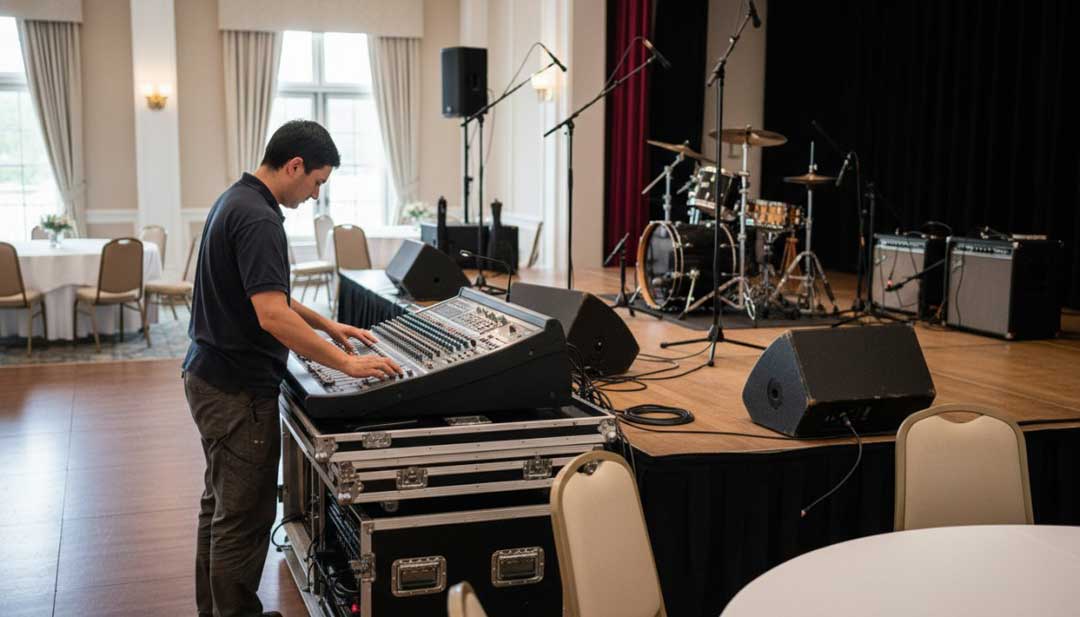
Ignoring the technical rider creates real problems on the day. A band that needs a 20-by-16-foot stage cannot safely perform on a 12-by-10-foot platform. A band that requires dedicated 20-amp circuits cannot run off a venue’s standard outlets without risking equipment failure or tripped breakers mid-reception.
Request the band’s rider before signing any contract. Share it with your venue coordinator immediately. If the venue cannot accommodate the requirements, you need to know before you have paid a deposit, not the week of the wedding.
Stage Requirements, Power Supply, and Sound Check Logistics
Stage requirements vary significantly by band size. A four-piece band typically needs a minimum footprint of 16 by 12 feet. A seven or eight-piece band with horns may need 24 by 16 feet or more. Factor in space for monitor speakers, instrument cases, and musician movement.
Power supply is a detail venues frequently underestimate. A professional band with a full sound system requires dedicated circuits, often multiple 20-amp lines, separate from the circuits powering the venue’s lighting and catering equipment. Ask your venue’s event coordinator for their electrical specifications and share them with the band in advance.
Sound check timing needs to be built into the venue’s event schedule. Most professional bands require 60-90 minutes or more for setup and sound check before guests arrive. If your venue has back-to-back events, confirm that the band has sufficient access time. According to National Association of Music Merchants guidance on live event production, inadequate sound check time is one of the leading causes of audio quality issues at live events.
Takeaway
The technical rider is not optional paperwork. It is the blueprint for a successful live performance. Treat it as seriously as your catering contract.
Wedding Band Contract Checklist: Red Flags and Must-Have Clauses
A solid wedding band contract checklist protects both parties and eliminates ambiguity before your event. Any band unwilling to provide a detailed written contract is a band you should not hire.
Must-have contract clauses:
- Exact date, venue address, and performance hours
- Itemized fee breakdown including travel, equipment, and overtime rates
- Deposit amount and payment schedule
- Cancellation policy
- Force majeure clause covering illness, emergencies, and unforeseen events
- Liability insurance confirmation
- Technical rider attached as an exhibit
- Setlist customization terms and any song restrictions
- Band break schedule and background music provision
Insurance, Liability, and Cancellation Policy
Professional bands carry general liability insurance. This is not a nice-to-have. Many wedding venues require proof of vendor insurance before allowing any performer on their property. Ask for a certificate of insurance before signing and confirm the coverage amount meets your venue’s requirements.
As documented in American Federation of Musicians guidelines for live performance contracts, professional musician agreements should clearly define force majeure provisions.
Using Vendor Recommendations and Wedding Planner Networks
Vendor recommendations are one of the most reliable ways to find quality wedding entertainment. Wedding planners, photographers, and venue coordinators work with bands repeatedly. Their recommendations carry weight because they have seen these acts perform under real conditions, not showcase settings.
Green Light Bands works regularly with wedding planners and venue coordinators across a range of event types, which means their roster has been vetted through real-world performance, not just demo reels. When a planner recommends a specific act, they are putting their own professional reputation behind that recommendation.
Ask your venue coordinator which bands they have worked with successfully. Ask your wedding planner for their shortlist. These recommendations are not just convenient starting points. They are quality filters that save you hours of research and reduce your risk significantly.
How Far in Advance Should You Book?
The most in-demand wedding bands book out 12 to 18 months in advance for peak wedding season dates. Couples who begin their search six months before the wedding often find their first-choice acts already committed.
Start your band search as soon as you have a confirmed venue and date. The venue determines the stage requirements and technical constraints, which you need to communicate to any band you are seriously considering. Locking in your date early also gives you negotiating room on customization and setlist requests, since bands have more flexibility when they are not under last-minute pressure.
For off-peak dates (winter months, weekday events), the booking window is more forgiving. But for Saturday evenings in May through October, treat band availability the same way you treat venue availability: first come, first served.
According to WeddingWire’s vendor booking timeline guide, entertainment vendors are among the first categories couples should book after securing their venue and photographer. The most regretted delay in wedding planning is waiting too long on live entertainment.
Frequently Asked Questions
How much does a live wedding band cost?
The cost of hiring a live wedding band varies widely based on band size, experience level, location, and performance duration. Smaller local bands may be more budget-friendly, while larger, more experienced groups with full sound and lighting production command higher rates. Always clarify what is included in the quoted price, travel fees, sound system rental, and overtime charges can significantly affect your total budget. Request itemized quotes from multiple bands before committing.
What questions should I ask a wedding band before booking?
When hiring a live wedding band, ask about their full repertoire and setlist flexibility, whether they can learn custom songs for your first dance, how they handle band breaks, what their technical rider requires from the venue, and whether they carry liability insurance. Also request references from past wedding clients to verify their professionalism and crowd engagement.
How far in advance should you book a wedding band?
When you book a wedding band it’s important to realize that most experienced bands book out 9 to 18 months in advance, especially for peak wedding season dates. As soon as you have a confirmed venue and wedding date, checking band availability should be a top priority. Waiting too long limits your options and may force you to compromise on musical style or performance quality. Secure your preferred band with a deposit and signed contract as early as possible to lock in your date.
What do wedding bands need from the venue?
Wedding band rider requirements typically include a dedicated performance area or stage with minimum dimensions, access to adequate power supply (often multiple dedicated circuits), a safe load-in route for equipment, and sufficient time for sound check before guests arrive. Bands may also require a green room or holding area. Always share the band’s technical rider with your venue coordinator early in the planning process to avoid day-of surprises that could disrupt the event logistics.
Is a live band better than a DJ for a wedding?
A live band creates a unique atmosphere and performance energy that a DJ cannot fully replicate, the visual excitement, crowd engagement, and spontaneity of live musicians elevate the reception experience. However, live bands typically cost more, require more space, and have a more limited repertoire than a DJ who can play any recorded track. The best choice depends on your wedding theme, budget, venue size, and how important live performance energy is to your overall vision.
Finding the right live band for your wedding is a logistical and creative challenge that most couples only navigate once. Green Light Bands offers a diverse and exclusive roster of professional acts spanning Top 40, classic rock, jazz, and country, all with professional sound production and the performance energy to keep your dance floor packed from the first song to the last. Contact Green Light Bands to check availability for your date and get a detailed proposal that covers every item in this guide.