
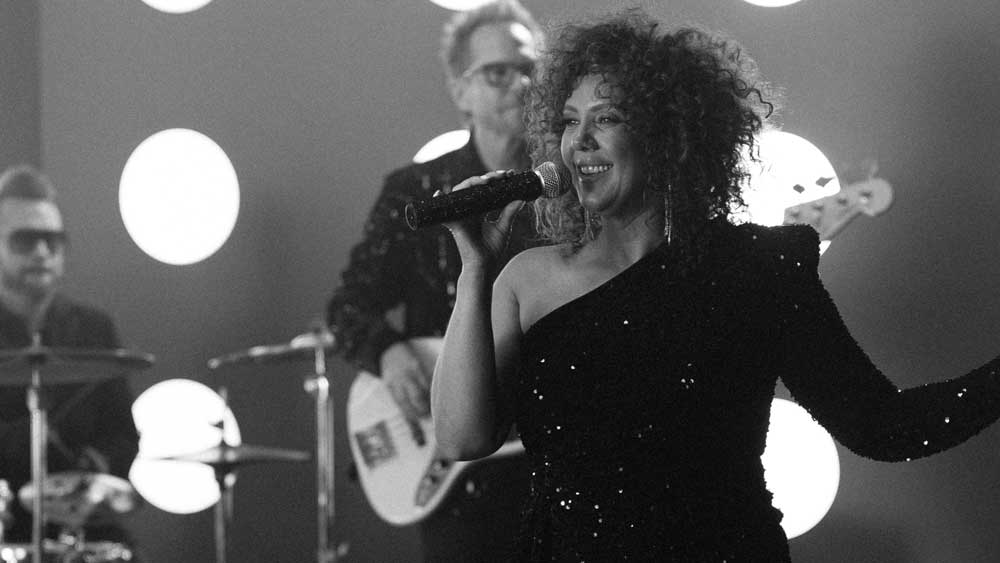
Live Wedding Band Price Ranges
There’s more variation in the price of a live wedding band than couples are led to believe. To know the reasons why is what separates a sound budget from one that’s in tatters two weeks to the day before the wedding.
Wedding Band Prices at a Glance
Green Light Bands has put together this guide to get to the bottom of where hidden costs lie, what the price tiers are and what makes a quote what it is. By thinking of band pricing as a figure on a page instead of a collection of variables, most wedding couples are either unprepared or they overpay. We’ll teach you how to make sense of a quote, be smart about negotiations and align your budget with the kind of experience you’re looking for.

Red Hot Revolution Live Wedding Band for Receptions
By definition a live wedding band is a group of professional musicians and vocalists hired to play music for a wedding reception or ceremony. They will have a bandleader that sees to setlists, timing and any announcements with the couple and the venue. For world-class wedding bands, look to Green Light Bands. Those who have no need for anything less than the very best should take a look at Red Hot Revolution and Metro Music Club.

Metro Music Club: Popular Live Wedding Music Band
Live Wedding Band Price Breakdown by Band Size and Genre
The overall cost is determined by the size of the band, their music style and popularity, and whether or not it’s a travel gig. A Top 40 dance band of a specific size will run you more than the same number of musicians in a jazz band or folk group due to the rehearsal time, the repertoire and the equipment needed.

A live wedding band performing on a warmly lit reception stage decorated with string lights and white floral arrangements, musicians playing guitar, keyboards, and brass instruments while formally dressed guests dance and celebrate in the foreground.
Acoustic Groups vs. Full Production Show Bands
Who you hire for your event is not a matter of budget alone.
An acoustic group is ideal for a ceremony or cocktail hour when you want people to be able to enable conversation. They’re logistically simpler, don’t need stage risers, and the cost is lower because there’s a more intimate feel instead of a high energy party atmosphere. There’s a limit to the amount of energy an acoustic trio can muster; they’re not going to deliver the same kind of momentum on the dance floor in a 300-capacity ballroom as a show band.

Liquid Blue Band for Wedding Events
Full production show bands like Liquid Blue bring everything: a rhythm section, lead and backup vocalists, perhaps some horns and the high-tech sound to match. The price is affected by the quality of the performance. Twelve musicians means twelve musician fees as well as twice the travel and production of a smaller act.
An electric string quartet like Emerald Electric Strings comes with a mid-range cost. They’re much in demand and can be teamed with a DJ for something dynamic and hard to forget. Whether it’s classical or rock instrumentals, they put on high-impact performances.
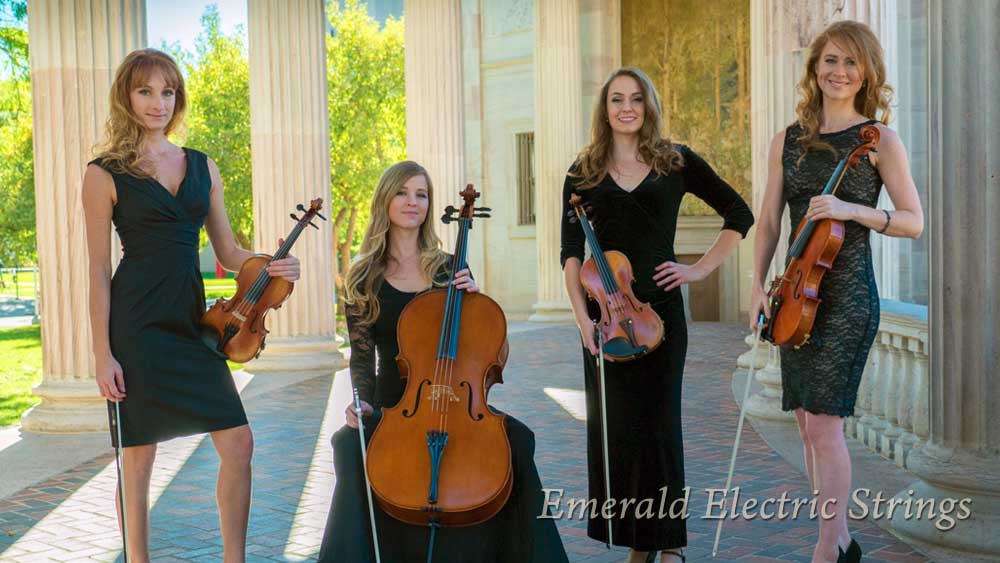
Emerald Wedding String Quartet
You may also want to consider a jazz and swing band with a crooner of Paul Cave’s caliber. His smooth vocals when performing American standards and classic jazz is both elegant and refined, delivering an entertaining but not overbearing atmosphere at a wedding.
If the guest list is under 80 people, or the venue lacks a decent dance floor, go with the acoustic or jazz option. If you want raving about the dance floor for years to come, a full show band is worth the extra premium.
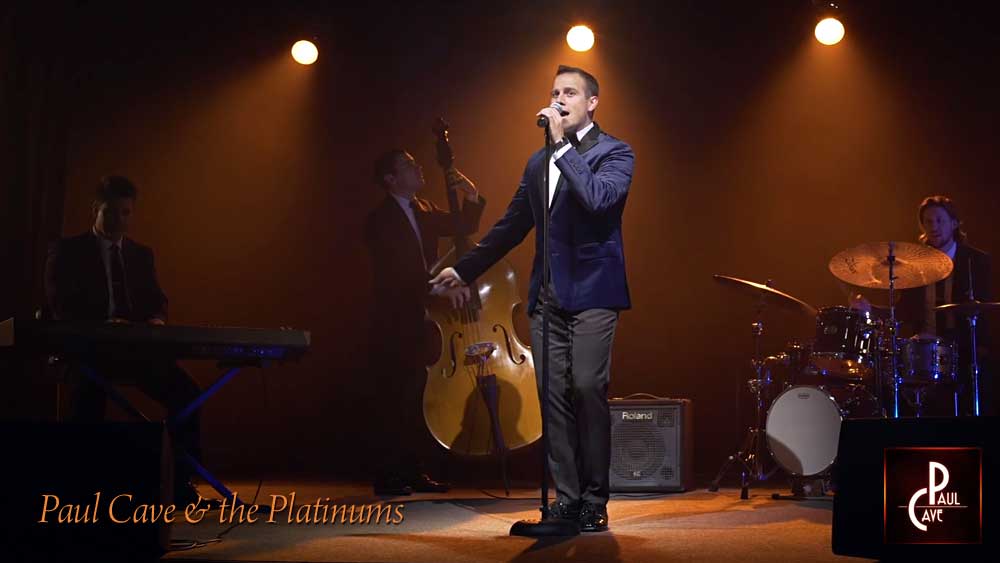
Paul Cave and the Platinums Wedding Jazz and Swing Band for Receptions
Factors Affecting Wedding Band Prices
You don’t have to look far for a guide that spells out the various factors in wedding band pricing. What’s lacking is an explanation of how everything works, how one single variable can change the total price of your quote and by how much. This is where we’re going to provide you some clarity so you’ll have a bit more leverage in a negotiation or know where to pull back.
Band Size and the Compounding Cost of Each Musician
It’s simple arithmetic. A five-piece band consisting of drums, bass, guitar, keys and a lead vocalist, and a nine-piece with added brass and a backup singer, are not priced differently due to their reputation. With a nine-piece band you’re paying for four extra performers.
Take the horn section, the upgrade most couples are drawn to, and yet don’t fully appreciate how much it will increase the overall price. Add a three-piece horn section to a five-piece band and you have more than three additional fees. You’re looking at a larger production footprint in the form of monitor mixes, load-in time and stage room. It’s the hallmark of a show band and comes with a cost structure to match. For a high-profile event, you’d be hard pressed to find a better live band than Modern Retrospect; they’re in great demand and their standard roster includes a three-piece horn section of some dynamism.
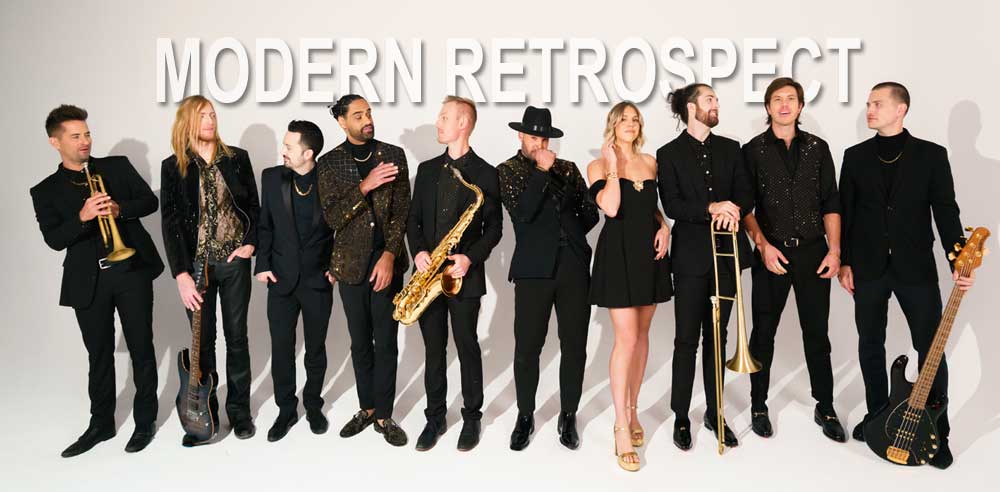
Modern Retrospect Cover Band for Wedding Events
Now let’s look at a quote from a nine-piece band. A good way to look at things is to put aside the cost of the horns and consider what the rhythm section alone would run you. Ask your booking agency if they can give you a no-horn version for less. Since most bands will have the same core group no matter what their band size is, having a feel for the “per musician” increment allows you to make an informed decision on whether or not the horn section is justified for the wedding reception.
Performance Hours, Overtime and the Like
You’ll find that a typical wedding band contract stipulates three or four hours of performance time. The trouble is that couples tend to misinterpret what’s meant by ‘performance time.’ In the eyes of the contract it’s only those hours the band is actually playing, not how long they’re present at the venue. Say a band puts in an appearance at 4:00 PM to get ready for a cocktail hour at 6:00 and is done with the reception by 10:00 PM before loading out at 11:30. They have been on-site seven and a half hours but have only performed four, and that’s what the contract covers. As for the band’s setup, sound check and breakdown, some band booking agencies will bill for these separately while others have a minimum booking window to account for them.
Then there’s overtime, a common place for unanticipated costs to crop up. Typically, it’s charged on an hourly or half-hourly basis for each musician. A half hour of overtime is a small matter for a five-piece but when you have a nine-piece the professional fees multiply. Make sure you’re given the overtime as a total for the band and not a per-musician figure so you’ll be able to understand the total wedding band cost.
Travel and Accommodation: Out-of-Town Fees
When you book a band from outside your area, travel is where the budget is most likely to increase. It’s also the least transparent part of a quote. Local travel, say within 50 to 75 miles of the band’s home base, is normally a flat fee or part of the base price. Past that range the cost goes up and it’s good to understand why.
Mileage and vehicle costs: You need a van or truck to move the equipment, not a personal car. Reimbursement for a cargo van runs above IRS rates and a large outfit may need more than one. Find out how many vehicles they require and the method of calculation.
Overnight accommodation: If a same-day return is out of the question, hotel costs will be factored in. Nine rooms for a nine-piece, or five or six rooms for shared quarters at the very least, is a considerable additional cost. Some agencies will give you a per-room rate, others a bundled travel fee. Get the details.
Per diem : When musicians are away from home a daily allowance for meals and incidentals is customary in their contracts. Budget for this on a destination wedding or any travel gig.
Destination wedding premium: Air travel changes the equation entirely. Between the flights, baggage for the cases, ground transportation and multi-night stays for a band of any size, the base performance fee is substantially increased. While some will offer a fully loaded, all-inclusive package, others prefer to itemize. Be sure not to compare a local quote with a destination quote without getting an itemized estimate; the performance fees may be on a par but the overall cost won’t be.
Geographic Location and what the Local Market Will Bear
There’s no national standard for band pricing. In cities like New York, Los Angeles, Chicago or Miami the base price is higher due to the cost of living, what venues expect and the wages of the musicians. A six-piece band in a metro area will ask for more than a live band of similar quality in a mid-size region.
This has implications for the wedding couple. A destination wedding in an expensive market will come with local prices to match. And if quotes in a mid-size market appear steep by national averages, you should look at whether the average is being skewed by data from the metros. National figures are not a good local benchmark. Three or more direct quotes from agencies in your area is the only way to get a real sense of the going rate.
Post-Pandemic Rates for Live Wedding Bands Are Up
For couples to come up with an accurate budget and not be tied to figures from a bygone era, it’s useful to have some perspective on why the going rate for a live wedding band today is in excess of pre-2020 levels.
There are three reasons for this change. To start, the pandemic put an end to live event work for professional musicians for a long time; a good number of them have walked away from the wedding entertainment business altogether so the pool of seasoned live wedding bands has been whittled down. With demand on the rise and supply diminished, you get the kind of upward pressure on prices that has yet to abate.
Then there was the post-pandemic wedding boom. The backlog of bookings from couples making up for lost time in 2020 and 2021 put a strain on availability in the following years, driving up prices. The more intense part of that surge is over but the floor it put under pricing has remained.
Inflation has also taken its toll on production costs of every description: fuel, vehicles, and audio gear to name a few. You’ll see those reflected in any quote you’re given.
Take it as historical context when a friend relates what he or she put down for a wedding band five years back. Don’t make the mistake of thinking that price is today’s benchmark. Come up with a budget with today’s market in mind, leave room for incidentals or overtime and go to a local agency for a quote instead of trusting aggregate data which can be out of step with reality.
Wedding Band or DJ?
Most planning guides will give you a table and a recommendation and call it a day when it comes to comparing the cost of a wedding band and a DJ. And it’s not much use. Couples would be better served by a plain view of what they’re getting at any given price and where the value lies, and if a hybrid model of hiring both a band and a DJ is the answer.
What the Cost Covers
With a professional DJ you’re paying for one person, their mixing equipment, a well created library of music, and the ability to work a crowd and move between songs without missing a beat. There’s little overhead to speak of: a single performer and vehicle. That’s the structural reason for the gap in pricing between a DJ and a live band.
The numbers for a band are not made up. A six piece means six professionals need to be paid. Add a 3-piece horn section and it’s three more musicians to pay for. In addition to the headcount and their rates you have the extra monitors, risers and a sound system. Once you see how it works a band quote ceases to be confusing.
A Third Option: the Hybrid
The ‘band and DJ package’ is not so common, but more popular today than in years past. The way it’s typically done is to have the live band perform during cocktail hour as well as the first couple of hours of the wedding reception, the high visibility part of the evening, and then let the DJ take over the late night when the crowd has thinned and you would otherwise be racking up overtime fees for the musicians.
With this setup, you have the energy of a live band when it matters most, and the per-musician costs don’t become a financial burden. The DJ can also play any genre at any time, as well as take odd requests during the final hour. Not all agencies have this as an off the shelf option, but ask about it if it’s something that you’re interested in. Some agencies who represent both can coordinate the handoff logistics and take the vendor management off your plate.
Crossing the Value Curve
There are three questions that should be asked here:
1. Is dancing the most important part of the day? An older guest list or a venue where conversation and dining are most important will make a full wedding party band’s price hard to justify. A smaller acoustic group or DJ will do the job for less.
2. What’s the size of the venue and your guest count? Recorded music doesn’t have the same physicality as a live band in a large ballroom of 200. If it’s a 60 person affair the difference is not nearly as pronounced.
3. What do you want guests to remember? There’s a practical side to what the guides put in sentimental terms. A band will read a room and put on something unrepeatable in the moment, while a playlist cannot. But if you want to spend your money on food, the ceremony, and the venue, then optimize your entertainment spend accordingly.
And to be frank, a lot of wedding couples who go with a DJ to save money are quite content with it. A good DJ with the right system and an ear for the room will run a fine reception. There’s a premium for a live band and you should pay it only if you and your guests will appreciate the extra energy and elevated experience.
Hidden Fees and Additional Costs to Budget For
You can expect the quoted figure to be far from the last word with some agencies. Couples are often surprised by this, but with an eye for the details it’s something you can control.
Sound System and Audio Equipment, Emcee Services
You’ll find that some bands will put their sound system and audio gear in the quote and some won’t. A top notch system for a sizeable reception will not be a small expense. If the venue and the band are both without a sound system, which would be extremely rare, then you’ll have to engage an AV company of your own.
Then there’s the matter of emcee services. The bandleader may well act as emcee, making the necessary announcements for toasts and introductions, or they may simply be there to perform. If you want the band to provide the emcee for the whole reception, make sure it’s part of the package and if there is an extra charge.
There are other costs to put in your budget:
- Vendor meals: Under most contracts the couple has to provide a meal for the musicians. Ten for a 10-piece band.
- Sound permits: An outdoor venue may insist that the wedding couple secure a noise permit.
- Stage and riser rental: If the venue is not equipped with a stage you might have to rent one.
- Lighting: Not all bands come with a lighting package.
Booking Deposits, Insurance and Contractual Nuances
A band’s contract needs to be read in its entirety. It’ll set out the terms for performance, liability, overtime and how and when you need to pay.
A good number of venues won’t let a vendor on the property without general liability insurance, so a professional band will need a certificate to prove they’re insured. Without that, consider it a red flag.
As for the deposit, expect to put down 50% of the total fee upon signing with the balance due a week or two before the event. The American Federation of Musicians says that a contract for a pro musician spells out obligations and payment to safeguard both sides.
The New Price Ranges for Live Wedding Bands
It’s plain to see that the market has been altered since 2020 and has yet to revert to the old ways, and probably never will. And there are reasons for this.
Two years of shutdowns meant lost income for professional bands, some of whom have made a career change and left the field completely. With a smaller pool of seasoned talent to go round, prices have been driven up. On top of that the demand from wedding couples postponing their 2020 and 2021 weddings has been fierce, resulting in many extra bookings through 2022 and 2023 and diminishing availability. The surge is over but in most markets you’ll never again see 2019 pricing. And then there’s inflation – higher costs for fuel, transportation and audio equipment are costs the client has to absorb.
Today, the sensible thing is to work with present day rates rather than what a friend was quoted four years back. Entertainment is still among the top five items in a wedding budget across the country and while the market is more competitive the base prices are higher.
Questions to Ask a Band Before You Book
A little vetting will go a long way towards saving you both stress and money, and it doesn’t take more than half an hour. Too many couples don’t vet or don’t ask the important questions.

A couple sitting across a table from a professional bandleader in a bright, modern meeting room, reviewing a printed contract together with open notebooks and a laptop displaying a setlist on the table.
Vendor Vetting and Comparing Quotes
Run through this before you sign any binding contract:
- Your procedure if a musician is sick?
- Does the quote cover the emcee, setup and breakdown as well as the sound system?
- How do you figure overtime and at what rate?
- Proof of liability insurance?
- What are your requirements of the venue regarding power, load-in and stage?
- Will you put up with a do-not-play list and how are requests dealt with?
- What’s the payment schedule and what forms of payment do you take?
In comparing one band to another, look at the individual line items. A lower total could be because they’ve left out the sound equipment. Without that kind of scrutiny the comparison is of no use. This is also a good time to mention that if you base your band decision on the lowest quote, be very careful. There’s usually a very good reason why a band is a lot cheaper than another, most often due to their lack of experience.
For the most part communication prior to signing the contract is what makes the difference between a good experience and a bad one. Be very careful of hiring a band that’s hard to get hold of or hedges on substitution.
Making the Most of Your Wedding Music Budget
It’s not so much a question of how much to spend. It’s more about finding the perfect fit for the type of reception you’re envisioning.
Take the venue and the guest list into account. You need a different type of entertainment for a 200 person ballroom wedding with a late night dance floor than a 50 person affair at a small room at an inn. If dancing is what you want, make room in the budget for it. For dinner music and a brief set afterwards a smaller group is a better value. Green Light Bands offers exclusive world-class bands that play Top 40, pop, country, jazz, bluegrass, Motown and classic rock that are suited to varying sizes and energy levels.
There’s a method to budgeting for your wedding entertainment:
- Before you’re in the market for quotes, determine what your total entertainment budget will be.
- Put 70-80% of that toward the band and hold back the rest as a contingency for things like overtime, equipment or vendor meals.
- Don’t wait to book. Good bands at any price have their peak season dates spoken for months ahead.
The bandleader is every bit as important as the band. A good one has the ability to read the room and modify the set list depending on how the energy is. The data shows that those who make live entertainment a priority tend to be more satisfied with their reception than couples who relegate it to a lower rung on the budget.
Let’s be blunt here. The flowers will be lovely for an hour and in 90 minutes the food is gone. A live band is an investment your guests will feel, they set the mood for the whole evening and are what’s talked about when your wedding comes up in conversation months down the road.
With the potential of hidden fees and no two quotes alike, coming up with an entertainment budget can be a chore. Green Light Bands makes the booking process straightforward with transparent pricing and “all-inclusive” options. Their roster is diverse, from Top 40 to country, jazz and classic rock, and they put on high-energy shows that fill the dance floors. Reach out to them for a quote and hire the perfect live wedding band for your reception.
Frequently Asked Questions
What’s a typical live wedding band price?
Prices vary depending on location, the size of the band and how long they’re scheduled to perform. You might pay $1,500-$2,500 for a duo or small acoustic act. A mid-size band of five or eight will be in the $6,500-$15,000+ bracket. For a full show band with a horn section, emcee and sound system you’re looking at $15,000-$20,000 or more for a local wedding; travel gigs will cost more. Get itemized quotes from several band so you can get a feel for the going rate.
Is a band pricier than a DJ?
Almost always, yes. If the band is cheaper than a DJ, watch out, they are probably inexperienced with a small repertoire of songs. Where a professional DJ runs $1,500-$4,500 for a reception, a live band’s starting price is going to be higher given the increased setup time and equipment, as well as the fees for the various musicians. But the comparison is not just dollars and cents. A live band delivers dance floor energy, crowd interaction, and an atmosphere that a DJ cannot. Most couples consider the extra expense justified by the experience it affords their guests.
What factors are involved in wedding band prices?
In addition to the number of players in the band and the length of their performance, there’s the matter of location and travel. Overtime is another consideration, and whether the package comes with audio and emcee services is also a factor. Obviously, wedding reception bands with a horn section are more costly than acoustic groups. In many markets post-pandemic demand has driven up prices, so being flexible on the date or the size of the band is a sensible way to keep the music budget in check.
What questions should I ask a wedding band?
Find out what the quoted price covers and if setup, breakdown and travel are separate expenses or included in the total cost. How do you break down your sets and for how long? Will you be using your own sound system? Who is the bandleader and are they also the emcee? We suggest you get references from private events and a sample setlist as part of your due diligence.
Are travel and equipment part of the bill?
Not necessarily, and it’s a hidden cost many couples come across. A base fee from a band may leave out accommodation for an out-of-town player, rental of audio gear and time for setup and takedown. If the venue is over an hour from where the band is based, you may end up with a travel charge that’ll have an impact on your final cost.
How early should I book?
Nine to twelve months is normal for a professional live wedding band, especially for anything in the May to October wedding season. Some of the more in-demand bands on an agency’s roster can have their calendar full well before then. An early booking also puts you in a better position to negotiate terms as well as lock in a price before a band’s annual price increase. Be prepared to put down a 50% deposit to secure the date.