
Wedding Ceremony Music: Costs and What Drives Them
Understand wedding ceremony music costs: compare soloists, quartets, bands, DJs, and learn budgeting strategies. Discover pricing factors and package options.
Understanding Wedding Ceremony Music Costs
There are hundreds of decisions to be made when planning a wedding, so one should give due consideration to the matter of ceremony music. Live musicians can be a modest line item on your budget or a major expense. This article will put those costs in perspective, outline the factors involved, and show you how to make choices that are both smart and true to your vision.
A wedding ceremony may only run 30 to 45 minutes, but the window for the musical performance is longer. You’ll have prelude music for arriving guests, processional music for the wedding party, something to accentuate the wedding vows or readings, and recessional music as you make your exit. To get a rough idea of the costs, it helps to know what the various types of musicians charge, how timing and venue logistics come into play, and what is included in the music package and what is an add-on. There are options for all price points; it’s a question of making intentional decisions.
Takeaway
The ceremony music budget typically ranges from modest to substantial depending on musician type, duration, and travel requirements. Planning ahead helps you negotiate better rates and secure your preferred performers.
Options and Pricing for Your Ceremony
The type of musician you select will suit your style and your budget.
Soloists
A violinist, cellist, guitarist, or vocalist can provide an elegant, intimate atmosphere. They are particularly well suited to a smaller, formal affair where the music is meant to complement the proceedings, not overtake them. A soloist will be in charge of the music the whole time, from prelude to recessional. They will bring their own instrument and sound system.
String Quartets
For a classical, sophisticated sound, a wedding string quartet is a popular choice. They can deliver the emotion and musical arrangements that a soloist cannot offer. In a larger space they do an excellent job of filling the room. Some will even break into duets or trios for different parts of the service to add some variety.
Then there’s Modern Retrospect. As a popular live wedding band, they have wowed crowds at shows for high-profile and celebrity crowds. They are a great pick for the wedding couple who wants sophistication, but also offers a bit of edge, creating a celebration that’s engaging, but also elegant.

Modern Retrospect Wedding Band
Live Wedding Bands
Most often, a wedding band will have between four and seven members, and can perform everything from the prelude to the last dance of the reception. Yet few couples have a full band play for the ceremony alone. The most common approach is to engage a smaller piece of the band for the ceremony before the full band comes out for the cocktail hour and wedding reception. It’s a way to keep costs down by having a single live band deliver music for the wedding ceremony, cocktail hour, and reception. In this case, there’s no need to hire separate groups for each part of the wedding.
Red Hot Revolution is in-demand for corporate events and high-end parties, but that experience serves a wedding ceremony and reception well too. They offer everything from sophisticated wedding ceremony music to high-energy dance music for the after party, creating excitement for your guests right from the start.

Red Hot Revolution Band for Weddings
Should You Hire a Band or DJ?
When deciding between a band or a DJ, cost is usually the deciding factor. However, it’s not the only one. A DJ plays recorded tracks with exacting precision, simply going from one song to the next as needed. For the ceremony, it’s mainly about cueing up the right song at the right time.
With live bands and musicians, it’s quite different. There is an emotion to a string quartet playing Pachelbel’s Canon in person that a recording does not have. They are able to go with the flow of the day. If the processional runs long, they’ll simply extend the music without missing a beat. For many couples, the emotional impact of live music for the ceremony is worth the extra cost. If you want that kind of impact, and can put up with the setup demands, you’ll want to go with a live band or wedding musicians. However, if it’s more important to you to keep costs down, maintaining total control over timing, a DJ for the ceremony is the better option.
Tip
If you’re booking a wedding band for the reception, ask whether they offer ceremony music as an add-on. Many bands hired for weddings and receptions include a ceremony ensemble (often a trio or quartet of their musicians) at a discounted rate compared to hiring separate ceremony musicians. This bundling strategy often saves money while maintaining musical consistency throughout your event.
What Factors Determine the Cost of Your Ceremony Music?
Length of Performance and Musician Availability
In many cases, the longer the performance, the higher the cost. However, most musicians work on an hourly rate rather than by the minute. A standard ceremony is in the 45-minute to an hour range, maybe 15 minutes of prelude while guests come in, 15 to 20 minutes for the processional and the ceremony itself, and 10 to 15 minutes for the recessional and postlude.
You’ll want to book your live musicians or band as far in advance as you can, because popular groups are often booked months in advance. This is especially true in the busy wedding season, on Saturdays from May to October. On the other hand, a Friday afternoon wedding is generally less expensive than one on a Saturday evening. So if your date is flexible, you can save money on a non-prime date.
Travel Expenses and Equipment Costs
Musicians that have to fly in for your wedding will cost you extra for flights, ground transportation, hotel, and per diem. As far as equipment is concerned, an acoustic guitarist requires little more than his instrument and a small sound system. A wedding string quartet in a cathedral may need music stands, mics, and a sound system. If the venue already has a system in place, that’s one less expense.

Liquid Blue Wedding Music Band
Some groups make venue sound systems a non-issue. Liquid Blue and the Metro Music Club Band, for instance, put on a great show with lots of energy and fun. Their experience and technical know-how means they bring everything necessary for a flawless performance, regardless of what the venue provides, so you don’t have to worry about renting equipment from outside sound rental firms.

Metro Music Club Band for Wedding Ceremonies and Receptions
Location Also Affects Price
You’ll pay more in a major metro area than in a rural setting, a result of local demand and cost of living. If you want to know what fair pricing is in your area, you’re going to need to do some legwork. To find these costs, either speak with other couples who have wed locally or talk with your venue coordinator.
What is Your Wedding Music Budget?
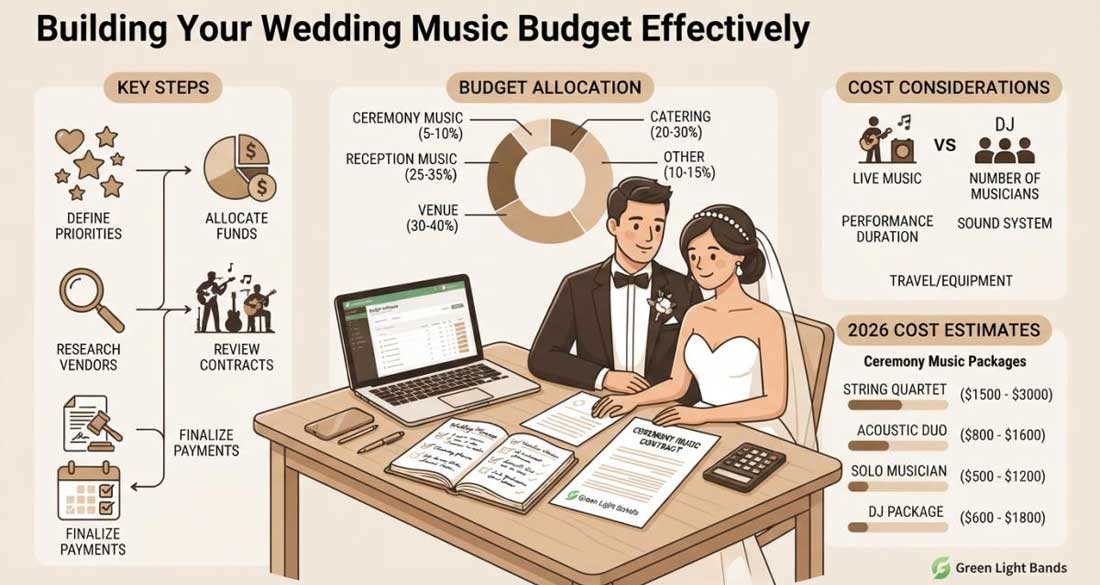
Ceremony music is just one item in your overall wedding entertainment budget. If you’re on a strict budget, you’ll want to spend a larger share of that budget for the music that’s most important to you.
How Much Money Will You Allocate for the Ceremony and Reception?
When determining where to put your money for wedding entertainment, you’ll most likely want to put more money toward the wedding reception since it’s four to six hours long compared to the 45-minute ceremony. On the other hand, the ceremony is where you set the tone for the entire wedding event.
A good split might be 20-30% for the ceremony and 70-80% for the reception. If you’ve hired a live wedding band for the evening, you could spend 15% on the ceremony music, 75% for the full band, and 10% for a DJ to cover any band breaks or late-night dancing. But in all cases, spend the most on what’s important to you. For example, if a string quartet is what you’ve always wanted for your wedding ceremony, make room for it in your budget.
Warning
Avoid the common mistake of booking the cheapest ceremony musicians available then being disappointed by their professionalism or sound quality. Ceremony musicians are visible and audible to all your guests during an important moment. Invest adequately in ceremony music quality.
Look for Hidden Fees in the Contract
It’s always a good idea to read the contract carefully before signing. Sometimes you’ll find hidden fees like overtime, parking, rehearsals, and gratuity (15-20%) on top of the base price. If you have any questions about these fees, or other items in the contract, speak up – get clarity. Sometimes musicians or bands will negotiate their fees. They might give you a discount for an off-peak date or a package deal for providing all music for all parts of the day. The Rhinestone Rodeo Band is an example of a band with transparent pricing. Their pop and country sets are great at keeping dance floors packed, and they’re totally upfront about what’s included in their package and what’s not. So there won’t be any unpleasant surprises.

Rhinestone Rodeo Band: Wedding Entertainment
What’s Involved in Your Wedding Entertainment Budget?
Your ceremony music timeline determines what musicians you’ll be hiring and how long they’ll perform.
Prelude, Processional, Ceremony, and Recessional
Planning your ceremony music will dictate the length of a performance, but also what kind of musicians you’ll want to hire. It’s typical for ceremony music to run from 45 minutes to an hour, broken down into four distinct parts.
A typical timeline is as follows:
Prelude (15-20 minutes prior to the start): As guests make their way in and get seated, the prelude music should be elegant, setting the tone without being overbearing.
Processional (2-5 minutes): The processional is a little more energetic and celebratory as the wedding party comes in. While some opt for modern pieces, there is always room for the likes of Pachelbel’s Canon or Wagner’s Bridal Chorus.
Ceremony music (15-30 minutes): For the vows, readings or any unity ceremonies, it is best to have a discussion with your officiant and musicians ahead of time.
Recessional (1-3 minutes): An upbeat recessional is ideal as the bride and groom make their exit.
Total ceremony music time: 45 minutes to one hour in most cases.
Music for the Cocktail Hour and Reception
Following the wedding ceremony, couples often have their ceremony musicians also play for their cocktail hour, usually for about 30 to 60 minutes. The right background music at cocktail hour will maintain the atmosphere, but still allow for conversation.
If you’re hiring a full live band to provide reception music, ask if they can put together a smaller ensemble for the cocktail hour as well. This is generally a bit cheaper than hiring separate musicians. The transition from cocktail hour to reception should feel natural, which is much easier when the same musicians perform for both. Once the wedding reception gets started, and the full band or DJ takes over, the energy will naturally increase.
Take Emerald Electric Strings for example. With their refined string work they add a certain sophistication to the proceedings. They move from prelude to cocktail hour with a continuity of sound that ensures your guests have a cohesive experience.

Emerald Electric String Quartet for Ceremonies and Receptions
The Smart Way to Budget
There are ways to save money on ceremony music.
Bundle your services: If you are bringing in a band for the reception, see if they can do the ceremony as well. Many will offer a discount of 20-30 percent on an add-on ceremony package versus hiring someone else entirely
Be flexible on dates: Musicians charge more on Saturdays during peak season. A Friday or Sunday, or an off-season date, can come in at a lower cost.
Don’t overlook newer talent: It’s not absolutely necessary to pay premium rates of an established name. Less experienced musicians can sometimes be found. However, be very careful hiring inexperienced musicians as they make your special day unforgettable, but not in a good way.
Live music is not necessary for every moment: Pre-recorded music through a venue’s sound system can work for the prelude. This means you’ll only need to hire live musicians for the processional and recessional.
Negotiation is sometimes possible: The best results come from knowing the local market and then negotiating with the musicians or band in a respectful way. You’re trying to negotiate a lower price, but also balancing the emotion of the day with the practicalities of the budget and location.
The agents at Green Light Bands have turned countless weddings into memorable events. They offer exclusive bands, everything from high-energy wedding bands to string ensembles that suit a more formal vision to amazing solo musicians. Get in touch with Green Light Bands and talk through your options.
Frequently Asked Questions
What makes ceremony musicians more expensive?
Costs vary based on regional living expenses, travel expenses, and the type of performers you hire. Overtime and technical setup fees can also be a pricing factor. Understanding these factors allows for a more effective use of your budget.
Are live bands or musicians costlier than a DJ?
Almost always, yes. Live musicians and wedding bands require more personnel and equipment. On the other hand, a solo acoustic guitarist might be cheaper than a DJ, but a full band will surely run you more. It’s worth comparing quotes for the musicians you’re most interested in, your particular venue, and your wedding date.
What does a good wedding entertainment package include?
Live wedding musicians should be used for the prelude, processional, and recessional at the very least. The package can also include background ceremony music, cocktail hour music, dinner music, and reception music. Make sure the contract is clear on what’s included so there are no surprises.
How early should you book wedding music entertainment?
For the in-demand bands, string quartets, and soloists, 9-12 months out is best. In a slower season you may get by with 4-6 months, but booking early gives you better band and musician choices, as well as the opportunity to iron out the details of your timeline and contract.