
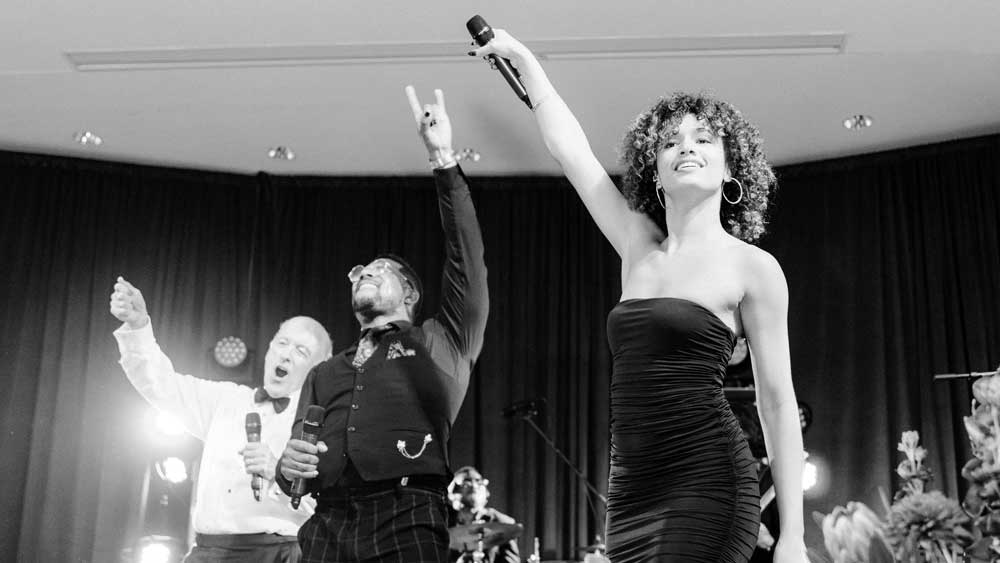
Live Band vs DJ for Weddings
When it comes to the reception, one of the more important choices a couple has to make is whether to hire a live band or book a wedding DJ. We at Green Light Bands have seen thousands of couples come to terms with this decision; in our experience it seldom boils down to “hire what you can afford.” Live bands and DJs are not interchangeable, they provide very different shows for your guests. To be sure of your decision before putting signing a contract we’ve laid out both sides of the issue here.
Many people will say it’s a matter of budget and most guides go along with that. In truth, the right answer is dictated by such things as your venue’s power situation, the age of your guests, your timeline and the sort of energy you’re after on the dance floor when the clock strikes 10.
Live Band vs DJ for Weddings: A Quick Overview
There’s a big difference between a DJ and a live performance band. Take Red Hot Revolution for instance, an in-demand wedding reception band that enlivens wedding parties like you can’t believe. They deliver performances in real time for an atmosphere no DJ can match. Then you have the professional DJ who will act as your MC, see to the timeline and draw on a digital library for a virtually endless selection of pre-recorded material.

Red Hot Revolution: Internationally Acclaimed Live Band for Weddings
Atmosphere and How to Engage the Crowd
You just can’t produce the same emotion from a pre-recorded song as you can from a live saxophonist who delivers a smashing solo while making eye contact with a guest. Our Modern Retrospect band is very popular for this reason; with a three-piece horn section the saxophonist is adept at involving the crowd and filling the dance floor. It’s a feedback loop of sorts. A good bandleader is active and responsive, and will read the room and change the tempo or play an acoustic number or even use a guest’s name. You won’t find that with an algorithm.
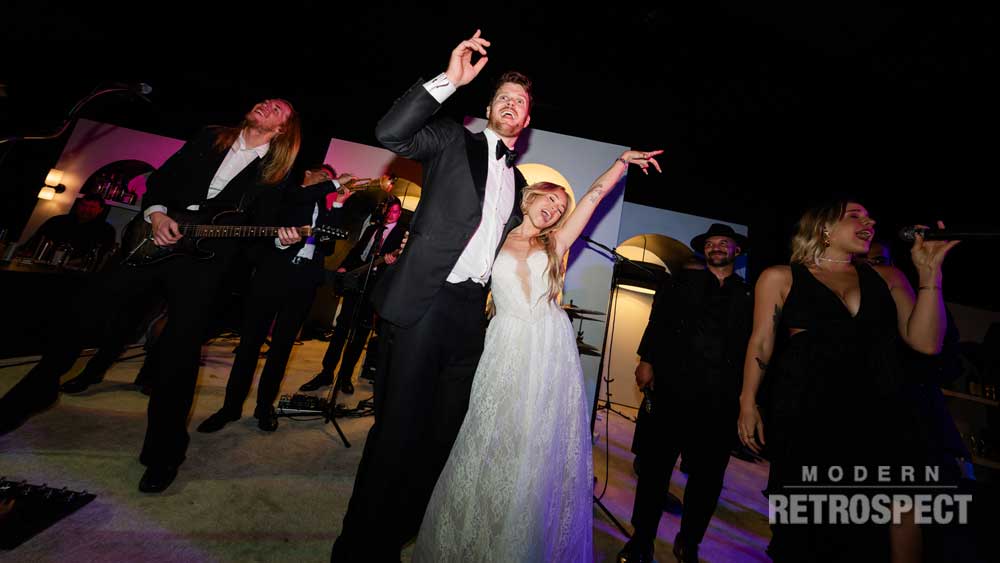
Modern Retrospect Wedding Reception Dance Band
The Case for Interactive Entertainment
A wedding party band is interactive by nature, whereas passive entertainment is just a pre-ordained show no matter how the room is feeling. A professional wedding DJ can be interactive if he approaches it as a performance and not a service for merely playing music from a list. But the distinction is important once dinner is over and the lull sets in and you need to coax people back to the floor. When a band like SHUFFLE plays some well-known classics you’ll have them up from their seats quicker than a DJ with the same songs coming through the speakers. Even those not inclined to dance thoroughly enjoy watching a live band.
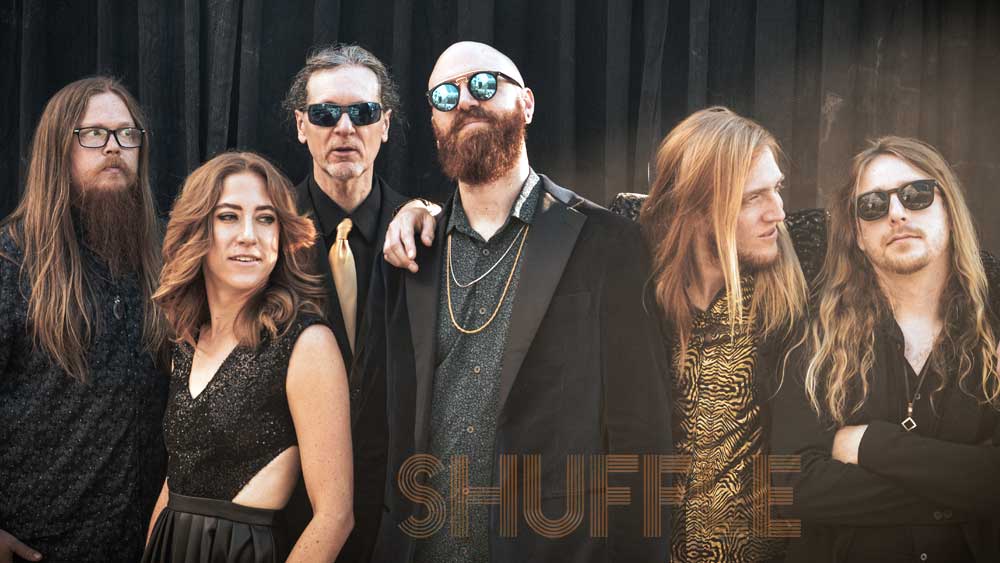
SHUFFLE Wedding Band Playing Classic Rock, Current Pop, Punk, and More
The Cost of a Live Band vs a DJ
Cost is where most couples start, and it’s worth being direct: a live band will cost more, and in many cases much more. This is the rub for most couples. You’re covering the expense of several musicians and their equipment, travel and rehearsal as opposed to DJ and their files. Entertainment is invariably a pricey item on a wedding bill and a world class live band is at the premium end of it. But if you want something so exciting you’ll be talking about it for years to come, then a band is what you go for.
What Accounts for the Large Price Difference?
It’s headcount and the hours put in. A five piece band means five professionals rehearsing your requests. A DJ has his preparation but there’s no cost to him for another song in the library.
For a live band the costs will be driven by:
- How many musicians are involved (an nine-piece is more than a trio)
- Accommodation and distance for travel
- Custom arrangements as opposed to a standard setlist
- The length of the engagement and sets
- If they’re bringing their own sound system
With a DJ it’s a question of:
- Reputation and experience
- The quality of the audio gear
- Any lighting in the package
- If the DJ also acts as an MC
- Travel
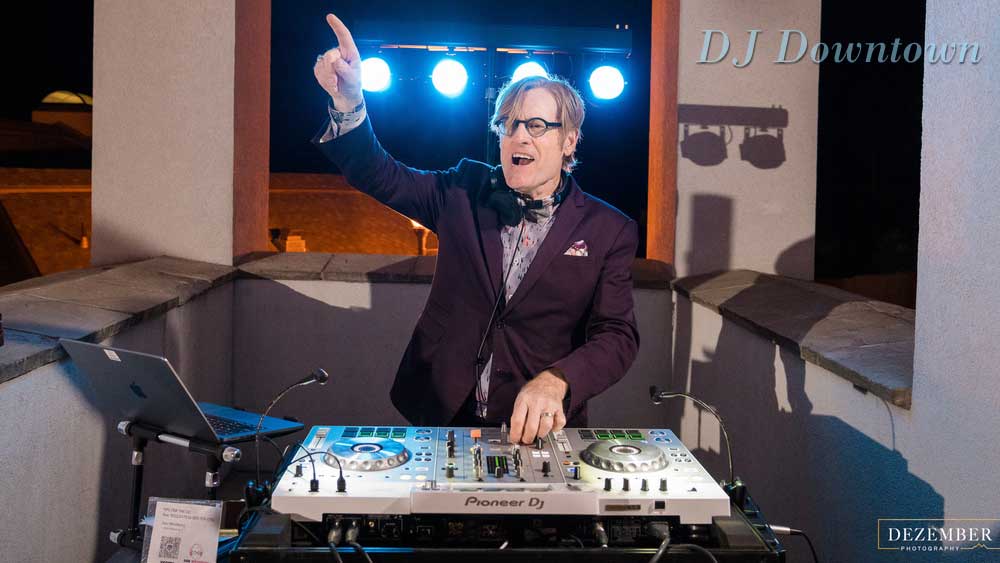
DJ Downtown: Professional DJ for Wedding Dance Parties
The Case for and Against a Live Wedding Band
Advantages of the live option:
- It makes a visually compelling statement at your wedding reception
- There’s an energy that results in crowd engagement from a live act, but you won’t get that with recorded music
- The prestige it brings is something guests can feel
- A good band will read the room and adjust their energy according to the guests engagement level
- They can provide everything from acoustic music for cocktail hour to a full-band for dancing and dinner sets
- With an exclusive band roster such as offered by Green Light Bands, you can have bluegrass, Top 40, country, classic rock, pop, Motown or jazz in one evening, appealing to every age group
Disadvantages:
- You’re paying more than you would for a DJ
- They take up more stage space and demand more power
- If it hasn’t been rehearsed, an obscure song request is off the table
- Expect breaks in the performance (the norm is 45 to 60 minutes of music per hour)
- Earlier access to the venue is needed for the longer setup time
- In the end the sound is only as good as the band’s production values
Then There’s the Professional DJ
Pros:
- A DJ has an almost endless catalog of songs to choose from
- The entertainment doesn’t stop for a break
- The smaller footprint is an asset in small venues
- It’s easier on the budget which frees up funds for other vendors
- An experienced DJ will see to the MCing and timeline without issue
- A DJ can play any genre or era at a moment’s notice
Cons:
- They don’t have the visual appeal or the kind of energy live performers have
- Guest engagement can be more passive unless the DJ is very, very good
- While the playlist may be OK, a run of the mill DJ can only offer background music
- Some will find a DJ less fitting for a formal reception
- Sound is a matter of mixing ability and equipment
Venue Requirements, Space and Technical Riders
Any professional and experienced band will have a technical rider that lays out what the venue needs to supply in the way of power, load-in, stage size and even catering for the players. Make sure you run this by your venue coordinator before signing a contract. An older barn or historic property may need a generator to power a seven-piece band; they generally want a 24 by 16 foot stage and 20-amp circuits to boot.
Questions to ask before you sign:
- What are the precise stage dimensions and power circuit requirements?
- What’s the decibel cap at the venue and has the band worked within it?
- How long is the setup and when do they need to be in?
- Do they have their own sound system?
- In the event a musician is sick the day of the event, what’s the plan?
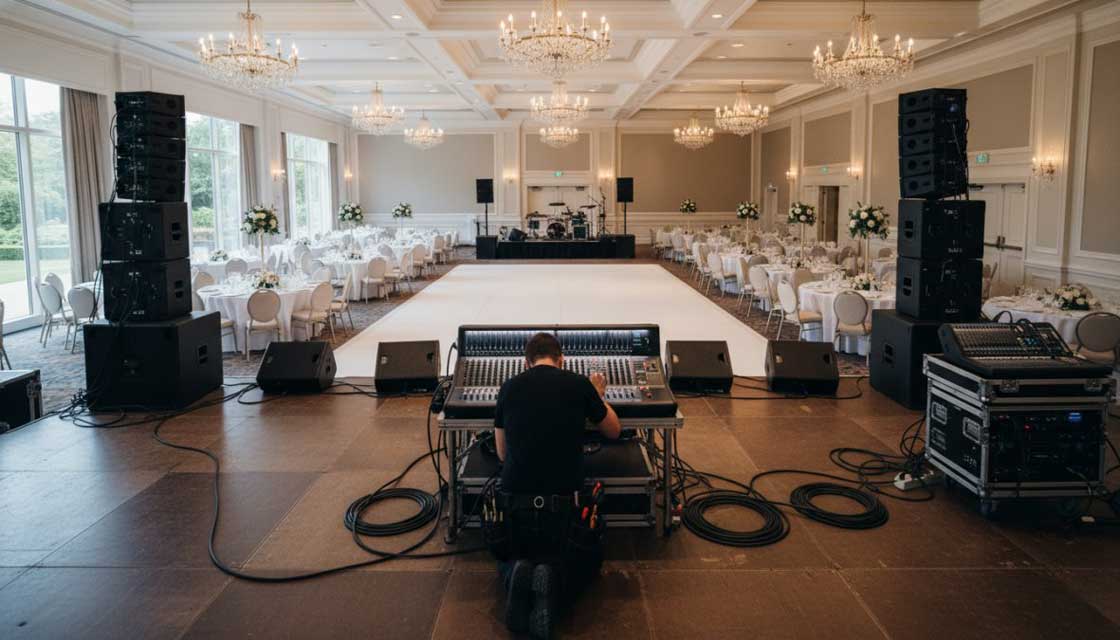
Professional audio technician configuring a mixing board and speaker stack at a wedding venue before an event, with stage monitors and cables visible in a warmly lit ballroom.
Planning the Music Timeline for the Reception
If you structure the schedule properly the reception will have a natural flow to it rather than stalling between the meal and the dancing.
For the ceremony: A string quartet or live acoustic group is where the premium is most evident in setting the emotional tone.
Cocktail hour: An acoustic duo or jazz trio won’t drown out conversations, but will let the full live band complete their setup.
Dinner: Lower volume background music that picks up a little as the evening goes on.
First dance: This is the moment that counts. Band or DJ, both can deliver, it’s a matter of wanting a live performance or the original.
Open dancing: This is where the choice of band or DJ matters most. You could have a Rhinestone Rodeo type of country/pop band pack the floor with their physicality or let a DJ who knows the room do the same with greater latitude.
Last dance: Either fast or slow will make a good closing song.
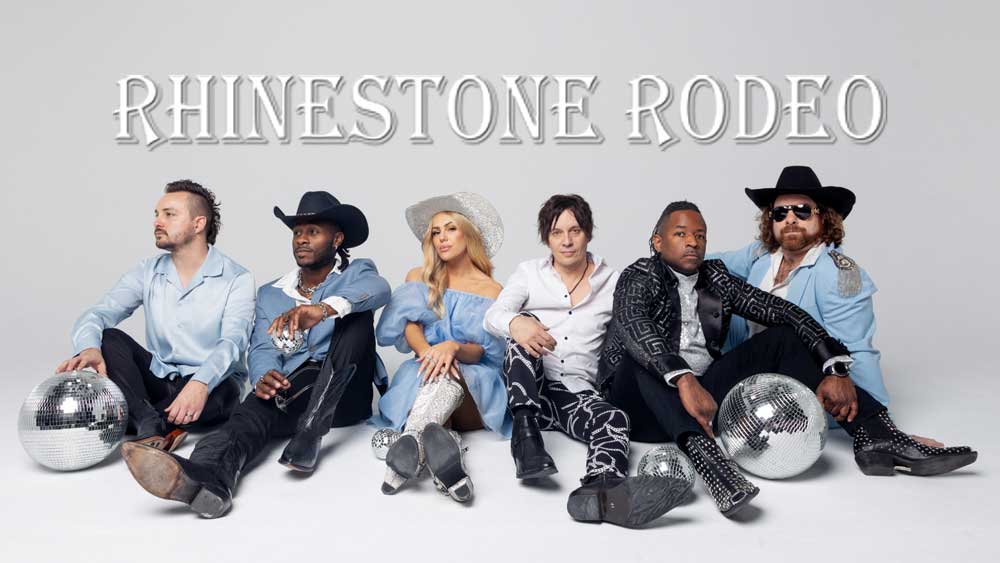
Rhinestone Rodeo Dance Band for Reception Parties
A Hybrid Approach
It’s an underutilized part of wedding planning to use both. You might engage a live band for the cocktail hour and early part of the reception and then hand things over to a DJ for the late night hours. Or you can have the DJ play music for cocktails and dinner, then let the live band loose for the reception dancing while the DJ fills in during band breaks. Either option gives the emotional resonance of live music as well as the convenience of a digital library.
Logistically the venue must have the room for two setups and a transition period, preferably with an event manager keeping tabs on things. There are agencies that will put a band and DJ in one package. It also takes care of the “break problem” as the DJ is there to keep the floor going while the band is on a scheduled rest. A demo video is only part of the story; the questions you ask a wedding band will tell you much more. Make sure to go over this checklist before you put down a deposit on a live band.
Pre-booking Questions:
- Are MC duties included or do we have to engage an emcee?
- Have you performed at our venue before and what does your technical rider call for?
- Tell us about your sets, how many you put on and the length of any breaks.
- What are the contingencies if a member is unable to perform on the day of the wedding?
- We would like to see a certificate; do you have liability insurance?
- Who will we be dealing with to coordinate the timeline?
- Can you accommodate a new song for the first dance and what’s your policy there?
Ask these questions of a wedding band and it’ll become apparent whether they’re a professional band or a hobbyist group. A band that merits being booked will not hesitate to give you straight answers.
Wedding Style and Budget: How to Decide
When it comes to the matter of a live band or a DJ, it’s a question of your vision, the venue and budget.
Choose a live band when:
- The venue can fit the stage and power a full band
- You’re after an event atmosphere for the reception as opposed to a mere party
- You want guests to rave about the entertainment you’ve hired
- Performance is what your guest list is into
- Entertainment is a priority and the budget allows
- The tone of the wedding is formal, theatrical or upscale
A professional DJ is the way to go if:
- There are noise or space limitations at the venue
- Your playlist has an eclectic mix of songs a band would not be able to cover
- You require music all night with no interruption
- The entertainment budget is a bit more constrained
- Your style is on the casual side, modern or festival-like
Or take a hybrid route:
- For some flexibility in the late hours of dancing, with live music to open the ceremony and reception
- If the venue is amenable to either
- And your budget is somewhere in between, allowing you to have it both ways
It’s no coincidence that wedding planners say the chief reason guests have a good time at a reception is because of the entertainment. To prove this, all you have to do is see why clients leave so many rave reviews for a band like Liquid Blue.
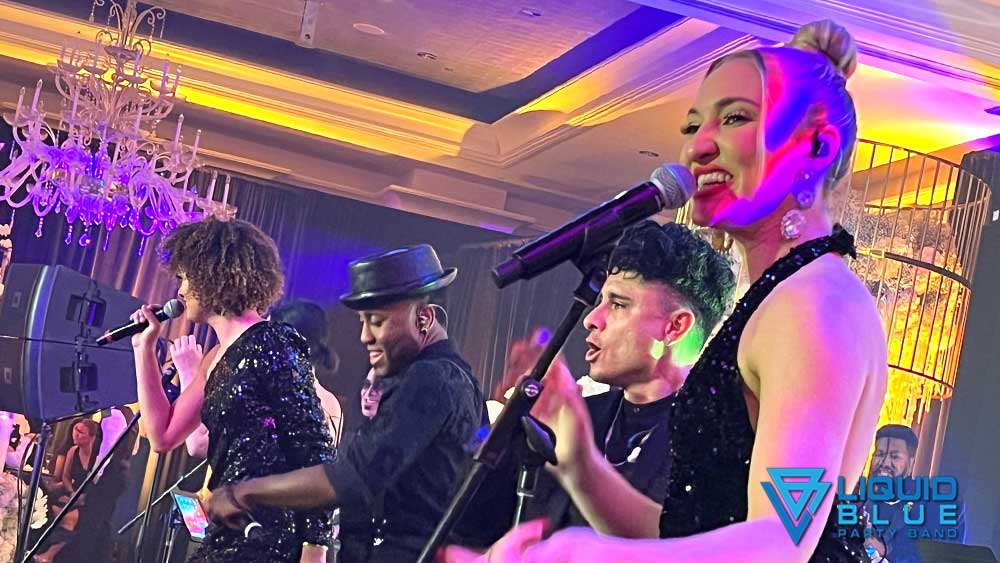
Liquid Blue Performing at an Upscale Wedding Reception
The real question isn’t “band or DJ?” but rather what do you want your guests to be feeling at 9 PM? Be candid about it and the choice becomes easy.
Making the wrong decision on reception entertainment will be felt by every guest come nightfall. Green Light Bands has a roster of professional wedding bands to suit any venue or guest list with bands versed in Top 40, country, jazz, classic rock and others, all with the sound and production to match. They know how to run a wedding timeline and act as MC while seeing to it that the dance floor is filled with guests of all ages. Get in touch with Green Light Bands and put together the right act for your style.
Some Questions We Get Asked
Which is the better option for a wedding, a live band or a DJ?
It’s a matter of what you put your emphasis on. A live band will put an electric charge in the room and interact with your guests in a way that’s difficult to do for a wedding event DJ, but then again a good DJ will be more affordable and has a wider song catalog to keep things going without a hitch. If you have the desire for a visual spectacle and want to really get the crowd involved, a band is the better choice.
In terms of cost, how does a band stack up against a DJ?
You’re looking at an average of $7,500 to $15,000 and up for a wedding band, contingent on the market, the musicians’ experience and popularity, as well as the hours and number of band members. For a full wedding reception a professional DJ will run you somewhere around $1,500 to $3,500. The disparity in price comes down to travel, equipment, rehearsal and the fact of having to book multiple performers. Those with a tighter budget will find a DJ more attainable; for others the extra outlay for live music is part of the whole entertainment package.
Are there any downsides to a live band?
Practically speaking, yes. They have a bigger footprint on stage and increased power needs so the venue has to be able to meet their technical rider. There’s more time for set up and they’ll need breaks between sets (though you can expect a top band to put on some recorded tracks during that time, much as a DJ would). And their repertoire is not as open ended as a DJ’s digital library. Then there’s the higher cost. But with some forethought in your timeline and by checking on venue limitations when you make the booking, these issues can be easily handled.
Before making a booking with a band what should I be asking?
Make sure to cover the basics: the length of your breaks and number of sets, whether they bring their own sound system and audio gear, and if you can add a few songs that are not on their list. You will also want to know their plan in the event of a musician falling ill and if they’ll be acting as MC for the reception. Also ask about the venue requirements for their technical rider. Getting these answers early on will allow for an apples to apples comparison with other bands and preclude any day-of-event surprises.
Is it possible to have both?
Some wedding couples these days are choosing to go for hybrid entertainment. The usual setup is to have the band for the dancing and the bulk of the reception and let a DJ see to the cocktail hour or step in for the band’s breaks so the entertainment never stops. Some hybrid packages will give you a DJ with a live saxophonist for instance. It’s a good way to please your guests provided you have a firm handle on the reception music schedule and coordinate with your vendors. At Green Light Bands we can put together the sort of entertainment you have in mind.