

A Complete Guide to a Wedding Reception Timeline With a Live Band
There’s no room for guesswork when you’re putting together a reception timeline with a live band. A DJ can make an instant pivot, but a live wedding band demands structured time for sound checks, set changes and the like. In short, your timeline is what holds the whole wedding reception together.
We’ve put together the following to give you a clear picture of how to construct a timeline that’ll see your guests in good spirits and your catering running on time, while the band remains as energized for the last dance as they were for cocktail hour.
Top Live Bands from Green Light Bands

Metro Music Club Wedding Reception Band
Metro Music Club
What Metro Music Club puts on is an upscale show of R&B, funk, pop and the dance hits of the day. It’s hip in an effortless way, all soulful and sleek, giving your event the air of an exclusive VIP affair.
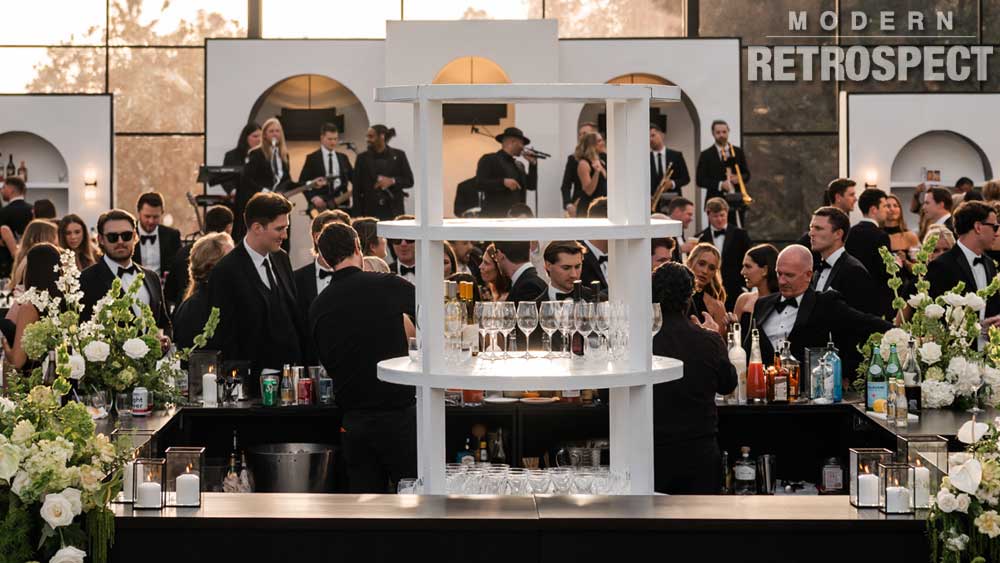
Modern Retrospect Performs at a Celebrity Wedding Party
Modern Retrospect
With three vocalists to match and a horn section hot enough to get you out to the dance floor with your guests, Modern Retrospect has the power to make any celebration a high-octane, decades-spanning party.

Red Hot Revolution Top 40 Wedding Band
Red Hot Revolution
Expect a spectacle of arena proportions from Red Hot Revolution. The vocals are breathtaking, the choreography slick and there’s a light show to match; it’s the kind of jaw-dropping performance that leaves the dance floor full and your guests in awe for years to come.

Liquid Blue Band for High Profile Weddings
Liquid Blue
Having put on an unforgettable stage show for sold-out audiences in over 125 countries, Liquid Blue was made “America’s Best Dance Band” for a reason. They bring world-class Top-40 energy to any event where ordinary will not do.

Music City Groove Reception Dance Band
Music City Groove
True Nashville-grade professionalism is what you get from Music City Groove. Their concert-style medleys of pop, country, rock and soul leave no dead air and have guests of all ages on their feet all night.
What to Know About a Live Band on Your Timeline
You cannot treat a live band as you would a DJ or pre-recorded music. Before your guests are in the door, the band will want to load in. Then there are the transitions between performances and the window for a sound check. An hour is not unusual for a 7-piece wedding band to put their equipment through its paces, balance out the vocals and work with your venue’s system to get the mix right.
If you take the time to understand these requirements, you’ll be more in tune with the flow of the evening. The timing of the grand entrance, the first break, the length of the dinner music and the onset of the more raucous dance sets will have an effect on the rest of your vendors’ schedules.
In What Way Does the Reception Flow Change?
Pacing is different with live music. You’ll need to allow a few minutes from one set to the next for the band to reset and tune up. Make those breaks part of your plan, a good time to cut the cake or listen to a speech. And it’s not just the pacing; the room responds to emotion in a first dance with a live band, and they’ll be off to the dance floor quicker for a live set than they would for a recorded playlist.
Don’t forget to sort out the logistics. Find out what your band considers “dinner music.” Some will have an acoustic guitarist on his own, others a more subdued arrangement. It should be softer, perhaps a smaller ensemble.
And remember that a five-hour hire does not mean five hours of non-stop playing. A band might put in 2.5 to 3 hours in all, broken into sets. Your timeline has to reflect the times they’re on and the times they’re not, because you’ll be left with a DJ, recorded music or nothing at all during their off periods.
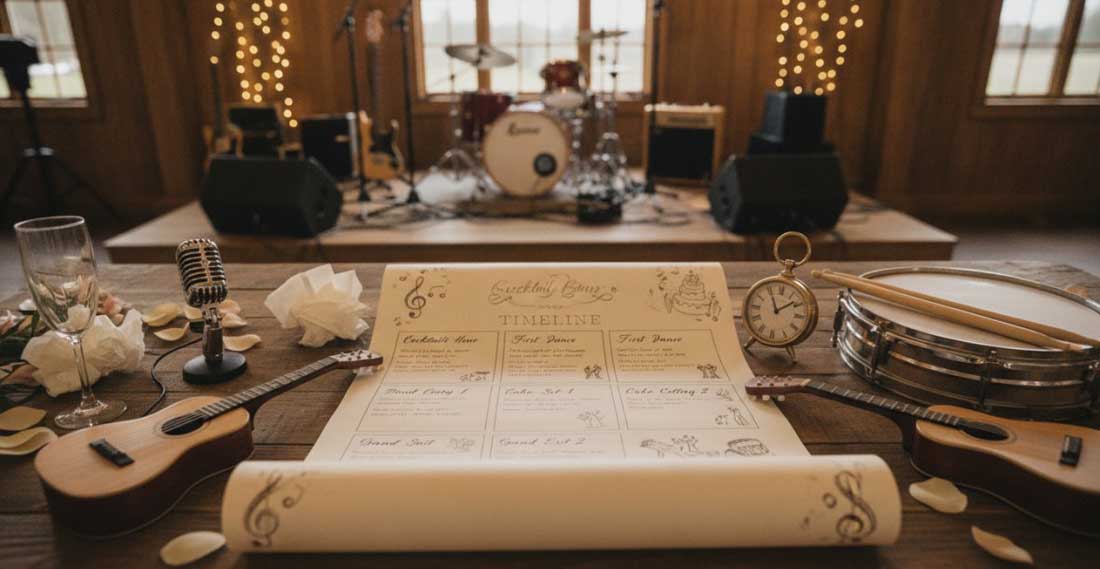
A timeline for a wedding event that includes music for soundcheck, cocktail hour, grand entrance, dinner music, first dance, parent dances, cake cutting, and open floor dancing.
Standard Durations and Performance Windows
From the start of cocktails to the end of the dancing, a wedding reception is in the order of 4-5 hours typically. In that time, the band will generally be performing for 3-4.
A standard contract will read something like this:
- 4-hour reception: Expect 2.5-3 hours of music from the band (a 45-minute closer and 2 x 60 minute sets)
- 5-hour reception: The band will play 3-4 hours (3 x 60 minute sets and a 30-45 minute closing)
- 6+ hour reception: The band will put in 4-5 hours in a number of 45-60 minute sets
Then there’s the matter of noise restrictions at your venue; some have hard stops at 10 or 11 PM by virtue of local ordinances.
An Example of a Live Music Timeline
Take a 5.5-hour reception where the band is scheduled for 3.5 hours in three sets. Here is how a day might go.
2:30 PM – 3:45 PM: Load-In and Sound Check
The band makes their way to the performance area with their equipment. An hour or so is spent on sound check. Drums, bass, keys, guitars and vocals are run through the venue’s system while your sound tech and the band’s man see to it that levels are dialed in and the mix is clear in every corner.
4:00 PM – 4:45 PM: Cocktails and Guest Arrival
As guests come in, the band will pack up for a bit after they’re done with the sound check. Catering will have the cocktail stations ready. A solo acoustic musician or some recorded music is the usual choice for this hour while the band is off.
5:00 PM – 5:45 PM: Grand Entrance
While the guests are having their appetizers and a drink, the band will be on hand at 5:30 for your entrance, a 3-5 minute piece of high energy music. Afterward they will put on 30-40 minutes of cocktail hour music at a conversational volume.
5:45 PM – 6:30 PM: Band Break #1, Dinner Service
With the band on their first break, guests will be making their way from the cocktail area into the dining room. The catering team puts out the first course while a DJ or some recorded music is put on for the transition and the dinner that follows.
6:30 PM – 7:15 PM: A Softer Set for Dinner (Band Set #1)
The band comes back with a set tailored for the dinner hour; if there’s an acoustic guitarist in the mix or a smaller ensemble, they’ll be up. The music is at a background volume so as not to stifle conversation but still give the room a pleasant tone.
7:15 PM – 8:00 PM: Time for Speeches and Toasts, Band Break #2
It’s the MC or best man’s turn at the microphone now. The band has their second break. Following the speeches your caterers will bring out dessert and cake. When the cake has been cut and served, the band will be ready for their closing set.
8:00 PM – 9:00 PM: First Dance and High-Energy (Band Set #2)
This is the band’s longest set of the evening. They will play the first dance and parent dances before turning up the energy to entice your guests to get out onto the floor.
9:00 PM – 9:30 PM: Open Dance Floor
The dance floor is full and the band is playing on, though they may cede to recorded music for a breather.
9:30 PM – 10:00 PM: Band Break #3
The band takes their final break of the night. A DJ or recording is left to keep the dancing going.
10:00 PM – 10:45 PM: The Closing Set
For a 30 to 45 minute final performance the band returns and will end on a song that leaves everyone energized as they head home. This is only an example; one can expect Green Light Bands to have “dance” sets of around 4 hours in all, with a couple of 15-20 minute breaks.
Some Thoughts on Cocktail Hour and Dinner Music
There’s quite a distinction to be made. With cocktail hour music you want something with enough energy to promote mingling and lively talk. For dinner the music should be soft so as not to get in the way of guests speaking over their meal. Most bands will have different arrangements for each. Where a 5-piece rock outfit would be too much for the dining room, a jazz trio or an acoustic player from the same band is ideal.
Pacing and Set List Structure
How the band structures its sets and chooses songs is what gives your reception its flow. The usual wedding band will work to a 2×60 (two 60-minute sets with a break) or a 3×45 format. The former is good for a simpler timeline with less in the way of transitions. The 3×45 gives the band an opportunity to reset and keeps the energy up, and affords you more leeway. We suggest talking it over when you book to see what a good band will suggest for the length of your event.
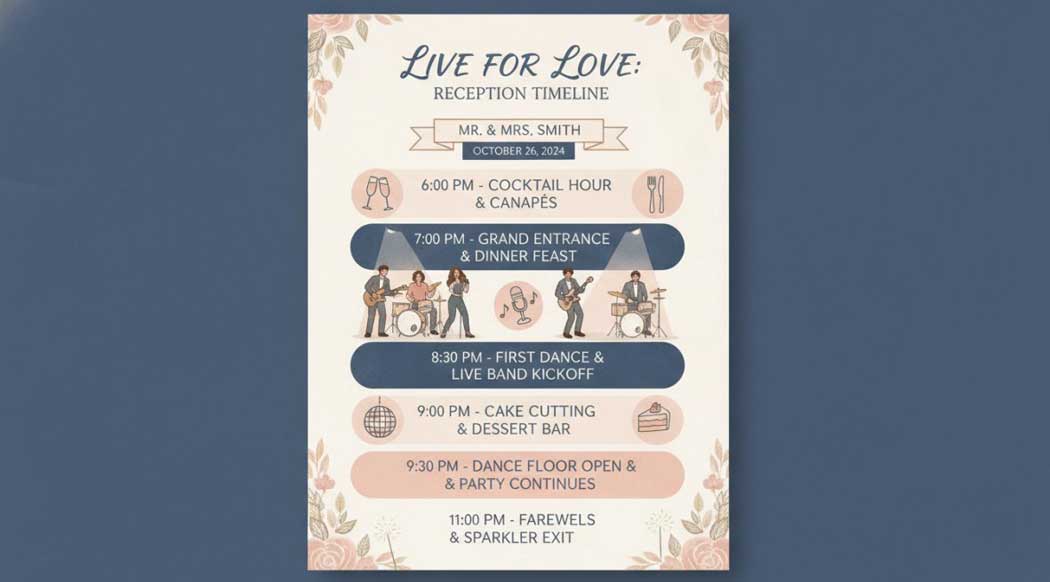
Key moments listed on a reception timeline that includes all main activities and music.
What to Look for in a Live Performance
There are certain moments where you want the band to be live:
Must-Haves
- Grand entrance (3-5 minutes)
- First dance (3-5 minutes)
- Parent dances (5-10 minutes total)
- The closing number (3-5 minutes)
Should-Haves
- Music during cocktails (30-45 minutes)
- Dinner music (45-60 minutes)
- Extended dance set (1 hour or more)
Engaging the Guests with Dance Sets
A well chosen dance set will have a progression to it. Start with medium-energy to draw people to the floor, build the tempo and then peak with the band’s most rousing material before a few slower numbers and a big finish to cool things down. On the other hand, many couples these days opt for high energy dancing during the entire dance portion of the reception – no slow numbers except for the first and parent dances.
On Scheduling Band Breaks
Think of a band break as a strategic part of the timeline, not dead time. You can manage the flow by putting in a 30-60 minute break when live music is not called for.
Break #1: As the move from cocktail hour to dinner is made, let recorded music handle the early service.
Break #2: This is a good time for the toasts. Your MC has the floor and the band can rest for 30-45 minutes.
Break #3: With a longer reception and four or more sets, have the final break at 9:00 or 9:30 when the dance floor is at its busiest. Let a DJ keep things moving until the band is ready for their close.
A smooth hand off between the live band and the DJ is key so there’s no jarring change in energy. The band will exit after a bow and the DJ should be on with a song of like tempo right away. Have a sound check done with both to make sure the volume of the music is in line with the band’s.
And don’t forget to have the band and the catering timelines in sync. Any miscommunication on that front can result in chaos.
A Guide to Timing Your Dinner Service, Speeches and Toasts
For the 20 to 40 minutes that speeches and toasts are in progress, guests will be seated and your band will be off. There’s no point in having the band play while the best man is toasting; the music will drown out the speech.
Work with your caterers to put dinner service on a schedule where the main course is done and dessert has yet to come when it is time for the speeches:
- The band is on break as dinner service gets under way (recorded music).
- Guests have their first course (band remains on break).
- A set of unobtrusive dinner music from the band.
- Main course is served and eaten to the sound of the band.
- The band goes on break and recorded music takes over.
- No live music for the toasts and speeches.
- Dessert comes out (speeches may still be going on).
- The live band is back on stage for an energetic set and the recorded music is off.
Put a written timeline in front of all concerned so there’s no uncertainty.
Load-In and Sound Check
Don’t make the wrong assumption that a sound check can be done in 15-20 minutes; plan on an hour at least. First rate bands will want two hours or more to do a proper setup and check before any guests are on hand. The sample below is indicative only, top tier bands could need more time.
3:00 PM: Unloading of equipment by the band.
3:10 PM: Stage is put in order with drums, mics, keyboard and guitar and bass amps.
3:25 PM: Equipment is given a full run-through.
3:40 PM: The sound tech makes his final adjustments, setting the volume on the bass and guitar, leveling the drums and EQing the vocals.
4:00 PM: All done. The band will put away their gear for a while and take a break.
The venue must be able to accommodate the band with power and water, a place to put the equipment truck close by, a green room for secure storage, breaks and an unimpeded path to the stage. Get confirmation from the venue ahead of the wedding.
Technical Aspects of the Band’s Timeline
What the venue can and cannot do technically will have a bearing on the quality of the performance and the band’s schedule.
Noise Restrictions
Check with the venue prior to booking the band. An urban location may impose a 10 PM curfew on noise, whereas a rural location is likely to be lenient.
Other things to verify at the venue:
- Stage size: Is the stage big enough for the band?
- Power access: Are there sufficient power outlets?
- Sound system: Will the band have to supply their own sound system or is one in house?
- Parking: Can the equipment truck be parked in proximity?
- Load-in/Load-out times: Is there a set time for load-in?
Factor some buffer time into your plans for any constraints.
When a DJ and Band are Both on the Roster
There’s flexibility in the hybrid model where a couple puts on both a band and a DJ; the latter will cover the cocktail hour and late night dancing and the band its allotted sets. But it calls for a higher degree of coordination. Have the band and DJ in direct contact with a common timeline and each other’s numbers if you make this choice.
Pitfalls in Reception Planning
Mistake #1: Underestimating the sound check. It’s an hour affair, start it no later than 3:00 PM.
Mistake #2: Having the band on while the best man is speaking. He will be hard to hear. Reserve the band break for speeches.
Mistake #3: Leaving “dinner music” open to interpretation. Be explicit with the band and ask for a softer touch if that’s what is required.
Mistake #4: Overloading the reception. Decide what the important moments are and be purposeful about them, then let the rest go.
Mistake #5: The band is left without a written timeline. Put one in writing a week or so before the wedding to make sure all parties are in agreement.
Mistake #6: Failing to plan for transitions. They can eat up 10-15 minutes of your time; put that in the schedule and you won’t be in a hurry.
Mistake #7: Not talking to your catering people over band breaks. Make it a point to have your catering manager part of those timeline talks with the band.
Wedding Reception Timelines Can Become Complex
There’s an element of complexity to a wedding reception timeline when there’s a live band, as opposed to having only a DJ, but it’s well worth the effort. A live band adds energy and creates moments that you just don’t get from recorded music. There’s more substance to a grand entrance, the first dance has a certain authenticity, and the dance floor will be full sooner.
Plan with some forethought. Lay out your timeline months ahead of time and see to it that your venue, catering team and band are all clear on it. Anticipate any potential for confusion and deal with it then and there. Allow for some leeway in the transitions.
For a live band that delivers, Green Light Bands offers a varied mix of Top 40, jazz, country and classic rock along with professional sound and production. Our exclusive bands know how to work a room and will adapt to the technical requirements of your venue and your timeline without missing a beat. Give us a call to add life and energy into your reception plans.
Frequently Asked Questions
What is the length of a live band’s performance at a reception?
You can expect most bands to put in 4-5 hours, subject to your budget and the way you have your reception laid out. That might break down to an hour for cocktail hour, 2-3 hours of dancing and 1 to 1.5 for dinner. When you book, have a conversation with the band to make sure their presence aligns with what you have in mind.
At what point does the band start?
Normally they’ll be playing while guests come in for cocktails to set the mood. Once dinner is underway the volume is turned down, then after dinner you’ll have your high-energy sets and perhaps an encore to close things out. It’s a good way to keep the evening dynamic.
Speeches and toasts – how do you handle those?
Let the band leader know the timing beforehand. The band will cut off 10-15 minutes prior to give the sound tech a chance to put the microphones in place. Then they can pick up with background music or move on to the next part of the show. An MC and a band in communication will avoid any awkward lulls.
Are breaks a necessity for a live band?
They are. Between sets a band will take 15-20 minutes to rehydrate and reset. You can have a DJ or some recorded music cover for them in the interim. Work with the band in the planning stage to time these breaks so they do not interfere with the first dance or when the dance floor is in full swing. On the other hand, you will occasionally find a band that will agree to play for as much as four hours straight without a break – but be prepared to pay a hefty sum for the privilege.
How do you coordinate the band with dinner and catering?
A detailed timeline is in order for the band, complete with when the cake is to be cut, the speech schedule and the start and end of the service. During dinner the band will play songs softly until everyone is settled. Get this plan in front of them two or three weeks before the day of the wedding. It’s the best way to preclude any conflict and have the reception run its course smoothly.