
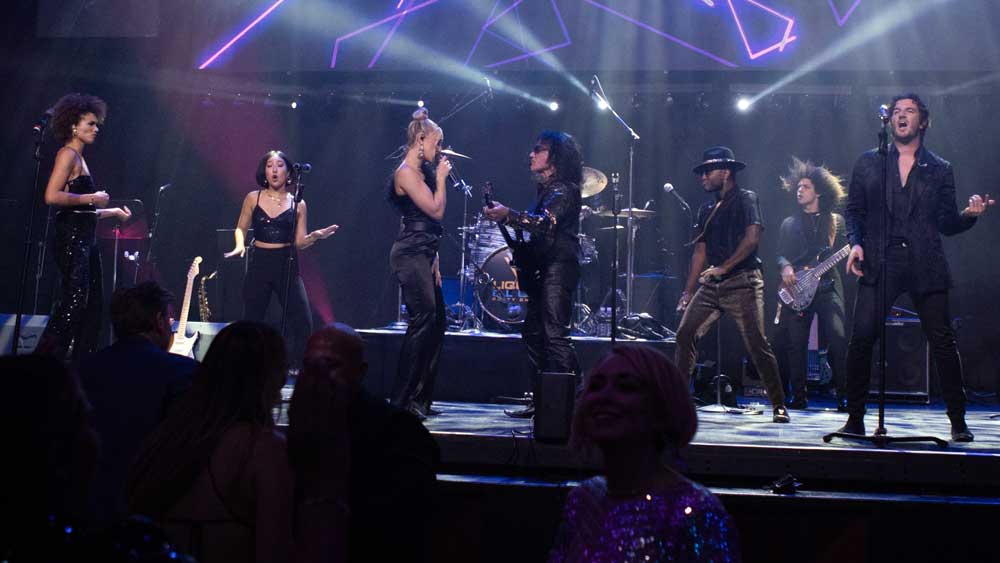
7 Types of Live Entertainment to Drive Brand Launch Engagement
There’s an expectation among attendees of a new product launch. They want something more than just a presentation; they want an experience that will stick with them. That’s where live entertainment comes in, and especially a live corporate band, turning an average product launch into a memorable experience. The event should generate its own buzz and encourage social media posting by guests after the event is over. Success of a product launch lies in sourcing live entertainment that’s right for your brand voice and budget while still moving the needle on engagement.
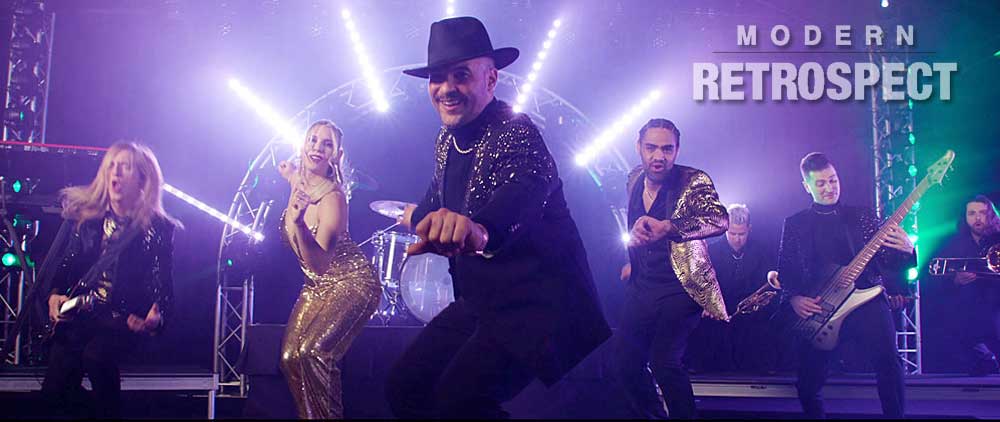
Modern Retrospect Performs at a Corporate Product Launch Event
Some “go to” corporate bands such as Modern Retrospect or Rhinestone Rodeo have a way of wowing a crowd time and again.
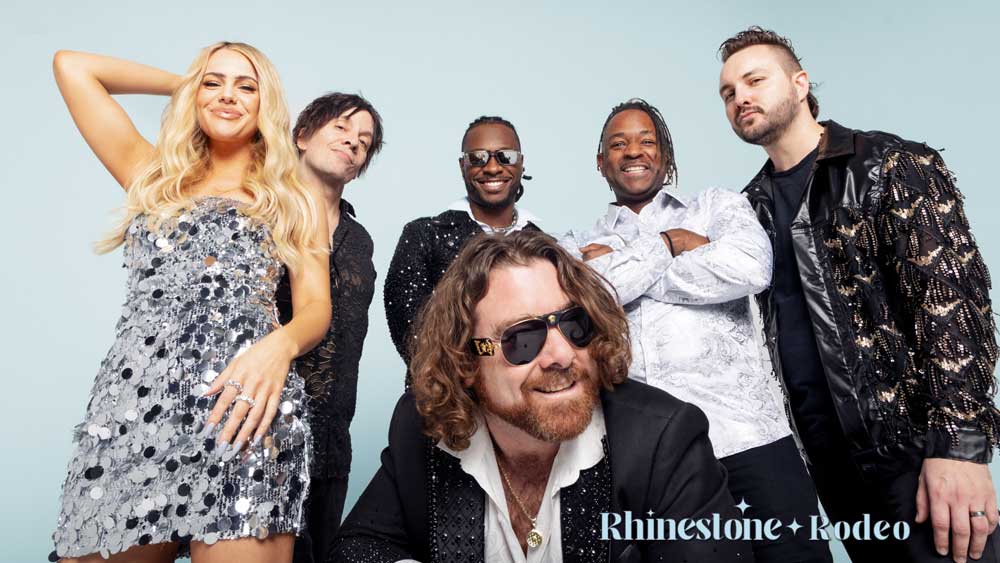
Rhinestone Rodeo Band: Corporate Live Music Entertainment
Types of Live Entertainment for Product Launches
Live Corporate Event Bands and DJs
For corporate product launches, live bands work particularly well when you want to set a sophisticated yet energetic tone.

Metro Music Club Band for Corporate Branding Events
For an important brand launch, you can’t put a price on the energy a live band brings, which is why bands like Metro Music Club and Red Hot Revolution are considered the gold standard. A full corporate band has a presence that’s felt as much as it’s heard, making them ideal for setting a tone that’s both sophisticated and lively.
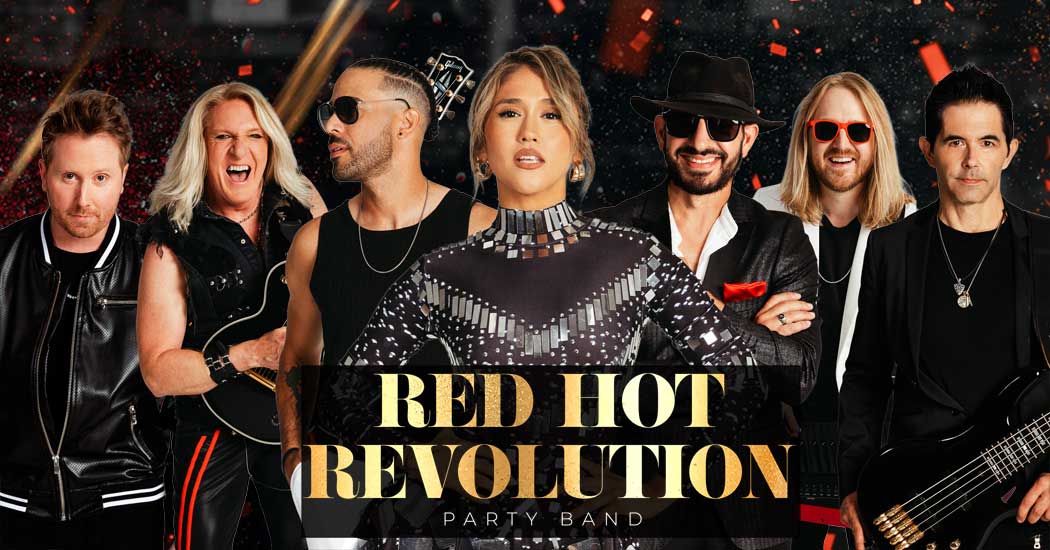
Red Hot Revolution: Corporate Event Live Band
Then there’s the flexibility a good DJ offers. An experienced DJ will read the room and make adjustments to the tempo or song choice as the night moves forward. Increasingly, brands are choosing to go with a hybrid performance – say a DJ backed by a live vocalist or saxophone – to get the best of both worlds in terms of energy and authenticity. Green Light Bands is one booking agency that specializes in this high-energy approach across various styles of music – from Top 40 to jazz, country to pop, customizing their song lists to your specific audience.
Specialty Acts and Interactive Performers
This is how you create a “wow moment” for people to videotape with their mobile phones. We’re talking about mentalists, aerialists or speed painters who can paint a live mural with your product in it right up until the official announcement.

An Aerial Silk Performer Wows a Crowd at a Corporate Product Launch
Interactive performers are another interesting option; they break down barriers between the stage and your guests. You might have a saxophonist do a piece during the keynote address and then have guests join in on some percussion during the networking portion. It’s an emotional connection you don’t get from passive entertainment.
Technology-Integrated Performances
The latest trend is to merge the physical with the digital via projection mapping, drone shows, hologram displays, or interactive LED systems. Picture a professional singer in front of a background being transformed in real time, or a band playing while drones form your product name above the crowd. Such hybrid experiences will be appreciated by a tech-savvy younger audience, and they make for excellent video content when you want to show off a drone display of your logo on social media channels.
Why Immersive Experiences Are Good Options
Static presentations have their place for some companies, but they lack the emotional feel of a live performance. Studies indicate that when you add music and movement to a corporate event, brand recall and information retention increase substantially. And because these live moments are so compelling, they have attendees wanting to share on social media. A simple 30-second video clip of a live specialty act can put your product launch in front of thousands of people without spending a dime on advertising.
A live performance also fosters a sense of community. When people feel like they’re part of the event, they develop a stronger connection to the brand and are more inclined to become advocates for your product.
Product Launch Entertainment Examples
Let’s say you’re an automotive maker unveiling an electric vehicle. You can bring in an electronic act with a beat boxer to underline the futuristic angle of the vehicle. Or a CPG company (Consumer Packaged Goods company) rolling out a new drink/beverage that hires a reggae band to put their retail partners at ease and promote sampling. A software firm recently had a jazz trio play during an executive keynote address for a B2B platform (Business-to-Business platform) to convey a certain professionalism. In each of these examples, the entertainment was selected to support the brand and product message.
What is the Right Fit?
Look at your demographics and the purpose of your event. A luxury brand will most likely choose to go with classical or jazz music, while a startup company may want modern jazz or electronic music. If the event is for a product reveal, you want higher energy music to build anticipation. For a networking event, ambient music is better suited so conversation can flow. Think about what impression you want to give to your attendees? In what way does the entertainment underscore and accentuate your brand message? You need to be sure the performer’s style is in keeping with how your brand is viewed.
Venue and Logistics
The venue will at least partially determine what can and cannot be done. An outdoor space for 5,000 people can accommodate a drone show or a full live band, while a casual 100-person boardroom can’t. So before you book anything, check the technical side of things: the sound system quality, stage size, electrical and power capacity, load-in and parking.
Timing is another factor. A 3-4 hour band performance is great for an evening reception, but for a product reveal you might only need 30 minutes. For a multi-stage affair, several 15-20 minute acts might be more appropriate.
Booking Event Performers: Best Practices
Technical Requirements and Sound
Get a detailed tech rider from the entertainer/performer before any contract is signed – you need to know exactly what they require in terms of microphones, monitors, power, stage size, etc. If you’re hiring a live corporate event band, make certain your venue’s sound system can do it justice. Some corporate venues have systems good enough for a speech, but not for live instruments, in which case you’ll have to rent professional audio gear. However, most professional live bands have their own sound system, relieving you from the responsibility of bringing in your own gear.
It’s also smart to have a technical rehearsal, perhaps the morning of or day before the event. That gives the talent a chance to solve any possible problems and set their monitor levels before the guests arrive.
Contracts and Professional Standards
Make sure to get everything in writing. The contract needs to cover the date of the event, location, duration and compensation, as well as who is responsible for what and what happens in the event of a contingency problem. The rider will clearly spell out the logistical demands, so go over it and negotiate wherever it makes sense. Be clear on payment terms up front – a 50% deposit at signing and the remainder a week or two before the event is standard. Also ask if you’re paying for travel and setup time in addition to performance time. Check on insurance as well, because most venues will insist the performer has liability coverage.
Budgeting for a Brand Launch
Costs can be high or low depending on the caliber of the act and how complex the production is. As a general rule of thumb, plan to pay 15-30 per cent of your total budget toward entertainment. On a $100,000 event that means $15,000 to $30,000. Make room in the budget for a dedicated sound engineer, professional lighting, and possible equipment rental.
Making Entertainment Part of the Story
Good live entertainment does more than just occupy a set period of time, it tells your brand’s story. With a new and exciting product you want music with high energy. A luxury product calls for something more sophisticated and refined. Think of the entertainment as an extension of the product. A fitness product launch could use a high-energy act, while a relaxation or meditation app would be better served by soft sounds.
Have some background noise during registration, then ramp up the energy for the reveal. Some brands even have the band use their own platform’s playlists.
Measuring ROI and Repurposing Content
There are plenty of photos and videos that can be created from a live show. Hire a videographer or photographer to get the highlights and the product reveal. Use an event hashtag to get your attendees to post their own photos and videos. From one three-minute performance you can pull 10 or 15 pieces of content for your website, LinkedIn, YouTube and social media.
Then measure the return on investment. Look at the social media engagement, if media picks it up, if sales or inquiries come in from the launch, and if people stayed longer and converted at a higher rate?
Done right, live corporate entertainment makes a product launch an experience worth talking about. Green Light Bands can make that happen with our high-energy shows in Top 40, country, jazz, pop, and classic rock, made to fit your vision. Call us to see how we can make lasting memories for your audience and give your brand message the amplification it deserves.
FAQ
Which live entertainment is most effective for a brand launch?
You’ll find that everything from live bands and DJs to specialty acts such as mentalists or speed painters can be very effective. Technology-driven performances like drone shows are also popular for driving engagement. The right option depends on your venue, how the brand is positioned and who makes up the audience. A high-energy musical act will hold an attendee’s attention, but an interactive performer is more likely to put on a show that guests will post about on social media. For a Gen Z crowd, tech-forward acts provide the kind of visual content that makes for good shareable social media material and puts your launch in front of people well after the event has ended.
How does one go about selecting the proper entertainment?
It’s best to begin with an understanding of your brand personality and the audience you’re targeting. Ask yourself if the occasion calls for some dance-floor energy, a more refined atmosphere or something interactive. Look at what the venue can handle in terms of space and technical specs. You should review a performer’s portfolio and video from previous events to see if their style aligns with the story you want to tell. Then have a discussion with your event production team on the logistics and how the act will fit in with product reveals or other presentations.
What’s a reasonable budget for this kind of live performance?
There’s wide variation in cost depending on where you are, the length of the show, the technical demands and the experience of the talent. Booking direct versus using an agency will usually make a difference, but hiring the cheapest act rarely works out as well as you’d expect. Travel and equipment needs also factor into the budget. We recommend getting quotes from several sources and looking for any line items you might otherwise miss, such as sound engineers or the time required for setup. It’s wise to put aside some extra funds for unforeseen contingencies and perhaps a backup plan so the launch proceeds without a hitch.
Measuring ROI on live entertainment
Look at the numbers: social media activity, hashtag volume and any user-generated content from the day of the event and during its aftermath. Registration figures and survey results will tell you how engaged your attendees were. Keep an eye on media coverage and any change in brand sentiment. The footage from the performance can be shown on digital channels, reaching those who did not attend. In your follow-up campaigns, you can see how these entertainment moments have moved the needle on leads and purchase intent.
Best practices when booking
Top talent should be secured at least six months ahead of time to leave room for any customization you may want. Get the technical riders and equipment details from the acts early on. Make sure the contract is in order regarding liability and that you always have clear lines of communication with the performer on setlist flexibility and anything tied to your brand narrative. A pre-event sound check is always a good idea. Let your production team handle the technical side of things.