
Best Corporate Event Entertainment Ideas
For an event planner there are few decisions with as much at stake as the selection of the entertainment, and yet you’ll find most guides reduce it to a matter of checking off boxes. The experience of Green Light Bands is the opposite; having supplied entertainment for thousands of corporate events, using the best corporate event entertainment ideas, we can see the pattern: what makes an event an experience that people will continue discussing for months, and not something they forget as soon as the party is over, comes down to the entertainment.
Below are tips on how to select entertainment, come up with a workable budget, and evaluate entertainment that has your desired effect on your event’s ROI, team morale and the engagement of those in attendance. The frameworks we’ll discuss can be applied to any occasion, from an annual conference of 2,000 to a client appreciation dinner of 50.
The trouble with typical guides is that they’ll tell you the “what” but neglect the “why” or the “how well.” Even if the entertainment you book has all the talent in the world, it can still seem flat if it’s not in keeping with your audience demographics, the theme of your event, or your corporate culture.
Good Corporate Event Entertainment Cannot Be Overstated
With the need to win over clients it’s important to hire top talent. It’s also necessary to treat guests at company events in a way that mirrors the corporate culture. Event planners will tell you that entertainment is what drives the numbers when it comes to attendee engagement, the metric they care about the most.
You want your event to elicit some emotion, whether it’s laughter or a sense of shared accomplishment, so that it forms an associative memory with your brand. In the case of employee appreciation this is a morale booster you can actually measure; with clients it creates a loyalty no amount of sales calls can match.
Then there’s the matter of the hybrid workforce. Since some of your audience will be remote in this case, you have to plan for two audiences, one in the room and one on a screen. Planners who don’t make the distinction are going to lose half their audience come the first act.
What constitutes corporate event entertainment is the array of interactive experiences and performances that further the goals of the event and leave lasting impressions on the guests.
Live Music and Corporate Bands: An Essential Anchor
There’s no more dependable way to anchor your corporate event than with a live corporate event band. From the cocktail hour to the dance floor in full swing after dinner, the ambient energy is unlike anything else. In fact, a band will establish the mood of the room before a guest is even aware of it.
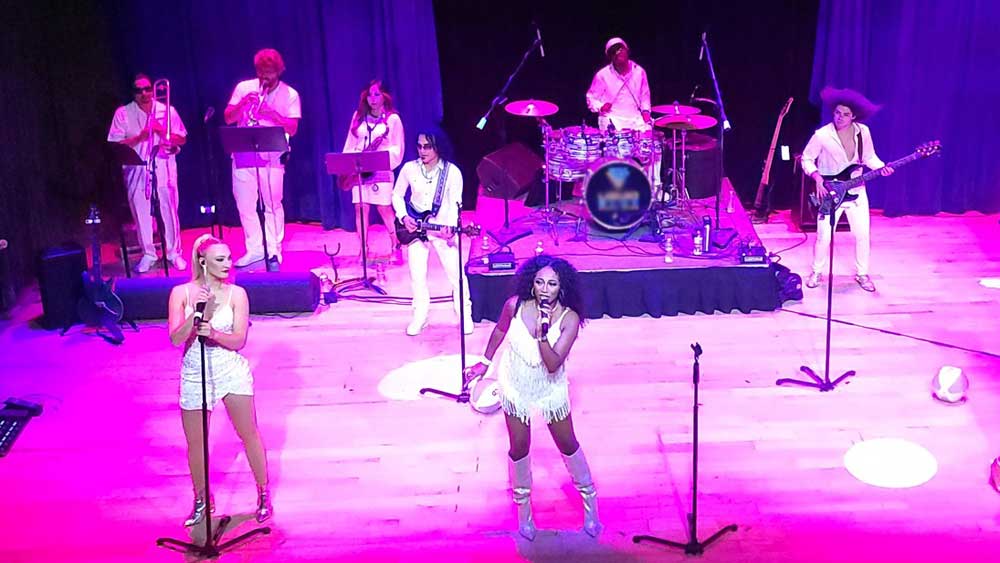
The bands we offer at Green Light Bands are diverse for the simple reason that a corporate audience is often multi-generational. A 300-strong gala will have its share of executives in their sixties, young hires and clients from every industry. We have Top 40, country, pop, Motown, bluegrass, Latin, jazz and classic rock to ensure setlists are versatile enough to hold the interest of all comers. Some of our exclusive corporate event bands:
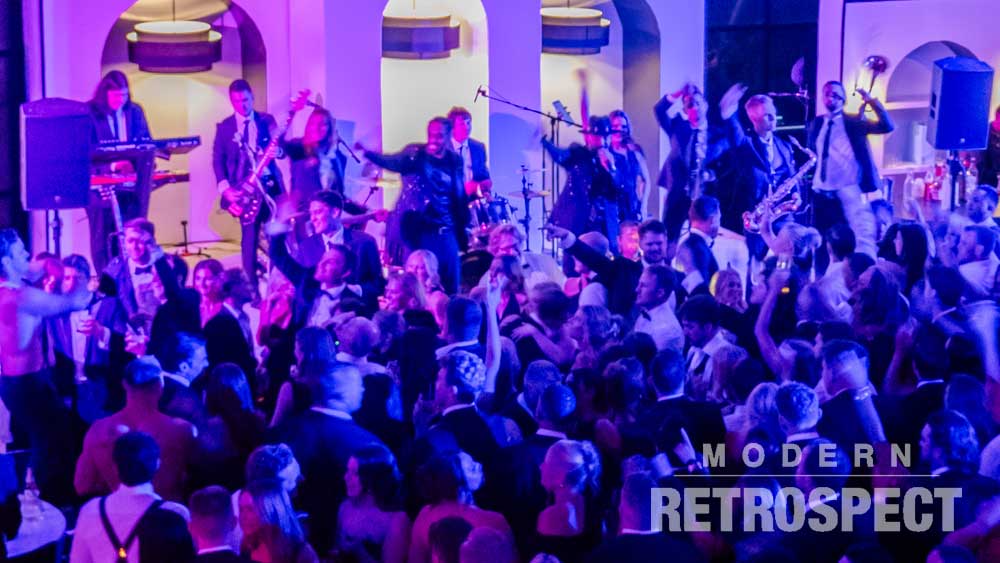
Modern Retrospect: for an audience-interactive experience with high energy and throwback hits that are hard to forget.
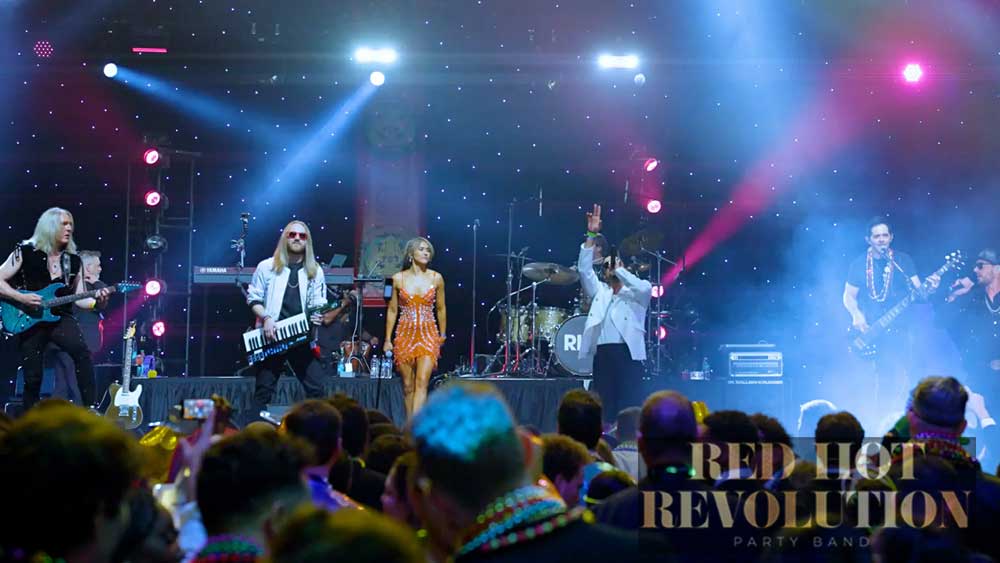
Red Hot Revolution: a party band with the bold vocals and nonstop energy to suit a high-profile event or celebrity wedding:
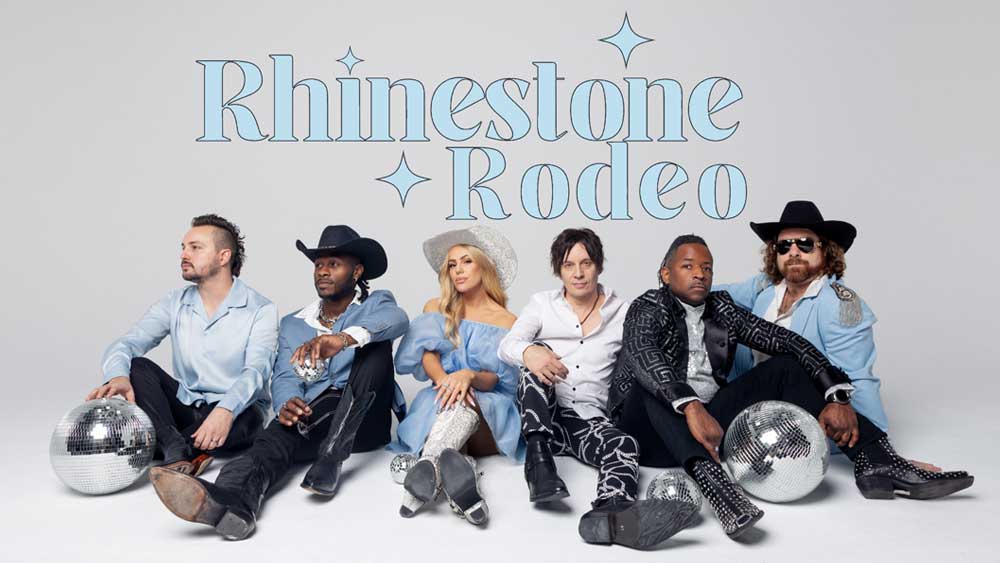
Rhinestone Rodeo: a country/pop dance band with modern appeal and plenty of danceable charm:
A Question of Genre
In the end the style you pick says a lot about your company. Jazz and acoustic are fine for a cocktail reception when conversation is in full swing. But if you’re looking to fill the dance floor then Top 40 and classic rock are the order of the day. Don’t make the error of settling for safe background music when the occasion calls for something with more life. If the agenda has you moving from dinner to awards and on to dancing, you want a corporate band capable of modulating, soft during dinner and up to full strength once the dance floor is open.
The Case for a Live Band Over a DJ
You might want to hire a DJ for the flexibility and cost. But a live band brings a human element to the room that a DJ is not equipped to provide. Good musicians will put on a show, interact with the crowd and alter the tempo as needed, making for the kind of unscripted moments that get videotaped on mobile phones and talked about long after the party is over. Where social sharing and engagement are concerned, KPIs (key performance indicators) will invariably be superior with a live band. A DJ is a sensible option only if the budget is the overriding concern and dancing is of secondary importance.
Activities that Add Life to the Room
Over the last 5-10 years we’ve seen corporate event planning turn from passive to interactive. People are not as content to sit and be entertained today. Interactive formats deliver better networking and survey results.

A group of corporate employees in business casual attire laughing and competing in an interactive game show activity at a company event, a host in the foreground holding a wireless microphone and gesturing toward a bright display screen.
Magicians and Mentalists
This is perhaps the most underexploited format for the corporate world. A mentalist at a cocktail hour is an icebreaker of sorts, affording the guests a common experience and a topic of conversation while you’re networking, something a stage performance would not allow. A stage mentalist can weave into their act company-specific details for the larger crowd, making for a more personalized affair.
Comedy Acts and Roasts
The key to corporate comedy is a comedian who has a feel for the room. You only need to look at the roster of Green Light Booking or similar agencies to find talent that has been properly vetted for the corporate environment; this goes a long way towards eliminating the risk of something that might be acceptable in one culture and offensive in another. Then there are corporate roasts, which are ideal for close teams marking a special occasion. Provided they’re well facilitated with the right guardrails, they’ll elicit the sort of unforced laughter you can’t get from a hired hand. Comedy hypnotists also have their appeal with a big audience.
Interactive Game Shows and Casino Night Setups
Whether it’s a trivia tournament or a Price is Right type of competition, game shows can put 50 to 500 people in a competitive frame of mind and encourage them to be less reserved with colleagues. A casino night does much the same thing: at a table of play-money poker or blackjack strangers will often become a team all on their own.
One word of advice for casino nights: make sure the vendor is supplying professional dealers and not merely the equipment. The dealer is effectively the host of the table and if he or she cannot engage the guests the whole thing can go cold.
Food and Drink Interactive Stations
There’s a triple purpose to having interactive food and drink stations: they’re a form of hospitality, which is not only an activity, but a means of starting a conversation. With a mixology class or live cooking demo, guests have a natural place to congregate without the formality of networking. It’s a way of showing thoughtfulness to clients, or for an employee activity it can be a good natured contest among the staff.
Team Building Activities That Are Also Entertainment

A teambuilding activity: Guests write and perform songs they have created in separate groups with the help of professional musicians.
It’s more prudent to view team building and entertainment as one and the same in the budget rather than separate line items. TeamBonding, for instance, has a catalog of over 100 programs with the facilitators to see them through, all with the aim of better morale and cross-functional relations. Some options to consider:
- Collaborative songwriting: Professional musicians will put groups through the motions of writing and performing an original song. In a deadline driven fashion it’s like any project but far more enjoyable.
- Charity builds: Have the teams vie to put together care packages or bicycles for donation. There’s engagement in the competition and meaning in the result.
- Escape rooms: For a low stakes test of problem-solving and communication, either in person or digitally for a hybrid event.
- Culinary contests: An Iron Chef kind of cook-off with mixed teams and a chef to guide them.
What’s not made clear about these activities is the importance of the debrief. Put in 15-20 minutes for a structured reflection or the participants will have had fun but not take anything away from it.
VR Experiences and Immersive Technology
VR (Virtual Reality) is no longer a novelty in the corporate sphere. At an in-person event a VR station makes for a self-contained pod during a cocktail hour. Where the event is entirely virtual, 3D venues and spatial audio give avatars a shared physicality that video conferencing is no match for. But you should allow for 20-30 percent of your guests to forgo the headset because of motion sickness, so give them something else to do.

Virtual event games and activities where remote attendees participate with corporate guests in attendance.
Gamification and Online Event Platforms
When it comes to scale, gamification is the best virtual option at hand. With an event app, Whova is one platform that will put leaderboards, photo contests and networking challenges in front of your attendees through its engagement and gamification tools, for the kind of sustained interaction you want to see over the course of an event. In a hybrid setting this is all the more useful; a trivia leaderboard makes no distinction between an attendee in the ballroom and one at home on his laptop, putting them on a level playing field.
Planners with distributed teams can offload a good deal of the administrative work to virtual team building services such as Confetti. They have 100 or more virtual experiences to choose from and will take care of the logistics from end to end, making for a smooth integration with Zoom, Google Meet or Microsoft Teams.
Accessibility, Inclusivity and Sustainability in Corporate Entertainment
When events fall short on accessibility and inclusivity it shows, and it’s an avoidable cost to a company’s reputation if some thought is put into planning beforehand.
For corporate entertainment, accessibility is a given, not something to be addressed later. It’s about delivering an experience where those with mobility, hearing or visual impairments, or cognitive differences are still able to take part. A matter of practicality:
- Make sure the venue has a wheelchair accessible dance floor and stage
- Have captioning or sign language available for any hosted entertainment, game shows or comedy
- Lighting at interactive stations should be suited to a guest with low vision
- There should be quiet zones for anyone with sensory sensitivities when the entertainment gets loud
- Check that dietary needs can be met at every food and drink station
- Run down the accessibility protocols with your hosts and performers ahead of time
As for inclusivity, the entertainment should not alienate by virtue of age, religion, culture or physical ability. You would do well to review the material of a comedy act, or make certain a game show does not have trivia for only one demographic. If there’s a casino night, have non-gambling options for those with personal or religious reservations.
Sustainability calls for caterers who compost and source locally, vetting vendors for their restorative practices and using local talent to keep travel emissions down. The Events Industry Council says that for many corporate clients a sustainable practice is now a necessary requirement rather than just a preference.
ROI and KPIs for Corporate Entertainment
Don’t mistake attendance figures from a post-event survey for measuring ROI. To determine ROI you have to tie the entertainment to business results.
Green Light Bands has a three tier approach:
Tier 1: Engagement Metrics (immediate)
- The rate of attendance against those invited
- How full the dance floor is during a live set
- Interactive activity participation rate
- Social media mentions and photo sharing during the event
Tier 2: Experience Metrics (post-event)
- Net Promoter Score from post-event survey
- Specific entertainment satisfaction scores by activity
- Qualitative feedback on memorable moments
Tier 3: Business Outcome Metrics (30-90 days post-event)
- Retention among clients after an appreciation event
- Whether employees in attendance are more likely to stay on
- Pipeline advances at a sales function
An event with high marks in the first two tiers will invariably be reflected in better Tier 3 numbers; the positive feelings engendered for your brand at the event translate to the business relationship.
Making the Most of Your Corporate Event Entertainment Budget
First-time corporate event planners are often confused by how to put their budgets to work. One planner might find that a $20,000 entertainment tab is not necessarily what makes an event good when compared with one at $12,000; it’s the way you allocate funds that counts, not the sum total.
A few sound principles for the budget:
- Put your money where it’ll have the most impact. The audience will better appreciate and remember a headline comedian or live band than they will four so-so acts that have been cobbled together with the same amount of cash.
- Don’t put off booking. In the thick of the corporate season (Q1 and Q4) top talent can be tied up 6-12 months in advance. Wait and you’ll either pay through the nose or be left with second-rate options.
- Make a distinction between AV production and the entertainment itself. Put aside 20-25% of the entertainment budget for staging, lighting and sound; even the finest talent is no match for a shoddy production.
- Allow for contingencies of 10-15%. It’s the only way to ensure a technical hitch doesn’t turn into a crisis.
Selecting Entertainment in Line with Your Objectives
Planners who don’t have a goal in place will invariably be left with an act that’s all technique and nothing for the event. Make outcomes your starting point.
Audience and Event Type
You have to factor in the demographic as well. If you put the same format before a multigenerational financial services firm and a tech company made up mostly of millennials, the reaction will be worlds apart. If there’s any question, run a survey on some attendees beforehand.
Checklist for Booking and Vendor Management
An event can be undone in the vendor management stage, so go over the following with each booking:
- Before price is even on the table, verify the talent is still available for your date and venue.
- Get a copy of the complete technical rider, including load-in time, stage size and power needs.
- A detailed contract should be reviewed and executed.
- See that the agency or talent has liability insurance in order.
- Set up a call with the performer well before the event to get on the same page as to the audience profile and any customization required.
- Be clear on the down payment and the payment method and terms.
- Sort out the day-of details such as set length, break times and the window for a sound check.
- Designate one person to be the point of contact.
The signed contract is not the finish line for vendor management, a mistake some people make. That pre-event call is your opportunity to head off trouble. A performer who knows what you want and what not to touch will put on a better show than one who is unprepared.
A Quick-Reference List
We’ve put together a list of the top entertainment ideas for corporate events, sorted by objective for the planner in need of a handy reference.
To see your attendees dance and be fully engaged:
- Hire a live corporate band with a setlist that can do Top 40 or classic rock, or one suited to the room
- An interactive game show of the professional variety
- A casino night with proper dealers
When the aim is to foster some networking and conversation:
- A close-up mentalist or magician to work the crowd
- Food and drink stations where guests can be hands-on (chocolate tasting, sushi, mixology)
- Have them put their skills to the test in a collaborative cooking contest
For team building purposes:
- An escape room, either hybrid or in person
- A songwriting workshop with a facilitator
- A charity build event with an element of competition
Virtual and hybrid affairs call for a different approach:
- A platform that gamifies the event with its challenges and leaderboards
- Trivia over a virtual link with a host
- Cooking or cocktail classes where the ingredient kits are shipped out
And for making a lasting impression of prestige at a gala:
- An orchestra or live jazz
- VR stations to be had during cocktails
- A stand-up comic from a vetted agency who is suitable for a corporate setting
The Professional Convention Management Association’s resources on event planning will tell you that the most effective corporate events have a mix of at least two kinds of entertainment: something passive in the way of a live performance and an interactive component. It’s a way of catering to all attendee tastes and maintaining the energy from start to finish.
But a great corporate event is not made by the size of the entertainment budget, it’s the fit between what you put on, the goals of the event and the make up of the audience. Do the math right on that alignment and the outcomes the entertainment produces are worth the cost.
Then there’s the matter of hiring a corporate event band. A planner does not simply book talent and then hope for good luck if they want genuine crowd engagement. Green Light Bands, a booking service for corporate entertainment, offers high-energy live bands that play country, jazz, classic rock and Top 40 to put every demographic on the floor. Their setlists are as versatile as the production and sound values that come with the booking; they’re the anchor of your event. Reach out to Green Light Bands about your date and we’ll find the band that best suits your corporate audience.
Frequently Asked Questions
What are some low-cost options for corporate event entertainment?
Our advice on the budget is to go for interactive activities that don’t carry a heavy production price tag, such as an improv comedy act, a DIY station for food and drink or a trivia game show. If it’s a virtual event, Confetti and other platforms have per-participant pricing that’s hard to beat. You’ll also get your money’s worth from a live band; they hold the attention of the room for hours and in doing so obviate the need for several different acts and the attendant vendor management.
Is it better to have entertainment that’s interactive or of the passive sort?
There’s no question that an interactive format will lift morale and engage attendees more. Game shows, magicians and the like get people talking and participating, which goes a long way to cementing a positive culture in the company. A live performance is fine as a complement to set the mood at a reception or dinner but should not be the only thing on offer for the evening.
What works for a remote or hybrid team?
With a hybrid group you can do well with an online trivia night or an escape room. For larger events you might stream an interactive game show or a live performance to those not in the room so the experience is the same for both audiences. Platforms such as Whova have the gamification tools for this, or you can ship off the requisite kits for a collaborative cocktail or cooking session.
How is ROI measured?
You want to look at KPIs of both types. On the quantitative side there are the post-event surveys, lead generation at a client appreciation function, social media activity and attendance. Qualitatively, you have brand sentiment and what the employees have to say. In the case of team building, check back a few weeks down the line to see if it has done anything for collaboration. Make sure you have your criteria for success in place before you book entertainment, and evaluating the investment is a straightforward matter.