

A 2026 Guide for Finding Professional Bands for Events
Any event is only as good as the music you’ve hired, and yet it’s a decision with such impact that most planners don’t give it its due until well into the evening.
The Case for a Professional Band
There’s energy at events with live music; the dance floor will be full sooner, your guests will stay longer and the whole occasion will become an “unforgettable night” rather than just a pleasant dinner. It’s all about doing your homework to find the right band for the right crowd. The National Independent Venue Association has done research into entertainment trends at live events and their findings are very clear: when asked to rate the experience, guests invariably put live music at the top of the list.

Modern Retrospect Posing with Peter Cetera, Singer and Founding Member of the Popular Rock Band Chicago
If you’re in the market for the best live event bands, consider Modern Retrospect or Red Hot Revolution. They’ve been turning heads at Fortune 500 company functions and celebrity weddings and parties all around the world with their brand of high energy.
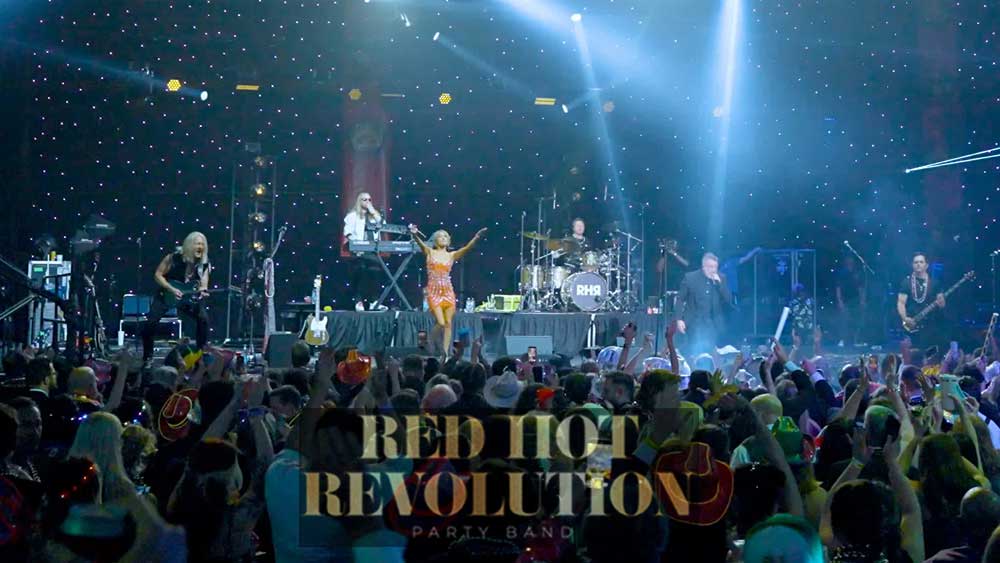
Red Hot Revolution Professional Live Band for Corporate Events, Weddings, and Other Special Celebrations
Professional musicians shouldn’t ever be put into the same category as a vendor. They’ll be the emotional core of the event you’re planning. We’ll get into the nitty-gritty of how to vet, contract and negotiate with a band, including technical requirements and other details one doesn’t see in most guides.
Put Your Budget and Audience First
Before you look at a band roster, look at your guest list. Planners have a habit of getting excited about a band without first considering who’s going to be at the event. You can put on a black-tie corporate gala and a funk band will have the floor to themselves; the same band would be the life of a bachelorette party. Let the formality of the occasion and the venue point you in the right direction with your search before any promo videos are even viewed. And set an entertainment budget to start with, so you have a figure to work from and no time is wasted on your outreach.

Liquid Blue Holds the Official World Record for the World’s Most Traveled Band
Genre Versatility
A live band has to be able to cover several music styles in a set. With a mixed-age audience there’s no option but to have this kind of versatility if you want to avoid an empty dance floor after the opening dance set. Liquid Blue and Rhinestone Rodeo are two world class bands that will ensure your guests are happy and the floor is full.

Rhinestone Rodeo: Professional Dance Band Performing at a High Profile Event
Make inquires as to how your potential bands deal with a diverse crowd. The finest professional musicians will go from classic rock to Motown to Top 40 and it’ll be one continuous flow of dance music without a break. A band with a rigid identity is fine for a concert, but when it comes to hiring bands for weddings and corporate functions you’re paying for the ability to be versatile.
DJ or Band?
The band vs. DJ decision comes down to budget, atmosphere, and flexibility. A DJ can be hired at a lower price point and will give you seamless transitions and a larger selection of music. But a live band brings a visual element and can improvise with the audience in real time. At a corporate event a band tells everyone you have invested in your guests; at a wedding pre-recorded music can hardly match the feeling of a live performance. If money is an issue, hiring both is an option we’ll come to shortly.
Booking Tips for Finding Professional Bands for Events
Live band booking tips that actually work: When asking for client references, don’t give all your attention to the most impressive credit on the resume – ask for two or three reviews from similar events as yours. A 500-person festival is a different beast than a 75-person private dinner.
To Book or Not to Book an Agency
An entertainment agency will handle the contracts and do the vetting for you, but you’re paying for the privilege. Commissions can be anything from a small percentage to a steep markup. Then again, you get a single point of contact for logistics and the use of exclusive talent with standardized contracts. When you book a band directly there’s no middleman to get in the way and it can be a more open line of communication with the musicians, but on the other hand, if a band doesn’t have an agent it may very well speak to their inexperience and possible lack of professionalism.
Some of the best live bands are only available exclusively through an agency such as Green Light Bands, so going direct to book these elite bands won’t happen. Top booking agencies make exclusive arrangements with high profile bands so they can put their energies into performing and leave the marketing, contracts and negotiations to someone else. Plus, a band booking agency is a good source of protection for those planning an event.
Questions to Ask Event Bands Before You Commit
Before putting your John Hancock on a contract, ask questions of the band such as performance logistics, technical needs, repertoire, contingency plans and the terms of the contract. Don’t skip over these items or you’ll have gaps to deal with on the day of the event.
A practical checklist:
- What does a standard lineup look like in terms of numbers of musicians?
- How much leeway is there in the setlist and how long do you need to if I want custom songs?
- How long are your dance sets and breaks?
- Are we to supply our own sound engineer and sound system or do you?
- What is your timeline for setup and sound check and what does that mean for venue access?
- If a member of the band is down with illness or has an emergency, what’s the protocol?
- Any prior experience at this venue or a comparable venue?
- What does your quoted price cover and what will incur extra charges?
Band Fees and How to Negotiate
Popularity, market, the type of event and how long the performance is will all factor into the price of a live performance band. Knowing this makes for a better negotiation than just demanding a discount. It’s best to concentrate on scope when you want to negotiate without ruffling feathers. Offering to put up local lodging to ease travel, or booking an off-peak date, or fewer sets will go further. Be aware that the top bands won’t usually even consider coming down in price.
What to Expect by Way of Deposit
The norm among professionals is a 50% deposit upon signing to hold the date, with the balance to be paid a week or two before the event. A force majeure clause will be included in most contracts; if there’s a likelihood of having to move the date, make sure to put in a provision for that.
Logistics, Riders and the Legalities of an Event Band Contract
There’s always the possibility of things going wrong and a proper contract is there to protect both sides. Any band that’s unwilling to commit these to writing is not being professional.
- Legal names of the parties involved
- Venue address and the start and end times for the event date
- Number of sets and how long the performance is
- Payment methods, schedule, the size of the deposit and total fee
- Technical rider (stage, power, equipment)
- Access for load-in and sound check
- Hospitality and meals for the band
- Liability and insurance
- A force majeure and substitution policy
- Overtime provisions in case the event runs over
Technical Rider: What You Need to Know
The rider lays out the technical conditions and space needed to put on a show. Misinterpret it and you’ll have chaos on your hands. Review the following:
- Stage dimensions: Make certain the venue has a stage with the correct width and depth for the whole band before you book.
- Sound system: If the band is not bringing their own, the venue must and it has to be of the right speaker configuration and wattage.
- Sound engineer: For an event of 100 or more guests this is a necessity not a luxury, so if the band does not come with one you’ll need to.
- Power: There will often be a need for dedicated lines and a certain amperage. Check with facilities at the venue.
- Monitor system: Musicians have to be able to hear themselves or the quality of the performance will suffer.
The Audio Engineering Society would tell you that shortfalls in live sound requirements, power and monitoring are the two most common technical problems at a live event.
Insurance and Liability
It’s the responsibility of a professional band to have general liability insurance for property damage and personal injury. As the organizer you’ll want to see:
- That the band has active coverage commensurate with the size of the event
- Your venue is an additional insured on their policy
- Clarity on whether your event insurance extends to entertainment incidents
Don’t wait until the week of the event to call for a certificate of insurance.
Post-Booking Communication Timeline and the Hybrid Band/DJ Performance Model
There are issues a band or DJ by themselves cannot entirely solve, which is what the hybrid model is for. The live band will perform for the high-energy peaks of the evening; the DJ is there to see to it that cocktail hour and dinner service flow with uninterrupted music and to make the transitions between sets. It’s an effective way to run an event with different phases without incurring the expense of a full band for six hours on end.
Then there’s the matter of post-booking communication. After the deposit has been paid and the contract signed, you’re not finished:
- As soon as you have signed the contract, talk with your venue to confirm the technical rider and get any conflicts solved as soon as possible.
- At 60 days out, provide the band with a thorough timeline for the day, from load-in and sound check to the program and meal service.
- Thirty days prior is when to reconfirm logistics and to put the setlist and any special requests in stone.
- A week before the event, let the band know the final number of guests and be sure about parking and load-in.
- On the morning of or the day before, speak directly to the band manager to confirm arrival and any changes at the venue.
A structured timeline is something professional bands like to see; it tells them their technical requirements will be seen to and that the event is in order. More than that, it forestalls the kind of surprises that can arise from poor communication.
Common Pitfalls in the Search for a Professional Event Band
You don’t make the costliest errors at the time of booking, but in the weeks leading up to an event when things are overlooked.
Price is not everything. After finding professional bands for events that you may be interested in, don’t ever book one based solely on which band gives you the lowest quote. If you do, you just might miss the mark on the actual cost. If the band in question has no liability insurance, sound engineer or sound system of its own, those costs will show up in other ways. Make a price comparison between bands based on the performance fee in total.
Do not neglect to look over the technical rider. Leave it to chance and you’ll find on the day of the event that the stage is too big for the venue, or there’s a sound engineer you haven’t added to the budget, or there are power needs you cannot accommodate.
Have a plan. What if the lead singer is indisposed on the morning of your event? A professional band will have someone of equal caliber to step in. Absence of such a backup is a glaring omission.
Allow for setup. Give a seven-piece band with a full backline and engineer two or three hours to set up and do a sound check; make room for it in your access times.
The period after you have booked should not be met with silence until event week. Missed details are invariably ones that were not put into words.
The Event Industry Council says that breakdowns in communication with entertainment vendors are a prime source of problems on the day of an event. Consistent follow-through from the signing of the contract is the remedy.
What separates a good event from an unforgettable one is the planning and the live entertainment. Do everything right and the night will be what it should be. You wouldn’t want to leave the choice of music to happenstance. Green Light Bands offers top professionals who cover Top 40, jazz, folk, classical, bluegrass, country and classic rock with performances that are high energy to ensure the dance floor is full from the opening set to the last number.
With Green Light Bands, you can expect the kind of professional production and sound that befits any occasion, from a wedding, celebrity or corporate function to a private party, festival or community event, no matter the scale. To put together a quote for your event with a team that makes live entertainment what it should be, the focal point, get in touch with us.
Frequently Asked Questions
How can I find and hire a dependable band?
First, have an idea of your entertainment budget and the make up of your audience and event. A good place to look is a booking agency such as Green Light Bands. Make sure to watch some video demos, see what clients have to say in their testimonials and check that the band operates with a proper performance contract and technical rider. For weddings and the like, you’ll want to book at least six months if not a year ahead.
What questions should I ask before hiring a band?
What is your deposit policy? How many sets will you perform and of what length? Will you use a setlist? Do you have liability insurance? Also ask about the band’s technical rider (PA system, stage space, sound engineer) and whether they have experience at venues similar to yours. It’s best to get these answers early on to avoid any expense, but also to make certain the band suits the atmosphere and logistics of the event.
Are all bands similarly priced?
Definitely not. Fees can run the gamut depending on the type of event, how far the band has to travel and the number of musicians and hours involved; a wedding or corporate affair will usually set you back more than a private party, but not always. In negotiating you might ask for a weekday rate or shorten the set, or bundle in sound production, but with top live bands don’t count on a discount. Be clear on what the quote includes because some will include the sound equipment and a dedicated sound engineer, while others will not.
Should you go with an agency or directly to the band?
For the uninitiated or when the stakes are high, an agency is definitely the simpler route and far less of a risk. They offer exclusive bands and provide the vetting and accountability that a large corporate event or wedding calls for. You may save a bit of money by booking direct, but then the responsibility of vetting the band is all yours – and that doesn’t always work out so well. An agency will have a broader roster to choose from, complete with the necessary contracts and client references.
If you are to have a contract, what must it include?
There’s a list of items a good contract should cover: the date and times of the event, venue, fee and how it’s to be paid, the deposit terms, balance terms, details of the technical rider including PA and stage dimensions, overtime, the number of sets and breaks, confirmation of liability insurance and a force majeure clause. Omit any of this and you could find your event production derailed by a dispute.