
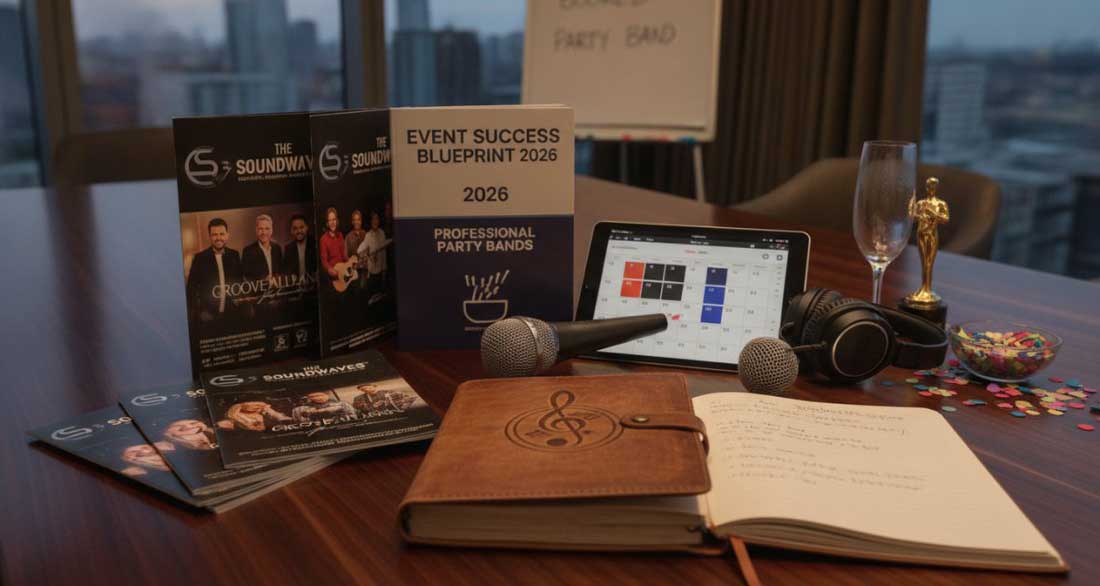
2026 Guide to the Advantages of Hiring Professional Party Bands
There’s more to be had from a professional party band than simply background music for your event. We at Green Light Bands can attest to the way live music turns routine get togethers into occasions that linger in guests’ conversations for years. What separates an evening you forget from one you don’t is the choice between a recorded playlist and a live band. Below you’ll learn how to make a decision about a live band with some assurance, set a budget, know what to look for in a contract, and put your entertainment dollar to good use.
7 Reasons for Hiring Professional Party Bands for Your Event
You can define a professional party band as a group of seasoned and talented musicians, the kind who play original or cover material for corporate and private functions with the ability to interact with an audience that a playlist can’t. Here are a few top corporate event bands that always wow crowds:
Modern Retrospect, for their high-energy take on hits that fill up a dance floor:
Liquid Blue, an award-winner whose global appeal doesn’t let the crowd excitement abate:
Metro Music Club, polished performers of any style who infuse a celebration with modern energy:
Red Hot Revolution, an explosive outfit with powerhouse vocals and the sort of charisma that commands the room:
What about the Atmosphere?
Even the best high-tech sound system with pre-recorded tracks is no match for the ambiance of live music. There’s something about the feel of real instruments and the sight of a performer on stage, not to mention the element of chance in a live show, that draws people in. You’ll find your guests staying longer and engaging more.
A Packed Dance Floor and the Energy to Fill It
You can’t download or pretend when it comes to stage presence. A pro will size up the room and make adjustments to the volume, tempo and song choices on the fly. If the dance floor begins to empty, a competent party band will play a classic hit or ratchet up the energy right then and there. It’s simply the difference of live entertainment over a pre-loaded DJ set.
Making a Human Connection
With a professional band the interaction is direct. They’ll play a request, make note of a birthday or anniversary, and in doing so put on a show that feels personal and not manufactured. That’s what gives guests the sense of having been there.
Versatility in the Setlist
The better bands have a deep well of songs to draw from across many genres. Prior to the event they’ll go over your must-plays and the songs you want left off to suit your particular crowd.
Sound Quality to Match the Venue
Amateurs and professionals part ways when it comes to sound. The latter come equipped with a dedicated sound engineer, monitors and their own sound system. They’ll see to noise ordinance compliance and set the volume to fit the space, whether it’s a 500-capacity ballroom or a small jazz room, without being told.
Memories Made
Recorded music can create a mood for an event, but a live performance makes moments of it. Whether it’s a musician co-opting an audience member for a dance or an impromptu sing-a-long, these are the types of things that an event is remembered for.
Experience and Reliability
When you pay for a professional live band you’re paying for the fact that they’ve done this hundreds of times and can deal with a power problem at the venue or catering running late. They’re reliable, they’re on time and have the back-up gear to prove it.
Wedding and Private Events: Live Band or DJ?
If the priority is atmosphere and engaging your guests in a way they’ll remember, the answer in the live band vs DJ argument is clear. But where the budget is tight or the venue’s acoustics are an issue, a DJ is the more sensible option.
On the Subject of Acoustic and Amplified Sound
For a garden ceremony, cocktail hour under low ceilings, or in a private dining room, an acoustic arrangement is usually best. A fully amplified party band needs the square footage for the stage, ceiling height for the sound to disperse and ample power, usually in the form of several 20-amp circuits. Make sure to get your venue’s noise limits and any power limitations in writing before you book; a band that’s fine in a 300-person ballroom will be too much for 100 guests at a restaurant.
Budgeting for a Live Party Band in 2026
As for the average cost of a performance, you’ll see wide variation in price depending on the type of event, the market and how large the band is. In major markets, you can expect to pay $7,500 to $12,500 and up for a 3-4 hour engagement with a professional 7 piece party band.
Pricing Variables
- Band size: Fees are commensurate with the number of musicians; you’ll put more down for a 10-piece band with horns than a 4-piece ensemble.
- Length of performance: The going rate is for 2-3 sets, any hours beyond that are an added expense.
- Travel and lodging: If the band is not in your market they’ll charge travel fees.
- The season and day: Saturday nights during the height of wedding season are priced at a premium.
- Niche Specialization: Expertise in Motown or swing, or a good tribute act, will run you more.
- What’s included: Some have sound and lighting as part of the package, others leave it to you or your venue.
Should you use Booking Platforms or an Entertainment Agency?
An agency such as Green Light Bands will see to the vetting of the bands, logistics, and contracting for a nominal booking fee, as well as vouch for the band. For an event where the stakes are high, there’s value in the protection an agency provides.
Technical Riders, Insurance and Contracts: What to Consider
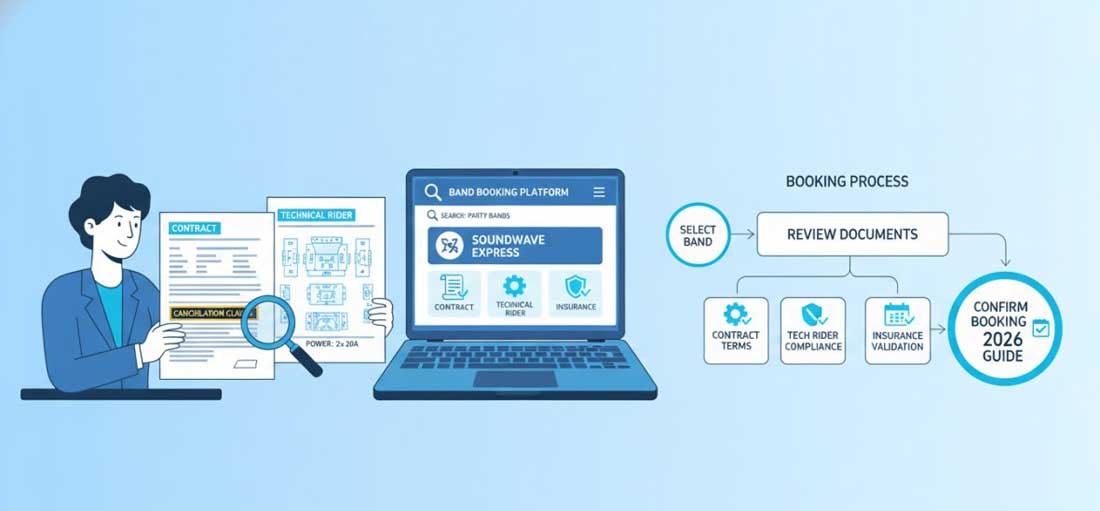
An event coordinator reviewing printed contract and technical rider documents, with a laptop open showing a band booking website.
Every pro has a technical rider and it’s important to know what’s in it. A tech rider will lay out the staging, power and equipment needs in exact terms. Make note of the following:
- Power: amperage, how many circuits are needed and their proximity to the stage.
- Stage: the depth and width required for a full setup.
- Load-in: when the band must have access to the venue for sound check and setup.
- Backline: does the venue supply the amplifiers and instruments or does the band?
- Lighting: some bring their own rig, some rely on the venue.
- Hospitality: green room privileges, food and drink.
Disputes over the rider and what the venue can deliver are the surest way to have a disaster on the big day, so have your venue coordinator go over it prior to signing your John Hancock on the band contract.
Be wary of red flags in the contract. Payment terms should be clear as to deposit, method of payment and date due. There needs to be a mutual force majeure clause for matters beyond either party’s control, and overtime rates should be known in advance. Experienced hosts will tell you to read the fine print before handing over a deposit.
Then there’s the matter of liability. A reputable party band has public liability insurance for any damage to the venue or injury to a guest. Ask for proof and the coverage amount. Most venues want a COI (certificate of insurance) with them listed as an additional insured. If you book an uninsured act you’re opening yourself up legally. Agencies of repute make this part of their due diligence.
Questions for the Wedding Band
Wedding couples tend to be much happier with their entertainment if they get into the nitty-gritty of logistics beforehand. Before you commit, ask these questions:
- Can I have a copy of your technical rider?
- How long are your breaks and how many sets will you perform? We would like to confirm the standard of two 45-minute sets and a 15 minute break (or whatever length of sets and breaks you want).
- Is there a sound engineer and sound system provided by you or do we have to put that in the budget?
- Proof of insurance? We’ll need the COI.
- Tell us about your setlist. What’s the policy on must-plays and how much notice for requests?
- What’s the overtime rate? We want to know before the event.
- Any experience at our venue? Familiarity goes a long way in avoiding complications.
Getting the Most from Hiring Professional Party Bands
There’s a world of difference between a “good” band and a band that’s the highlight of the evening, and it often depends on who you book them from. Be cautious of the less scrupulous booking agencies; a check of Google reviews for the booking agency is prudent. On the other hand, a band will put on a better show if given adequate time to set up, clear instructions and a client who has done the necessary work on the logistics end.
Hiring Professional Party Bands: Step by Step Guide
- Set the parameters for your event: the type of gathering, how many guests to expect, venue size and budget.
- Get in writing from the venue what their power capacity is and any noise restrictions.
- Do some legwork on 3-5 bands within your budget that suit the style you’re after.
- Before auditions have the shortlisted acts put in a technical rider.
- See how the rider’s demands measure up with what the venue has put in writing.
- Your act of choice should be asked to produce public liability insurance.
- Put in a call to the venue coordinator no later than 4 weeks out to set the load-in time.
- See with catering what the hospitality needs are, green room and meals included.
- Make plans for a logistics call with the band leader a week or two before the event.
- The final balance payment is usually due a week or two before the event.
Green Light Bands will take care of most of this when you’re hiring professional party bands. Their exclusive roster of live bands brings a high level of production and sound to performances that are part of the package.
There’s an open secret to hiring professional party bands: the best performances come from clients who don’t make things difficult for the band. A well run venue, plenty of time to set up and clear communication will show in the quality of the event.
It can be daunting to navigate the logistics of live entertainment, yet it’s one of the most consequential choices in planning an event. Green Light Bands has professional musicians in every major genre whose high-energy shows and sound production turn receptions into occasions your guests will not forget. Get in touch with them to hire the perfect live band for your event and get your dance floor hopping from song number one.
Frequently Asked Questions
DJ or live band for a party?
A DJ is less expensive and has an unlimited catalog of songs. But if the aim is to make memories at an important wedding or private function, a live band is usually the way to go. They put on an interactive show and forge a human connection with the room that a DJ can’t do, imparting a premium feel and an atmosphere to remember. In a very large venue or where the budget is tight a DJ is more sensible.
Will a pro party band supply their own equipment?
When you book a professional party band they come with their sound system, instruments and basic lighting. You’ll want to carefully look over the technical rider though as there may be stipulations for stage dimensions, load-in times or power circuits. Don’t sign a contract without doing so. When you’re hiring professional party bands via a full-service agency like Green Light Bands, their bands come with the whole sound and production setup which is a big load off the planner’s mind.
Why go with a professional rather than an amateur band?
The core benefits of hiring professional party bands include a crowd reading ability and a setlist that can be changed on the fly, not to mention a polished stage presence and equipment you can rely on. And they’re insured. An amateur might be cheaper but the chance of a no-show or sub-par sound and engagement is a risk that can undo all of your good planning.