
The Case for Hiring a Band for Milestone Celebrations

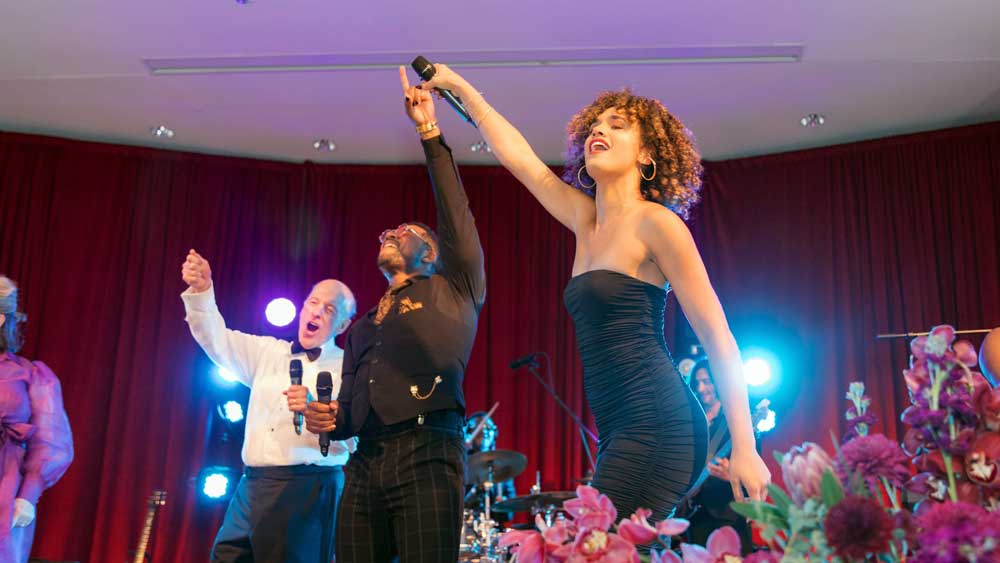
Red Hot Revolution is In Demand for High Profile Events Around the Globe
Why Hiring a Band for a Milestone Celebration Changes Everything
Chances are you won’t make a more consequential decision for an event than to hire a band for your milestone event. It’s what separates the reception where the dance floor is full till midnight from the one that has lost its crowd by 8 or 9 o’clock. It’s the distinction between live music and a playlist.
At Green Light Bands we’ve put on thousands of events and the pattern is always the same: there’s an energy to a live performance you’re not going to get from pre-recorded music. Consider Red Hot Revolution, a world class band with credits to show for it at celebrity parties, top tier corporate galas and weddings of multi-million dollar proportions. Then there’s Liquid Blue, the most travelled band in the world, and always a big hit with crowds.

Liquid Blue Delivers Dance Music at a Luxury Anniversary Event
There’s no algorithm that tells a musician when to put the brakes on a song as the energy fades or when to let it run long because the floor is heaving. A live band is a living, breathing part of the room. While your typical planning guide is preoccupied with which songs to play, this guide gets to the heart of it, from the psychology of the crowd to lighting design and the timing of beverages, all of which factor heavily into whether the band’s work will shine.
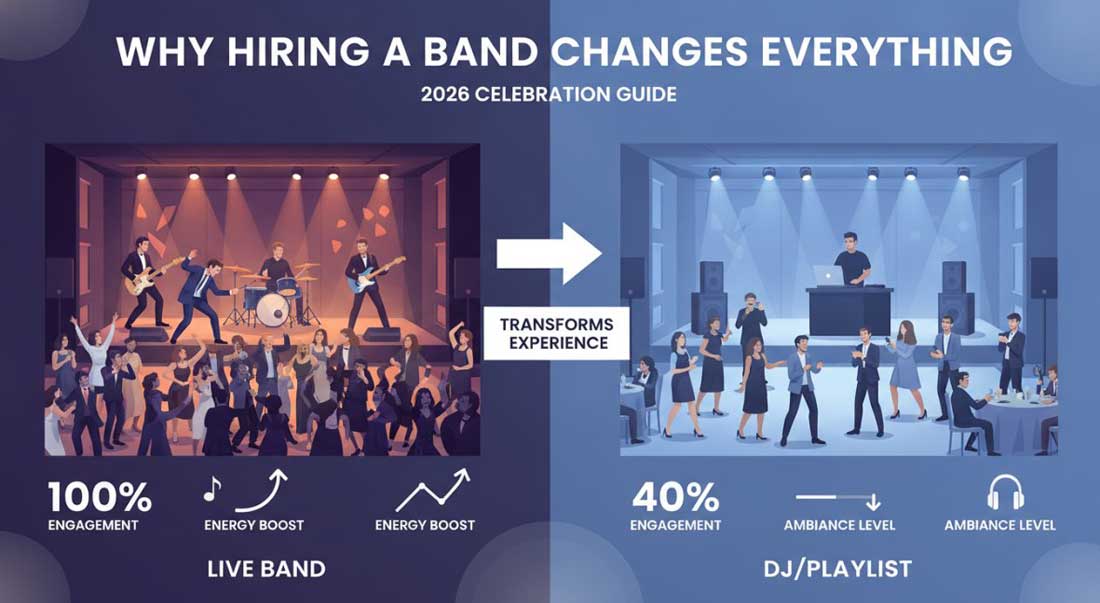
Comparing a live band and DJ: High-energy live band performing on stage at an elegant wedding reception, in contrast to a sparse dance floor with a DJ playing pre-recorded music.
Who Comes Out Ahead?
To be frank, neither a live band or a DJ can claim a universal victory. What’s right for you is a matter of atmosphere, the guest list, your venue and budget.
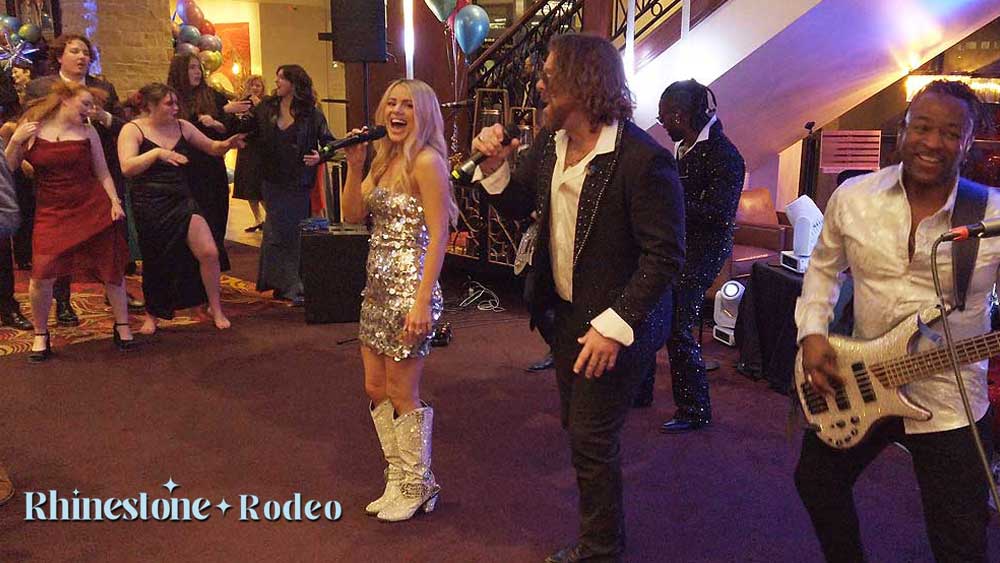
Rhinestone Rodeo Keeps the Crowd Buzzing at a Milestone Event
When a Live Band Is the Clear Choice
Guests will invariably state that a live band was one of the things they recall most from a reception. You don’t have to look very far to find proof; country/pop act Rhinestone Rodeo or the brash Modern Retrospect leave their mark at milestone events and guests continue raving about them long after the party is over.

Modern Retrospect Performing at a Celebrity Wedding While the Guests Fill the Dance Floor
For any milestone party calling for some gravitas – a wedding, retirement or an anniversary – a live band is the way to go, without question. It’s a visual as well as an auditory experience. A good vocalist and MC will read the room and put in a word of dedication for the guest of honor on the spur of the moment, something a pre-programmed system is incapable of.
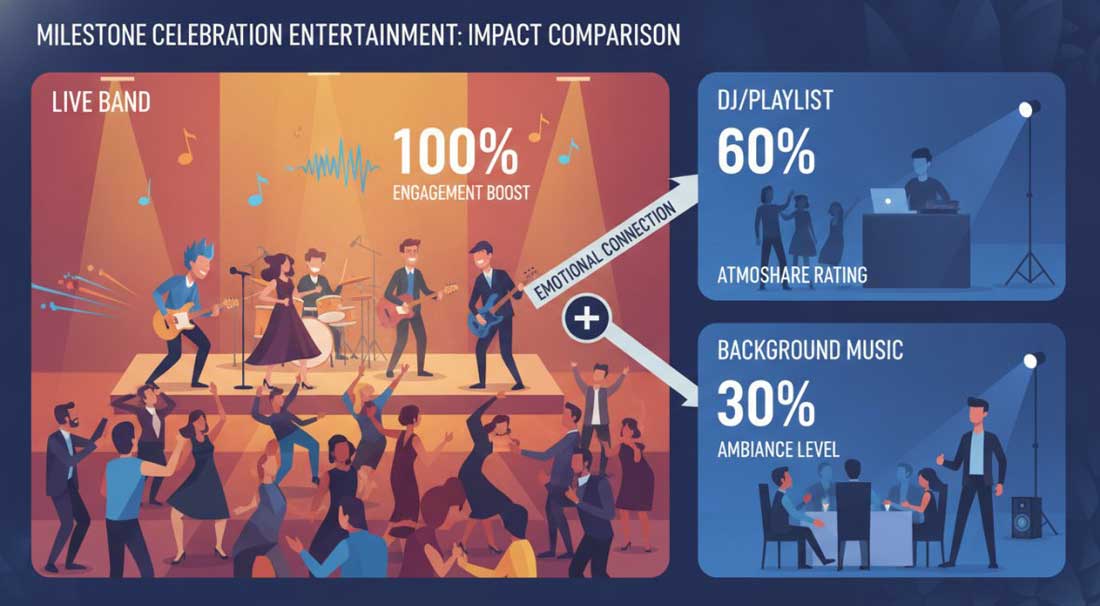
An impact comparison of hiring a band for milestone celebrations vs a DJ with a playlist and soft background music.
Can a DJ Be a Better Choice?
Under several circumstances, yes. A DJ is better suited when finances are limited. If your demographic is younger and wants chart hits done just as they were on the radio, a DJ will give you that. They can also make the transition from Latin to hip-hop to country in the course of an hour, while a band would have to be unreasonably large to cover those styles. In some of the smaller event rooms and historic venues a full band setup is simply too much for the space.
How Much Will a Live Band Cost You?
Pricing for a party is all over the map depending on the event location, how experienced and popular the band is and the length of the event. But don’t take the band’s quote as your final cost. A sensible budget makes provision for:
- Travel and hotel: Expect to be charged if the band has to come from a great distance.
- Production and sound: Find out if the rate includes a sound system and a dedicated audio engineer.
- Overtime: Don’t wait until the night of the event to agree on an hourly rate if the reception runs over.
- A tip: It’s customary to tip the band if they’ve gone above and beyond your expectations.
- Rehearsal: There’s sometimes an extra fee if you want the band to learn custom pieces for things like an entrance or first dance.
Before You Book
It’s asking the right questions that makes hiring a band a sure thing rather than a gamble. A demo video is only telling you how they are in a controlled setting; talk to them and you’ll see how they deal with the unforeseen. Make use of this checklist before putting your signature on a contract:
- Can I see a certificate of liability insurance?
- Is the sound engineer and sound system part of the quote?
- What’s your policy on must-play and do-not-play lists?
- How many breaks per set and what music plays during them?
- What happens if one of your musicians calls in sick?
- What are your requirements for power and space?
- And what’s the overtime charge?
How Long Should a Band Play at a Party?
Two to four hours is the maximum a band should be playing at a milestone event, say two or three sets with a break here and there. It’s a good balance for the flow of the evening and the stamina of the band members.
Making Your Reception Timeline Work
Any milestone event is built on a solid reception music timeline. Event planners and professional live bands alike will follow something along these lines:
Cocktail Hour (45-60 minutes): Something acoustic or ambient. You’ll do well with the likes of a jazz standard, some light pop or an acoustic take on a song everyone knows. Dancing is not what it’s about, atmosphere is.
Dinner (60-90 minutes): You want background music of a lower volume that leaves room for conversation. A band will usually call a break at this point and let a good playlist stand in.
First Dance and Formalities (20-30 minutes): The band is back to put on the first dance, parent dances and any toasts. Energy is less important than precision in these proceedings.
Dancing (90-120 minutes): The main event. This calls for a setlist with some smart sequencing to build to a peak, full energy and plenty of interaction with the crowd.
Final Song: Be deliberate in your choice. This is the song guests will be humming as they’re driving home.
A reception’s dancing segment will be the most satisfying part of the evening if you put the right energy into it; book a band such as Metro Music Club and you can be sure of that. Make allowances in your timeline for it.
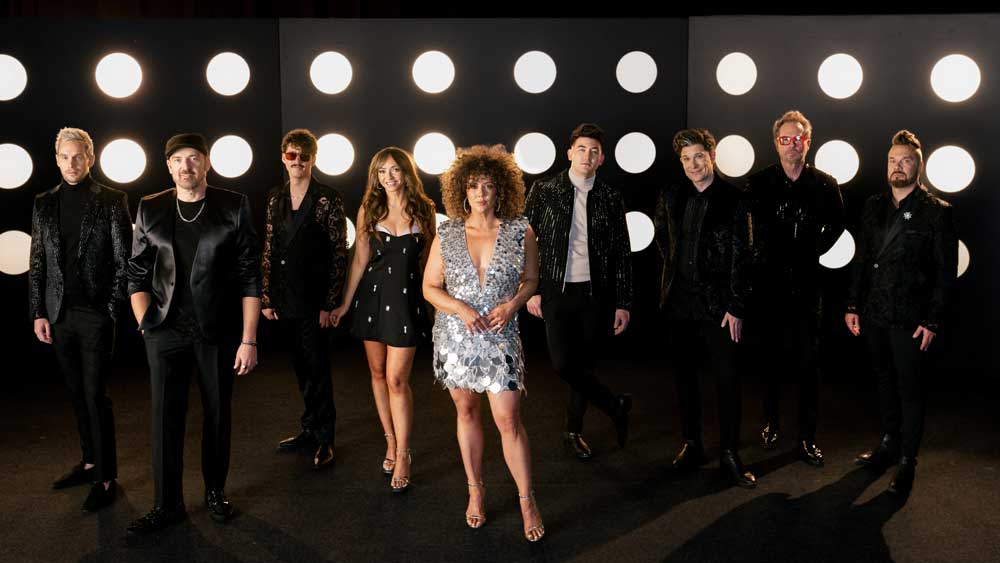
Metro Music Club Band for Special Events and Occasions
Must-Play and Do-Not-Play Lists
There’s a direct line of communication between you and your band via your must-play list, but keep it to a handful of songs. Put more on paper and you’re writing the setlist for the band, robbing them of the chance to read the room and keep the energy high. Then there’s the do-not-play list which is too often neglected yet just as vital. All families have songs with baggage from a trying time or an ex, or songs that will empty the floor. But 3 or 4 at the very most is enough.
An easy way to go about creating both lists:
- The non-negotiables first: the first dance, parent dances and anything for a particular occasion.
- A couple of high-energy numbers your core crowd is fond of.
- Two or three old favorites to entice the older guests onto the floor.
- Any off-limits material, with a word of explanation if it’s personal.
- Have the list in the band’s hands two months out, not the morning of the party.
The Overlooked Trio: Venue Layout, Acoustics and Lighting
In the course of planning an event people tend to talk only about the entertainment and put no thought into the physical surroundings. That’s how many milestone celebrations come up short. Even a world-class band will be underperforming if the room has poor acoustics, the stage is ill-placed or there’s no lighting to speak of.
Venue layout is what dictates the flow of traffic and sight lines. If the band is not in view from where guests are seated they’re not going to get up and dance. The stage should be positioned facing the room, and the dance floor needs to be large enough to hold a third of the guest list at once.
And then there’s the matter of acoustics. Marble, glass and a vaulted ceiling will muddy any live performance, mucking the sound with echo and feedback. Carpet and drapes will absorb the sound and give it clarity. If the venue shows any known difficulties, mention it to the band’s sound engineer in advance, and find out if the band’s production team can handle it.
Amplifying the Atmosphere with Lighting and Effects
For most budgets, lighting is the visual upgrade with the most impact. An hour or so with some LED fixtures at floor level along the perimeter will put color on the walls and make a banquet hall something more. Other things to consider in the way of production:
- Intelligent moving lights can add dynamism when the set is hot, as well as follow the performers.
- A fog machine can give a beam of light some depth, though use with restraint for concert quality results.
- Strobes are good during the height of the dancing, being mindful of photosensitivity.
- Pin spots to put the focus on the head table or center pieces at the right moment is a good add-on.
Dollar for dollar a good lighting design will do more for how the quality of the event is perceived by guests than will an audio upgrade.
Multi-Generational Crowds Need Inclusive Music
Bands sometimes err at a milestone party by playing music that only one age group will enjoy. With guests ranging from ten to ninety at a wedding or anniversary, inclusive music is a must. The band needs to cycle through the eras and genres so that each has its turn on the floor.
A useful guide for the setlist:
- Some classic rock, pop and Motown from the 60s and 70s. Older guests will be nostalgic, younger ones know the classics.
- Pop and dance from the 80s and 90s for those in their forties and fifties, easily recognizable and with plenty of energy.
- Top 40 and the current hits of the last decade for the younger set and to sustain the peak dance hours.
- If country, Latin or jazz runs in the family, put in a block of it instead of having an odd song here and there.
It’s worth asking during the hiring process how well the band can pull this off. There’s a big difference between a band that works for some and a band that works for all.
What if there’s a Lull After Dinner?
Sometimes there’s a lull at a milestone reception. It comes on between 8 and 9 PM once the meal is done and before the dancing gets under way. You’d be hard pressed to blame it on poor music, but more often than not it’s because the transition from one part of the evening to the next has not been properly managed. The guests are left wanting some indication that the party has changed pace.
A few tried and true strategies for this:
- Don’t let there be an extended pause after the final course of dinner. Get the first dance going right away, you don’t want to lose what little momentum there is.
- Let the MC make it plain to the guests that they should head to the floor when the formal dances are over. A passive approach will not do – be direct.
- For the opening number of the dance set, put on a song with energy that’s known to all.
- Put a “plant” in the crowd by having a couple of family or friends who are inclined to be enthusiastic get on the floor first. An empty dance floor tends to be self-perpetuating, but with a few people out there others will feel comfortable to come and join them.
- Build the room up to a peak instead of beginning at full throttle. A gradual increase in tempo is better.
Alcohol and Beverage Service
People don’t give enough thought as to how the timing of beverage service can have a bearing on the energy of the dance floor. Some rules of thumb:
- Make the bar available while the dancing is on. Give guests the option of a drink and they may well sit down if they have to choose between that and the floor.
- Be strategic with a last call. If you make the announcement too soon it puts the idea in people’s heads the night is coming to an end, band or no band. Work with the venue on the timing.
- Don’t allow for long gaps in service as you move from dinner to dancing. Guests waiting on a drink are not making their way to the floor and the lull will be all the worse for it.
- A signature cocktail during cocktail hour is good for social energy and makes for a natural gathering place that’ll see you through the reception.
In terms of managing a reception’s energy, the variable of bar service timing is among the most frequently ignored.
Hiring a Band for Milestone Parties
You need more than a demo video before hiring a band for a milestone event that will deliver. Logistics and communication are almost as important as the band’s musical ability.
- Tell your band about the event. Make sure they know who the guest of honor is and what you want the feeling to be.
- Put a sound check on the schedule. You’ll want to have 60-90 minutes before the arrival of guests for a proper soundcheck.
- Once you’ve vetted and contracted your milestone party band, trust in them to do their job and take a step back. Experienced musicians in the room can read a crowd better than you can from your table.
Green Light Bands offers exclusive, high-energy live band in many genres, that also come with professional sound and production for any event. We’ve seen a marked acceleration in the demand for premium live entertainment at private events and weddings; wedding and event planners and party hosts know very well that it’s the entertainment investment that their clients rave about.
Contact Green Light Bands if you want to find the perfect live party band for your milestone celebration.
Frequently Asked Questions
What questions should you ask potential bands?
Before you book a band, you need to make sure they have liability insurance, what their break times are and how many sets they do, whether they bring their own sound equipment, and how they handle guest song requests. You might also ask them if they can learn a custom song for your first dance. These are the type of questions that can tell you if the band is a good fit for your milestone party and what level of professionalism you can expect.
How much notice is needed to book?
We would recommend booking a top band 9 to 12 months in advance for a wedding, anniversary or birthday of note. Good bands can be snapped up fast in the height of the season. With corporate functions or smaller private parties where there’s some flexibility in the schedule, three to six months will usually do. Booking early gives you the upper hand in any negotiations over pricing or setlists.
What’s the typical length of a set?
Expect two to four sets of 45 to 60 minutes from a professional band, broken up by short breaks. At a four or five hour reception you can count on three hours of live music, possibly more, with pre-recorded music in the background for the breaks. Have a word with the band early on as to the structure of their performance so the timeline from cocktails to the last dance goes smoothly and without a hitch.
A band or a DJ?
For atmosphere and the kind of engagement with a crowd that creates a memorable occasion, a live band is unrivalled; a DJ cannot put that same energy into a room. But a DJ is less expensive and will have a wider variety of songs. When your budget is an issue or you require a very particular list of genres, a DJ makes more sense. Then again, many a host and wedding couple will hire a DJ for the cocktail hour and a separate live band for the reception.