

Why Live Music Improves Event Atmosphere: The Science Behind the Magic
There’s a world of difference between an event that’ll be remembered and talked about for years and one that’s easily forgotten; and live music is what makes the difference. In fact, the change in a room’s energy is underway long before the first note is even heard. The sight of a stage being put in place, musicians warming up or setting up their instruments are all visual indicators that something wonderful is coming soon.
A musical experience has a measurable effect on social bonding, which is backed up by research from the National Endowment for the Arts. It’s a matter of fact that people who have been to a live show feel more of a connection with their fellow attendees, a behavioral pattern event professionals can count on.
Creating Energy in the Moment

Modern Retrospect Performing Live Music at the Wedding Reception of Super Bowl Winning Quarterback Sam Darnold
What gives a live performance its energy is the fact that it cannot be repeated. A top band such as Modern Retrospect or Rhinestone Rodeo will size up the audience and change the tempo as needed, let a bridge run when the energy is right or rein things in when the situation demands. Such responsiveness results in a kind of feedback loop with the audience that’s impossible to get from a recording. In a way, the guests are made part of the proceedings by virtue of their own reaction.
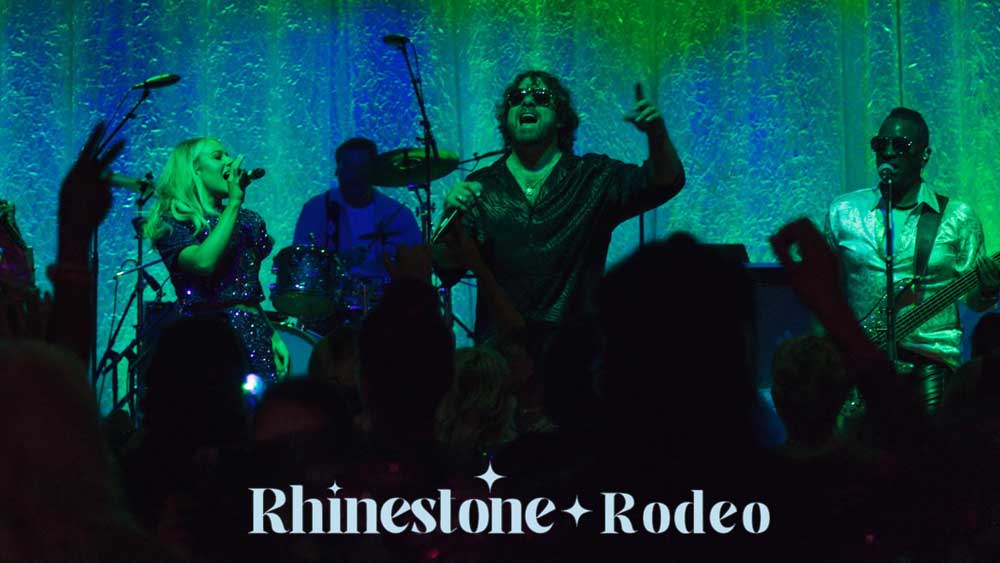
Rhinestone Rodeo Delivering High Energy Dance Music for a Corporate Event
A Case for Human Connection
On a neurological level we are predisposed to sync with live sound. Work in the field of music cognition, as reported by Psychology Today in its writing on social bonding, indicates that mirror neuron systems are set off and oxytocin is released by a common rhythmic experience. For an event predicated on making connections, live music is less of a luxury than a means to an end.
Live Music or DJ?
The live music vs DJ debate. It’s a question of the atmosphere you’re after. A DJ has exact control over each and every music track. But watching musicians at work, delivering live music in a live show, provides spontaneity and social proof that recorded formats do not. To truly transform the mood, live music is vastly superior.
Adaptability and Spontaneity
A good live band doesn’t need to be told when the crowd is losing interest; they can read the crowd and immediately know what’s required to keep them engaged. They’re reading body language and the energy in the room, moving on from a song that’s not working and milking one that is. The result is something that feels organic, not artificial.
Emotional Resonance
There’s an emotional impact to a live performance. The musicians are there in person, putting on a show without a safety net and the audience, if only subconsciously, has respect for that. At a corporate event it tells your guests the organizer has given them something of substance, which colors their view of the whole affair.
Keeping the Dance Floor Full
Bands like Liquid Blue know how to create and maintain a packed dance floor, using their skill at reading a room and changing course during their performance to maintain momentum. Experienced live performance bands will approach a four-hour engagement as a structured arc, not a random collection of songs.

Liquid Blue Has the Guests Going Wild at a Wedding Reception
When a dance floor goes quiet it’s usually because the band didn’t pick up on a cue. A song that would be OK at 10 PM might empty the dance floor at 8 PM. Professional musicians make adjustments in volume, key, vocal intensity and song choice to keep the dance floor full, treating their performance as a negotiation with the audience.
Sequencing the Setlist
In live event work one of the most undervalued skills is in the sequencing of a setlist. Take a wedding reception as an example: a well thought out plan might start with some mid-tempo music over dinner, move on to crowd pleasers once people are dancing on the floor, and by 10 PM be delivering high energy hits before winding down with a singalong to leave everyone satisfied. The way a band thinks about song sequence is what separates them from other bands.
Selecting Live Music for Corporate Events
When you’re choosing live music for corporate events, you need to be clear about the objectives of your event and then work back from there, through budget and compliance. Success is determined more by knowing these objectives than the style or tastes of the music.
Budgeting
Depending on the production needs, travel and the size of the ensemble, the costs for live music can vary widely.
- For cocktail hours and networking a solo or duo acoustic act is usually sufficient and needs little in the way of production.
- Corporate receptions typically require a four- to seven-piece band, along with a full sound system, to deliver the appropriate musical depth and visual impact.
- You’ll pay a premium for the talent fees and production involved with a larger band.
Then there’s the matter of sound production, backline rental, load-in and travel, to say nothing of a 10-15% contingency for overtime or equipment issues that goes beyond the band or talent fee.
Genre and Energy
Let the purpose of the event dictate the style of music. Put the timeline to the test to see where music should be leading and where it’s merely support, and make sure the band has the ability to change gears and the venue can handle the sound.
Compliance and the Contract
Don’t book without a certificate of liability insurance from your musicians or band, with your organization listed as an additional insured. Make the venue’s decibel limits and ordinances known to the band’s production team. Your contract should spell out force majeure provisions and you should address matters concerning people with disabilities.
As for sound quality, in a corporate setting there’s no compromise. Ask the question to any band about their sound engineering: do they have a FOH (Front of House) sound engineer of their own or are they mixing their monitors? At a professional event you’ll want dedicated audio staff, not the musicians fiddling with their levels from one song to the next.
Why Guests Put Live Music in Their Memory Bank
There’s an episodic quality to a live performance, moments of such sensory detail that they’re committed to long-term recall. Harvard Health Publishing has put out research on music and memory to that effect; it shows that what has emotional heft is imprinted more firmly than something neutral.
A Multisensory Affair
In front of a live act guests are engaged on all fronts. They’re watching the band’s performers intently, feeling the bass in their chest, under the warmth of the stage lights as well as hearing the music. It’s a level of immersion streaming music cannot equal. And the things people remember tend to be unscripted: the vocalist who leaves the stage for a serenade, a guitarist putting on an extended solo for a rambunctious crowd, a drummer locking eyes with a guest and playing to them.
Social Media and the Shareable Moment
When a guest puts a phone to his face to record, he’s making video of something visually exciting in real time. There’s skill to be seen and respected in a horn section’s tight chord or a vocalist nailing a run or a guitar solo being shredded. Such content is made to be shared and in doing so takes your event beyond the confines of the room.
Atmosphere is a Matter of Production
From the AV integration to the lighting design and stage presence, the caliber of the production is what separates the amateur from the pro. The difference is huge. Picture a live band on an elevated stage with amber lighting, electric guitars and drums on display, the audience in formal wear applauding in the foreground.
An Event Planner’s Guide to the Production Timeline
Production is a sequence of steps. Compress or omit them and you’ll have feedback squeals and lighting problems and other awkwardness that guests will not forget.
Pre-Production (2-6 weeks out)
Take stock of the venue’s ceiling height, power, load-in access and stage size. See if the band’s technical rider is in line with what the venue can handle. Get your production team in place with defined roles and a single point of contact, and make note of any compliance or permitting issues.
Load-In (4-8 hours before doors, day of)
Put down the stage, backline, PA and monitor systems, lighting rig and AV in proper order.
Sound Check (2-3 hours before)
Do your individual checks, put together the monitor mixes and calibrate the FOH to the room. Have the full band run through at show volume and go over the lighting cues.
Show-Time
Have all personnel where they should be when doors open. The FOH engineer will be on top of the mix, the lighting director calling cues as they come. Make sure there’s a production contact for venue management.
Load-Out
Reverse the load-in to take everything down. Disconnect power first before you put the rigging away and leave the venue as you found it. An incident log may be called for.
It’s evident when an event has been short-changed on any of this.
Legal and Ethical Issues
Organizers are responsible for the safety of their crew as well as the guests. Fire code occupancy limits are not open to interpretation. With general admission areas crowd flow needs to be managed by barriers and floor staff who know their job. Any overhead rigging or temporary staging has to be up to the task; insist on documentation from the contractor that they’re certified and have done the load calculations. A live event is a big draw on power and an overloaded circuit’s a fire hazard, so have your team create a plan for distribution and see that only qualified individuals make the connections.
Run the noise ordinances by the venue and let the FOH engineer know about them. An SPL meter at the FOH position is a good way to keep tabs on compliance during the show.
New Realities in Post-Pandemic Production
Hybrid events are fairly common for corporate events now, with audiences both physically in the room and participating remotely. That calls for a broadcast mix suited to a laptop or headphones, distinct from the FOH mix. Verify your team can handle everything.
Then there’s the matter of sustainability. LED rigs run cooler and use less power. You can use biodiesel generators or local backline rental and digital plots to lessen the environmental footprint. Modular stages are another trend; they give a polished look and save on cost and time without the need for custom work.
The Human Element
The technical production sets the scene, but it’s the performer who makes it worth remembering. You can tell a lot from a band’s stage energy, whether they’re engaging in an authentic way or making eye contact. These are indicators of how they’ll perform. Eventbrite’s industry data would seem to bear this out: satisfaction and word-of-mouth are invariably better with live entertainment than they are with recorded music.
Some Questions We’re Often Asked
What’s the impact of live music on an event’s mood?
There’s an emotional pull to the energy of a performance in real time that live music provides. A musician will feed off the audience and put some momentum behind it, something a DJ is not able to do. Whether it’s Top 40, jazz, country, pop, Disco, Motown, R&B, bluegrass, soul or classic rock, a good performer brings an authenticity to the room. That kind of excitement lifts the spirits of guests and gets them on the dance floor for a vibrant atmosphere that endures.
Would you say live music makes for a better atmosphere than a DJ?
It’s a matter of what you want from the event, but live bands have a way of creating an atmosphere with their spontaneity and live performance. They can read a room and change their setlist as the show goes on, delivering moments of unpredictability to hold the interest of guests. While a DJ has the advantage of pre-recorded material for consistency and flexibility, if the objective is to have a memorable event with plenty of energy and engagement on the dance floor, you’ll find live music does the job much better than a DJ alone.
How do you choose the right live act for an event?
For a private party or corporate gala you should look at the make up of the audience, how long the event runs and the kind of energy called for. See what a band can do with bluegrass, country, jazz or rock and check their production values and sound. It’s worth having a talk about how they handle a crowd and make changes to the set list. Ask for references from like events. Put together a professional band with a varied repertoire and the stage presence to back it up and the atmosphere will be all that’s expected and more.
In what way is live music better remembered than a recording?
A recorded track cannot compete with the experience of watching and listening to the instruments and performers as well as being part of the energy. Musicians will improvise and put on a show for the audience; no two performances are alike. The personality of the performer and the feel of the crowd leave an impression. Such sensory and emotional depth is what turns an event into one people are still talking about well after it’s over.