
A 2026 Guide to Engaging Professional Bands for Community Events
This is your guide to putting together a professional band for a community event. Here you’ll find booking advice, the ins and outs of insurance and technical needs, how to budget and what it takes to put some life into an event.
The Case for a Professional Band

Liquid Blue Band for City, County, State Fairs and Festivals
There’s no better way to ensure long average attendance times and contented attendees than with a professional band; recorded music or an amateur act simply can’t compare. Book a world-class live band such as Liquid Blue or Rhinestone Rodeo and the difference is easy to see. These amazing and popular live bands bring a human element to the event, responding in real time to the crowd and changing their setlist as the audience dictates. They have a knack for reading a crowd and shifting their direction when the energy wanes so the experience is something people are part of, not something pre-packaged.

Rhinestone Rodeo Band for Community Entertainment
Then there’s Modern Retrospect. A band of this caliber, with its high interactivity, is one of those professional bands for community events that are talked about for months to come and recommended highly by clients. After all, these events are more than mere diversions; they’re for building local pride, making memories and allowing neighbors to get to know one another.

Modern Retrospect Community Event Band
Live Entertainment and the Community Event
Festivals, Fairs and the Like
An outdoor festival or fair is the perfect setting for a professional band. With crowds ranging from 200 to well over 10,000 and running four to eight hours across all ages, you want a band with a strong stage presence and some general style and genre flexibility. Popular live party bands and tribute music acts and bands are also well suited to community events. In fact, festivals with live music can expect to see dwell times go up as much as 60 per cent over those without. The result is that people put in more time at the vendor booths and come back in force the next year.
Corporate and Gala Affairs
For a corporate function or holiday party of three or four hours duration the emphasis is on an upscale feel. The band is there to put a finer point on the ambiance and put people at ease rather than to deliver a show. Jazz, acoustic or pop standards of a more refined sound are common. What the corporate client looks for is a band with the sense to play at a volume befitting cocktail hour and then put some oomph into the dance floor later on in the evening.
Fundraisers and other gatherings
Charity galas and block parties occupy the middle ground. A client needs a cover band that can work within a tighter budget yet still connect with the community and the cause at hand.
Booking a Band: A Step by Step Approach
Be clear on your requirements and budget before you start making calls. Some questions to ask yourself:
- Date and length of performance (a 2-4 hour set is the norm).
- Indoor or outdoor venue? And how many do you anticipate?
- Who is your audience in terms of age and musical taste?
- Do you want sophisticated background music or high-energy dance music?
- As for genre, rock, Motown, Top 40, country or a combination?
- Is the venue supplying sound and lighting or must the band?
- Be realistic about the entertainment budget.
Knowing where you stand financially spares you the let down of latching onto a group that’s too far out of reach.
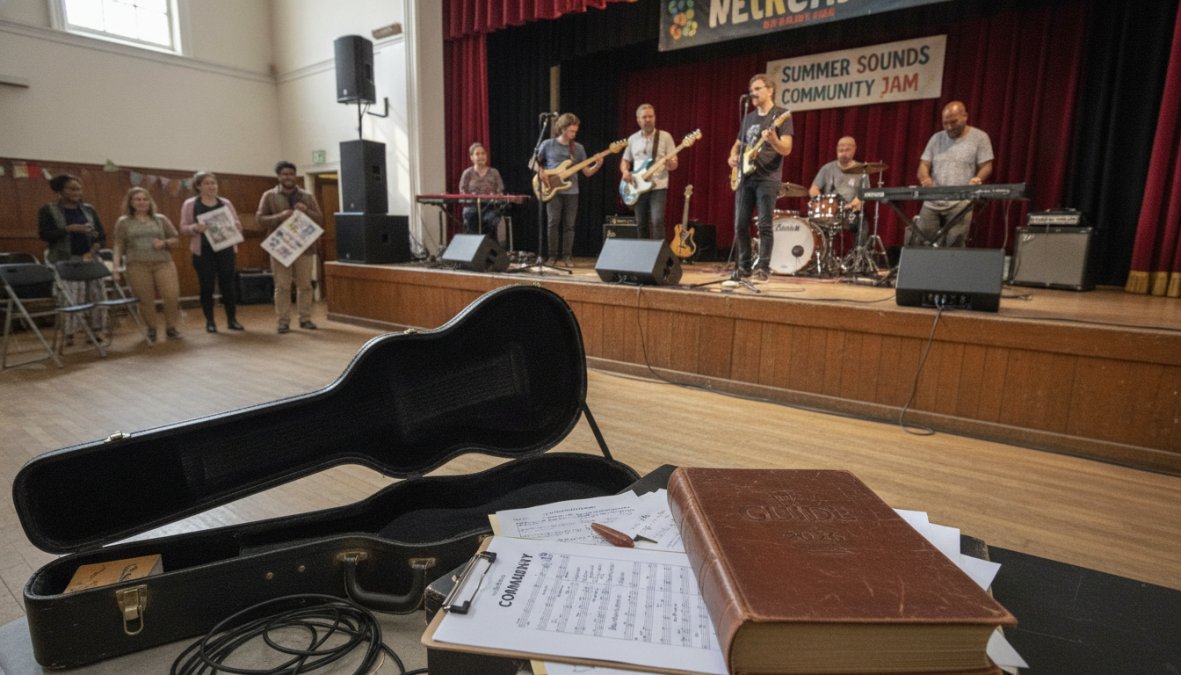
A live band audition for a community event.
Do some legwork on local talent. A modest budget means looking at bands within driving distance; with more to spend you can put in the research to have a top quality band fly in, which will pull in a bigger crowd. Make use of the GigHighway booking platform and other online platforms, social media, or ask for a reference from a past event. Watch a band’s promo video to see how they deal with the audience and any technical hiccups. Testimonials are worth a close read for signs of reliability.
Make contact with 3-5 party bands to get a feel for their pricing and how responsive they are. If they’re hard to get hold of now, they will probably be hard during the planning of the event too.
Putting the contract in order
After you’ve made your choice, spell out the details in writing:
- Times and dates for setup, performance and breakdown.
- Payment: the total fee and when the balance comes due (the deposit is usually half).
- Technicals: what is the band bringing and what do you or the venue have to provide?
- Setlist: any songs off limits or special requests?
- Insurance and liability.
- Travel arrangements and any mileage fees.
Professional bands will have a standard contract, but review it and negotiate if necessary.
Budgeting for Live Bands
Costs for professional bands for community events will vary with the season, the day of the week, how far the band has to travel and their level of popularity and experience. When you’re looking to hire professional bands for community events, a sensible rule of thumb is to put 25 to 50 per cent of the overall budget towards entertainment. On a $10,000 festival budget, that’s $2,500-$5,000 for a half-way decent live band. For a larger draw of 3,000 to 10,000 plus, expect to put $10,000 to $15,000 or more toward a local party band given the more complex sound system and production alone.
And don’t assume the cheapest quote is the best value; look at what’s being provided, such as whether the band has its own sound system.
Band Contract Template for Events: the Terms and Protections You Will Need
What is the process for setup and breakdown? How many hours of performance are we talking?
PERFORMANCE AGREEMENT
Parties to this Agreement are [YOUR ORGANIZATION NAME] (the “Client”) and [BAND NAME] (the “Performer”), effective [DATE].
1. EVENT DETAILS
- Event: [EVENT NAME]
- Event Date(s): [DATE(S)]
- Event Location: [VENUE ADDRESS]
- Performance Start Time: [TIME]
- Performance Duration: [NUMBER] hours
- Setup Time Required: [TIME]
- Expected Audience Size: [NUMBER]
2. COMPENSATION
- Total Performance Fee: [AMOUNT]
- Deposit Due (non-refundable): [AMOUNT] due by [DATE]
- Balance Due: [AMOUNT] due by [DATE]
- Payment Method: [CHECK/WIRE TRANSFER]
- Travel Fee (if applicable): [AMOUNT]
3. TECHNICAL REQUIREMENTS
- Client provides: [LIST: PA system, stage, power, parking, etc.]
- Performer provides: [LIST: instruments, microphones, lighting, etc.]
- Stage dimensions required: [DIMENSIONS]
- Power requirements: [AMPS/CIRCUITS NEEDED]
- Parking: [DETAILS]
4. CANCELLATION POLICY
- If Client cancels 30 days or more before event: deposit forfeited
- If Client cancels less than 30 days before event: full fee due
- If Performer cancels: Client receives full refund of all payments]
5. PERFORMANCE DETAILS
- Songs to avoid: [LIST ANY]
- Sound check time: [TIME]
- Breaks: [NUMBER AND DURATION]
- Attire: [FORMAL/BUSINESS CASUAL/CASUAL]
6. LIABILITY AND INSURANCE
- Performer maintains liability insurance: [YES/NO]
- Client is responsible for general event liability insurance
- Performer is not responsible for damage to venue or equipment caused by Client or attendees
7. PAYMENT AND PERFORMANCE
- Deposit must be received by [DATE] to hold the date
- If deposit not received by deadline, date is released to other potential clients
- Balance must be paid in full before performance begins
- Performer will perform agreed-upon duration in professional manner
8. MODIFICATIONS AND ADDITIONAL REQUESTS
- Special requests submitted with [X] days notice: [ADDITIONAL FEE IF APPLICABLE]
- Changes to event details must be communicated in writing
9. SIGNATURES
Client: ____Date:
Performer: ____Date:
Make sure the terms are tailored to your circumstances when working with the band.
Technical Rider Requirements for Bands
This is where a band lays out precisely what they’ll need in the way of equipment, power, stage space and logistics to put on their show.
Sound and Lighting
For a band to do their job properly, some technical support is non-negotiable; sound and lighting are part of the experience either you or they will need to supply.
You can expect these demands of a sound system:
- PA system: A PA with enough power and coverage for the size of the event
- Microphones: Vocal and instrument mics, plus monitor mixes so the band can hear one another
- Mixing console: A mixing console to manage the audio
- Speakers and monitors: Stage monitors and speakers to keep them in sync
- Cables and connections: The necessary cabling, adapters and back up gear
As a rule, a professional band will have their own sound system or insist the venue’s meets certain specs. For an outdoor affair you can count on them bringing their own.
Lighting is more of a variable. An indoor venue might have stage lights on hand, but an evening event outdoors will see the band provide or arrange for it. Make it clear on who is supplying what.
Venue and Stage
Some specifics to go over:
- Stage dimensions: 16 by 12 feet is the absolute minimum for most bands – 16 by 24 is preferred
- Stage height: 36 inches is standard above the audience
- Power availability: today’s bands want several circuits
- Weather protection: a tent or roof for an outside stage
- Audience barriers: between the stage and the crowd for outdoor events
- Load-in access: is there easy access to get equipment in?
- Parking: for vehicles and trucks
Have this conversation early on. There may be a simple fix if the venue is short on something, or it may be that they cannot oblige the band.
Insurance
Carry event liability insurance for your organization to cover property damage, bodily injury and the like; venues will want to see proof.
Most of the time a professional band has their own policy for their equipment and performance. Your general event liability is for the attendees. But make sure you know who is covered for what.
Other things to think about:
- Alcohol: liquor liability if alcohol is being served
- Pyrotechnics or special effects: does the venue permit it and is the band insured for it?
- Permits and permissions: for an outdoor event
- Noise ordinances: Noise restrictions in some jurisdictions
It’s worth 30 minutes with the band and the venue to iron out the liability questions. You’ll be glad you did when it comes to avoiding trouble down the road.
Choosing a Band for Your Community Event
Music Genres and the Audience
The style of the band has to be right for the occasion. A group that’s good at 80s rock is not going to cut it at a community event where you need Top 40 and country.
When looking at genre:
- Age of the crowd: a younger group will want current hits, older ones the classics. A live band with a wide repertoire is best for a mixed group.
- The atmosphere: an outdoor festival calls for music that’s upbeat and danceable, while a corporate gala is better suited to jazz or acoustic ensembles.
- Local culture and taste: Community events often reflect local culture and preferences.
Get a sample setlist from the band and see if it fits. Are they open to learning a specific song that you ask for? They’ll most likely put a price on anything not in their regular book, but some bands won’t.
High-Energy Performance and Stage Presence
When it comes to professional bands for community events, the setting and stage presence is of greater importance than technical expertise. A great band will put on a show where the audience is fully engaged and the room’s energy is high.
Track Record and Client Satisfaction
How a band will do at your event is best gauged by what previous clients have to say. Get names of clients from past events and get in touch with them. Find out if the band was flexible and reliable, the quality of sound, whether they made an impression on their audience and if they would hire them again. Online reviews can be very informative as well.
Pitfalls to Steer Clear of When Booking Live Entertainment
Booking too late: If you wait too long to book you may find your band options severely limited. Top party bands are booked 6 to 12 months out during peak season; leaving it to 2 or 3 months before the event is not a smart move.
Don’t be vague on what you need: The more specific you are about your goals, audience and the event itself, the better the match. And when it comes to price, do not let it override fit. You may pay a little more for a band with the experience, but it’ll be worth it in terms of results and fewer headaches.
Prioritizing price over fit: don’t let the cost override the fit. You may pay a little more for a band with the experience but it will be worth it in terms of results and fewer headaches.
Not discussing technical requirements upfront: These should be made clear weeks ahead of time so there’s no chaos on the day of the community event.
Ignoring the contract: Have everything in writing for the benefit of all concerned.
Not communicating changes: Make sure any changes to the venue, date or size of the audience are communicated to the band right away.
Expecting unlimited flexibility without compensation: And if you want the band to ditch their standard repertoire to learn something new or make other alterations, additional fees will most likely be incurred. And micromanaging a band’s song list is never a good idea.
Not checking references: Don’t neglect to check references either; they’re more telling than any marketing copy and will only take a few minutes of your time.
Creating an Experience Your Community Will Remember
There’s a considerable investment when hiring professional bands for community events and it’s repaid in spades through the success of the event and the satisfaction of attendees. Often the line between something you’ll forget and an experience you’ll not forget is a matter of having good live music entertainment.
It calls for attention to detail and communication that some organizers miss, but the planning is warranted. When done properly it yields positive memories and strengthens community ties well after the event is over.
Green Light Bands has a way of turning ordinary events into memorable experiences with the kind of professionalism and flexibility a community event requires. Their exclusive live bands know how to work a crowd and keep the energy up. For information about how professional live entertainment can take your next gathering on another level, get in touch with Green Light Bands.
Frequently Asked Questions
What is the lead time for booking a professional band?
It’s determined by the band’s popularity and the scale of the event. With festivals and the like you want to have a band secured 3-6 months in advance at the very least; for a private party of smaller proportions 4-8 weeks notice may suffice. But calendars of popular bands fill fast in the peak of the season. An early booking affords you the opportunity to see to the logistics with event professionals, put a contract in place and sort out technical matters.
Hiring for a public event, what is the criteria?
You want to see a track record of client contentment and a diversity in their repertoire. Look for bands with experience in events of your type and testimonials to back it up. They should be able to put on a performance with high energy for your audience and be cognizant of the venue’s technical side. Ask for references from a corporate or community function and how accommodating they were when it came to the length of the set or the list of songs.
Is insurance a must for professional bands for community events?
For public events with live music entertainment, liability insurance is indispensable. It’s there to cover any property damage, injuries or accidents. Most venues will not allow a performance without evidence of general liability. Verify the band has their own coverage as well. It’s protection for the organization, the performers and everyone in attendance.
What kind of technical demands will a professional band have?
They’ll have a rider that spells out the specifications for sound and lighting, electrical needs, load-in and the dimensions of the stage. Bands will typically require a raised stage of 16×24 feet or so, a PA system, monitors and microphones. Some will supply their own gear, others will look to the venue. Make certain the venue is up to it before you book to avoid problems down the road.