
A Smart Playlist Guide to Avoid Bad Party Music
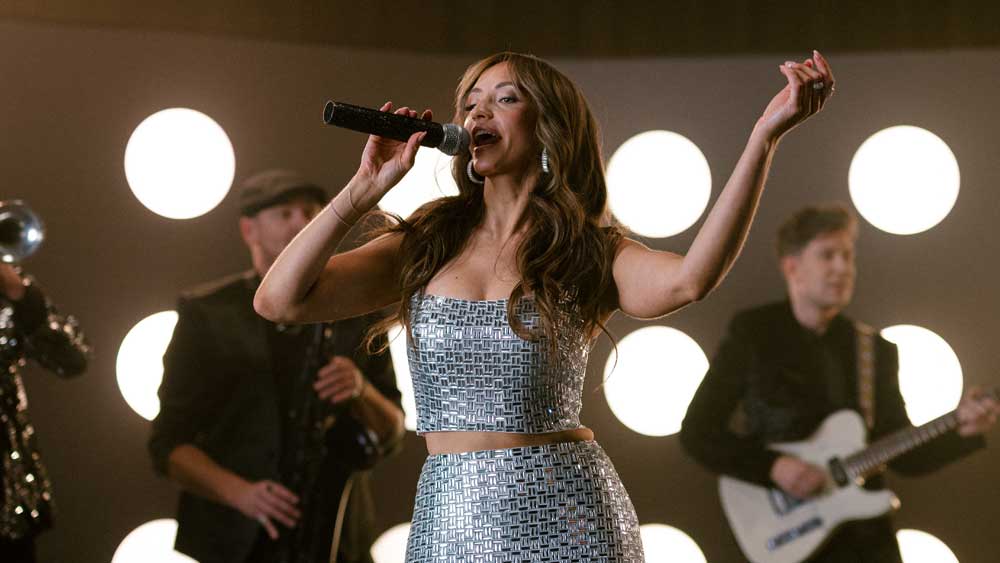
Metro Music Club Dance Party Band
There’s a world of difference between a dance floor that’s full for the duration of the evening and one you can put your feet up on by 8 or 9 PM; it all comes down to knowing how to avoid bad party music. We’ve seen this time and again at Green Light Bands in the course of thousands of events: put on some good music and people move, do otherwise and they make for the snack table or the exit. Metro Music Club and Red Hot Revolution are but two of the world-class party bands we know will put on a show for any crowd.

Red Hot Revolution Live Party and Dance Band
In what follows we’ll cover the ins and outs of making a party playlist with staying power, from the way you mix genres and handle requests to the matter of music fatigue – yes, there is such a thing. They’re no-nonsense strategies, tried and true, for those intent on an event with the feel of a real party.
You don’t get bad party music by choosing the wrong song per se, but by failing to read an audience or allow your own preferences to take precedence over the room’s energy. Rather than a subjective list of the worst songs, consider this guide a system.
What Is Bad Party Music?

Modern Retrospect with Chicago Singer Peter Cetera
An inferior band is almost always the prime culprit, of course, but music also falls flat when it has no connection with the room. You can have a hit on the turntable and still ruin the mood if the volume or timing is off. For quality music guests will appreciate, you’ll want to think about hiring an exclusive band like Modern Retrospect or Liquid Blue from Green Light Bands.

Liquid Blue Band for High-End Parties and Destination Events
The usual transgression is to make your playlist a personal listening session. That song that really moves you will be of no consequence on the dance floor. In the end, bad party music is an absence of audience awareness.
We would single out three problems:
- Tempo that doesn’t suit the moment: When you put on a ballad when dancing is at its height or when a song with a high BPM is playing as your guests are coming in.
- Overplayed tracks that trigger eye-rolls: Playing songs that elicit an eye roll and says more about a DJ’s lack of effort than anything else.
- Niche selections that exclude the room: Playing niche tracks that only some people are familiar with when you should be building collective energy.
Apply a simple filter before you’re done with a playlist: is it the right tempo, the right crowd, the right time?
The Psychology of Fatigue
Even good songs can have listeners disengaging after a while due to ear fatigue, which is a physiological fact. The Acoustical Society of America has published research showing that consistent music patterns diminish the emotional response with time.
So variety is called for. Keep to the same BPM for half an hour and it becomes monotonous whether your guests know why or not. Deliberate pacing is the answer. Don’t mistake tempo for energy; with smooth transitions you can vary genre and BPM and keep things going. The best bands at Green Light Bands, for instance, will medley or mash up a few popular numbers in short order to see the dance floor stay packed.
Engagement and Reading the Room
You cannot overstate the value of reading a room when managing a playlist. The dance floor is quite revealing.
If you have people making their way to the floor, singing along, or letting a conversation trail off as a track comes on, you’re on the right track. But if the floor is bare after two songs, phones come out in droves, talk drowns out the music or requests start to mount, it’s time to make an adjustment.
If the floor clears, resist the urge to go louder and bigger. It’s better to put on a mid-energy number everyone knows and work back up from there.
Your ‘Do Not Play’ List
Any competent creator of playlists has one. It’s a question of party dynamics, not what you like. A track gets put on the DNP (Do Not Play list) if it has a habit of alienating guests or breaking the energy. Make it genre specific as well; what’s unsuitable for a corporate cocktail party is not the same as what would tank a wedding. Then again, leave the customizing of a song list to the experienced bands, they don’t require micro management.
Overplayed Material
Then there are the overplayed tracks. The song is fine, but the association is not. With no element of surprise there’s recognition but no excitement, amounting to an emotional shrug. Spotify data will tell you some songs are in so many event playlists they’ve been stripped of any novelty. Be selective with your popular choices and build to the big moments.
The Guilty Pleasure Paradox
These can either be the height of amateurism or your best tool, execution being the deciding factor. There’s a paradox in a song that’s well liked yet risky to put on in public. Time it properly and you have the whole crowd with you, and you’re the hero of the night. Too soon and it’s embarrassing and your judgment is open to question.
Making a Party Playlist That’s Actually Good
There’s more to a good playlist than just the compilation of popular songs. It should have a narrative arc, a beginning, a peak and everything in between; the order is what counts, not so much the individual song.
For a four-hour party, one can follow this kind of structure:
- Opening (first 45 minutes): Put on some mid-tempo, well-known tunes that are 95-115 BPM to put those at ease who have arrived early.
- Build (an hour or so): Let the BPM creep up to 120-128 and put in some style variety. Start to read the room.
- Peak (the next 90 minutes): This is where you put your best stuff, the high-energy and high-recognition material.
- Wind-down (last 45 minutes): Ease off on the BPM and let guests make the transition from the dance floor to some socializing.
Mixing Styles to Keep the Momentum
Poorly created playlists tend to come undone when it comes to mixing different styles and genres. The temptation is to put them in groups, but that has no place at a party.
You’ve got to apply emotional logic. Don’t ask what genre is due next, ask what feeling is. A pop track of high energy will make for a smooth changeover to a funk number provided the key and BPM are right. Some rules of thumb for mixing
- Keep consecutive tracks within 10 points of BPM
- Have a transitional piece for any major genre shift
- Put an unfamiliar track in between two you know they like
- Don’t use something too niche to open or close a block
Sustaining Energy through Pacing and Length
Most people don’t give enough thought to the matter of event length. Add 20% to the event time; a five-hour playlist for a four-hour party allows you to be flexible with timing or to extend a set that’s going over well.
Then there’s pacing. Too many put their best forward and are spent by the last hour. But the final 30 minutes are what will be remembered most and a strong finish will color the whole evening.
A Request Policy
If left to chance, requests will ruin the entire vibe you’re after. Have a framework in place to head off any friction. It all boils down to three things:
- Are you taking requests? Fine for a small get-together, but for a large event you’re under no obligation to do so.
- How are requests made? An app or a written slip is preferable to being told verbally.
- On what basis do you play requests? Timing, audience fit and BPM are all fair game. If it doesn’t fit, leave it out.
Dealing with a request is as much a social art as anything. Be polite about it, but have a response ready for the songs you won’t play – only play the ones that work. Plan for the odd situation: the genre hijacker, to whom you can accommodate one song while holding your course on the overall arc; or the obscure choice which, unless it’s just right, is a skip. Niche tracks are almost always for the requester, not the room.
Collaborative Apps
There’s value in using an app to get input ahead of time and see what preferences are out there. Allow your guests to use the app a couple of weeks before the party, put a deadline on contributions three days out, then cull the submissions to make your final list and add your own to plug any holes in the pacing. It gives them a sense of ownership without ceding control of the end result.
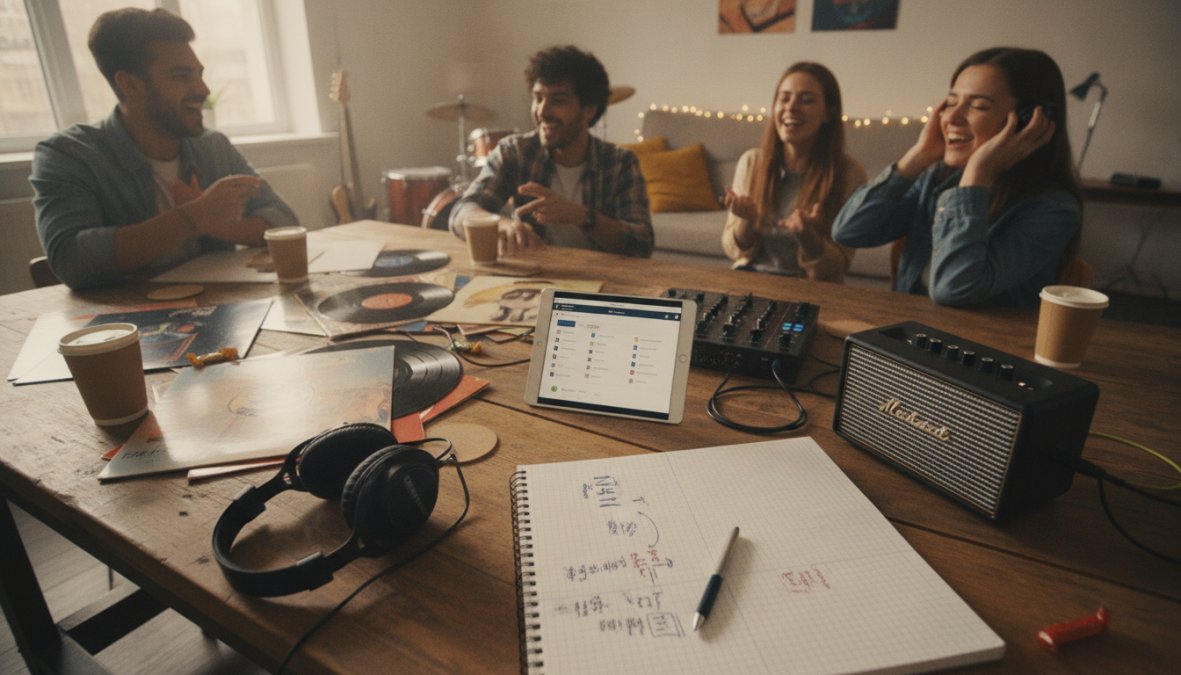
A bunch of friends are listening to music and planning a party playlist for their upcoming event.
Volume and Technicalities
You won’t avoid bad party music if the volume is wrong. Too soft and the music is wallpaper, too loud and nobody can talk. In the first 30 minutes of an arrival phase keep it conversational. By the time you hit the peak phase and the dance floor is in full swing, the volume should be commensurate. As you wind down, reduce it again.
Quality is equally as important. Make sure you’re using lossless files or an MP3 of at least 320kbps and don’t over-compress.
Some Mistakes to Avoid
Mistake 1: Don’t put the playlist together the day before. Give yourself a week to build it and listen in sequence, cutting what does not warrant its spot.
Mistake 2: Disregard for the BPM arc. A random order will leave your guests lurching and tired. Map it out.
Mistake 3: Failing to manage silence. Crossfade settings are there for a reason, test them.
Mistake 4: Overlooking the age range. For a mixed crowd you need a wider selection. A short ‘Do Not Play’ list can also be useful. Again, don’t micromanage the talent.
Mistake 5: Thinking the playlist is set in stone. No song list holds up 100% once a party gets under way.
You have to be prepared to re-order or repeat. The static playlist is only the start of it; the good song list creators are always making adjustments during the event.
The Case for Live Music in Place of a Playlist
Any playlist has its limits. While it’ll put sound in the room, a playlist is not going to read the room or put out an experience that has people talking about it once they’ve gone home. It can’t react to a crowd as it happens.
Live music is what gets past those limits. Put on a competent live band and you’ve got something a playlist never could: human energy, audience interaction, and some improvisation. They’ll make short work of a request and turn it into a performance, let a song run long if the crowd is worked up, or slow the tempo down to give the room a rest.
In the case of a wedding, corporate gala or private party where the whole point is the experience, you’re better off with live music. The National Association for Music Education has data to back this up; their resources show that in a social context, a live musical performance will result in a deeper emotional response and be more readily remembered than anything recorded. When you need an exceptional atmosphere, live music is less of an indulgence and more the proper way to go.
Yes, you can certainly avoid bad party music, but it’s a matter of having the flexibility to change course when the room indicates something isn’t working, of being in tune with your audience and the ebb and flow of the event. To remove any guesswork from the equation, Green Light Bands has high-energy live bands with the production and sound quality to see a dance floor full from start to finish. Get in touch with Green Light Bands and we’ll set you up with a band that’ll give your guests something to remember well after the event is over.
Frequently Asked Questions
Is there such a thing as bad party music?
There definitely is. As a rule it’ll wear on the ears, put a damper on the mood or simply not suit your audience. You’ll get awkward lulls on the dance floor from jarring transitions, too much of the same genre or an overdone track at the wrong tempo. The way to sidestep poor song selection is to have a feel for what your guests want and what fits the occasion.
How do you put together a party playlist that holds people’s attention?
You need to know the tastes of your audience first. Make for a good mix of the popular and the obscure with a consistent BPM and mood. Be strategic in how you blend genres to keep things moving and use crossfades. A well done playlist will be cohesive and yet change with the night.
Should I use a collaborative app or do it on my own?
With an app like Spotify you can have guests put in requests while you hold the reins close on creating a setlist, so a poor song choice doesn’t spoil the vibe. But make sure to lay down some ground rules as to what’s acceptable to preclude any conflict.
What volume is appropriate?
Some 85-90 decibels is the norm, loud enough to be heard but no need to raise one’s voice. With a live band, err on the side of too soft and the dance floor won’t come alive; too loud and you have ear fatigue. Take the size of the venue and number of guests into account and do a test run before your guests are there to gauge the right level for the room.